Loading...
Done


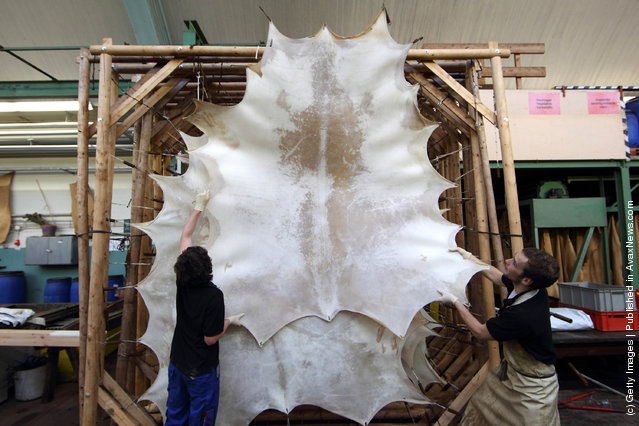
REUTLINGEN, GERMANY - NOVEMBER 17: Students hang out finished parchment leather at the LGR (Lederinstitut Gerberschule Reutlingen) tannery school on November 17, 2010 in Reutlingen, Germany. Even in early antiquity and up their hair or dried goat and sheep skins were used as material for documents. In the small Asian city Pergamon these skins were processed in large quantities for this purpose, so they formed the main trading arm of the city, of which the name is parchment is derived. In medieval times, reached the parchment is of great importance, it was such as France's production under the supervision of the University of Paris. Even now, important documents, placed on their unlimited shelf life as possible large value (eg diplomas, addresses, memory, writings, documents for primary and keystones) written on parchment...
Details
20 Nov 2011 18:17:00
The Museum of Feelings doesn't really have “exhibits" in the conventional sense; rather, visitors move from one themed alcove to another, five in total, each with its own distinctive aroma.  (Photo by Stephanie Keith/Reuters)

The Museum of Feelings doesn't really have “exhibits" in the conventional sense; rather, visitors move from one themed alcove to another, five in total, each with its own distinctive aroma. The “Optimistic Room," bathed in vivid pink and purple light, is little more than a lightshow, with patrons using small reflective panels to bounce light around the room. Here: People interact in the “optimistic” room at the Museum of Feelings, a pop-up installation in New York, December 15, 2015. (Photo by Stephanie Keith/Reuters)
Details
19 Dec 2015 08:00:00
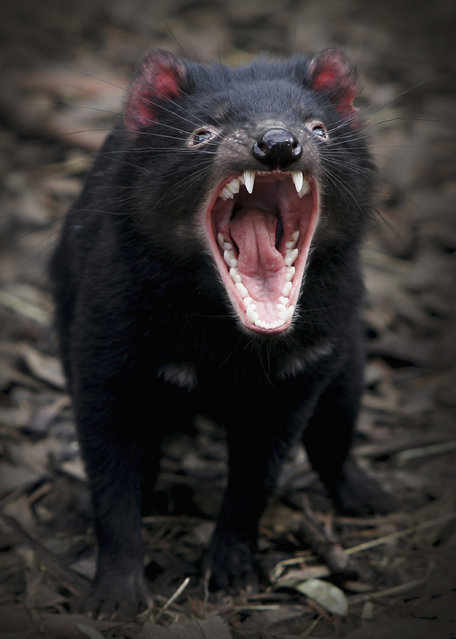
A Tasmanian Devil bears it's teeth at a quarantine facility August 31, 2005 in Hobart, Australia. The Devil, a native marsupial unique to Tasmania, is under threat from Devil Facial Tumor Disease (DFTD) which is decimating numbers throughout Tasmania. (Photo by Ian Waldie/Getty Images)

“The Tasmanian devil (Sarcophilus harrisii) is a carnivorous marsupial of the family Dasyuridae now found in the wild only in the Australian island state of Tasmania. The size of a small dog, it became the largest carnivorous marsupial in the world following the extinction of the thylacine in 1936. It is characterised by its stocky and muscular build, black fur, pungent odour, extremely loud and disturbing screech, keen sense of smell, and ferocity when feeding”. – Wikipedia. Photo: A Tasmanian Devil bears it's teeth at a quarantine facility August 31, 2005 in Hobart, Australia. (Photo by Ian Waldie/Getty Images)
Details
27 Jan 2014 09:45:00
Ethnic Cham Muslim people pass the time near their boats on banks of Mekong river in Phnom Penh July 29, 2013. (Photo by Damir Sagolj/Reuters)

Ethnic Cham Muslim people pass the time near their boats on banks of Mekong river in Phnom Penh July 29, 2013. About 100 ethnic Cham families, made up of nomads and fishermen without houses or land who arrived at the Cambodian capital in search of better lives, live on their small boats on a peninsula where the Mekong and Tonle Sap rivers meet, just opposite the city's centre. The community has been forced to move several times from their locations in Phnom Penh as the land becomes more valuable. They fear that their current home, just behind a new luxurious hotel under construction at the Chroy Changva district is only temporary and that they would have to move again soon. (Photo by Damir Sagolj/Reuters)
Details
31 Jul 2013 06:34:00
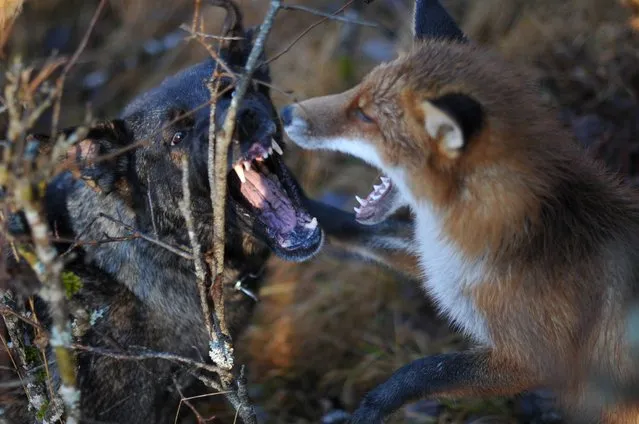
Life Fox And Hound

Tinni the dog and Sniffer the fox became quick friends, prompting the pooch's owner Torgeir Berge to start a campaign against the highly controversial fur trade after he noticed "how similar foxes and dogs actually are," calling the fox the "dog of the forest." Berge and his friend Berit Helberg plan to release a book sometime next year chronicling the duo, because "no animals should be living like the animals in the fur industry are living." According to animal advocacy group PETA, many creatures bound for the fur industry are allegedly kept in small, restrictive cages for their entire lives. Berge and Helberg said they plan to donate a portion of the proceeds to help save the Sniffers of the world, and we can totally see why.
Details
24 Apr 2014 14:40:00
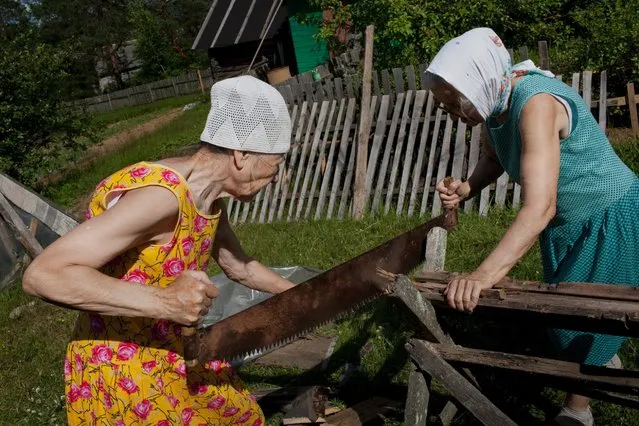
“Two-Handed Saw, 2014”. “Most of the neighbors have switched to power tools to run their households, the buzz of chain saws and weed-whackers overpowering the quieter sounds of country life, but my aunts hold on to the two-handed saw that's decades old, the sickle and scythe that need to be sharpened and polished after each use, the old axe that's becoming heavier each year. Each of these objects is familiar, holding memories of their brother, who succumbed to cancer a few years ago, of days before my grandfather lost his vision in the 50's, of busier days and longer futures”, Sablin told. (Photo by Nadia Sablin)

In northwest Russia, in a small village called Alekhovshchina, Nadia Sablin's aunts spend the warmer months together in the family home and live as the family has always lived, chopping wood to heat the house and making their own clothes. Sablin's book of photographs, “Aunties: The Seven Summers of Alevtina and Ludmila”, is published by Duke University Press. Here: “Two-Handed Saw, 2014”. (Photo by Nadia Sablin)
Details
25 Feb 2016 12:12:00
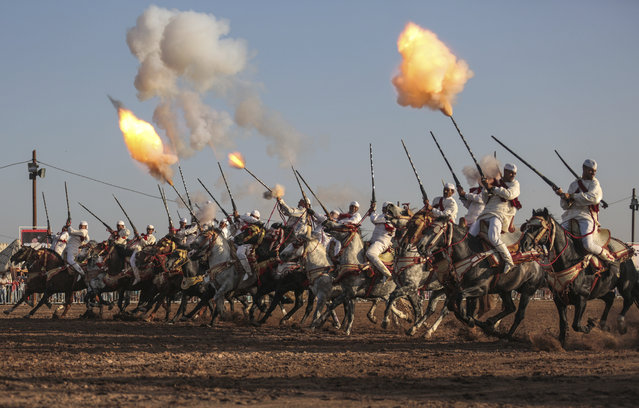
In this Thursday, August 17, 2017 photo, a troupe charges and fires their rifles during Tabourida, a traditional horse riding show also known as Fantasia, in Mansouria, near Casablanca, Morocco. (Photo by Mosa'ab Elshamy/AP Photo)

In this Thursday, August 17, 2017 photo, a troupe charges and fires their rifles during Tabourida, a traditional horse riding show also known as Fantasia, in Mansouria, near Casablanca, Morocco. Thousands gathered recently in Mansouria, a small town south of the capital Rabat, to attend one of the oldest festivals in Morocco. Nineteen horse troupes came from different parts of the kingdom to celebrate a three-day event that blends courage, skill and tradition. (Photo by Mosa'ab Elshamy/AP Photo)
Details
04 Sep 2017 07:57:00
A man pours red wine on a girl's head during the Batalla del Vino (Battle of Wine) in Haro, on June 29, 2015. Every year thousands of locals and tourists climb a mountain in the northern Spanish province of La Rioja to celebrate St. Peter's day covering each other in red wine while tanker trucks filled with wine distribute the alcoholic beverage to water pistols, back mounted spraying devices, buckets which are randomly poured on heads and into any other available container. (Photo by Cesar Manso/AFP Photo)

A man pours red wine on a girl's head during the Batalla del Vino (Battle of Wine) in Haro, on June 29, 2015. Every year thousands of locals and tourists climb a mountain in the northern Spanish province of La Rioja to celebrate St. Peter's day covering each other in red wine while tanker trucks filled with wine distribute the alcoholic beverage to water pistols, back mounted spraying devices, buckets which are randomly poured on heads and into any other available container. More than nine thousand people threw around 130,000 litres of wine during this year's Haro Wine Festival, according to local media. (Photo by Cesar Manso/AFP Photo)
Details
30 Jun 2015 11:56:00