Loading...
Done


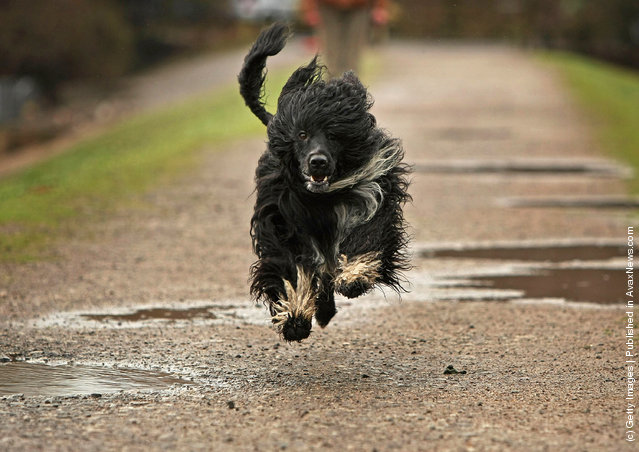
“The Portuguese Water Dog is a breed of working dog as classified by the American Kennel Club. Portuguese Water Dogs are originally from the Portuguese region of the Algarve, from where the breed expanded to all around Portugal's coast, where they were taught to herd fish into fishermen's nets, to retrieve lost tackle or broken nets, and to act as couriers from ship to ship, or ship to shore. Portuguese Water Dogs rode in bobbing fishing trawlers as they worked their way from the warm Atlantic waters of Portugal to the frigid fishing waters off the coast of Iceland where the fleets caught cod to bring home. Portuguese Water Dogs were often taken with sailors during the Portuguese discoveries”. – Wikipedia

Photo: Kix, a Portuguese Water Dog , enjoys a walk around the muddy fields near his home before the grooming and preparation starts for this years Crufts on March 3, 2009 in Telford, England. (Photo by Christopher Furlong/Getty Images)
Details
26 Jul 2011 11:27:00
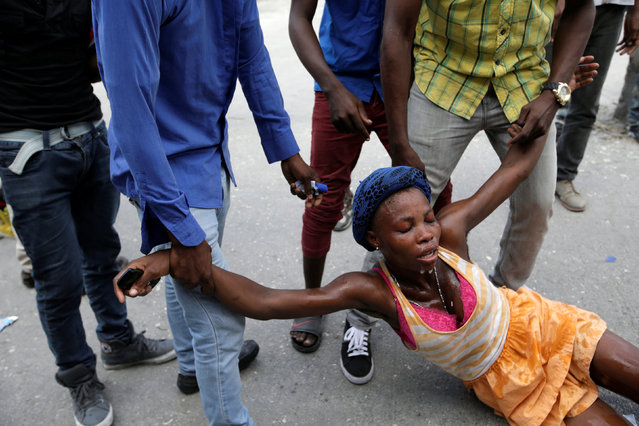
Men help a woman affected by tear gas used by National Police officers to disperse a demonstration of supporters of Fanmi Lavalas political party in the streets of Port-au-Prince, Haiti, November 22, 2016. (Photo by Andres Martinez Casares/Reuters)

Men help a woman affected by tear gas used by National Police officers to disperse a demonstration of supporters of Fanmi Lavalas political party in the streets of Port-au-Prince, Haiti, November 22, 2016. (Photo by Andres Martinez Casares/Reuters)
Details
24 Nov 2016 10:24:00
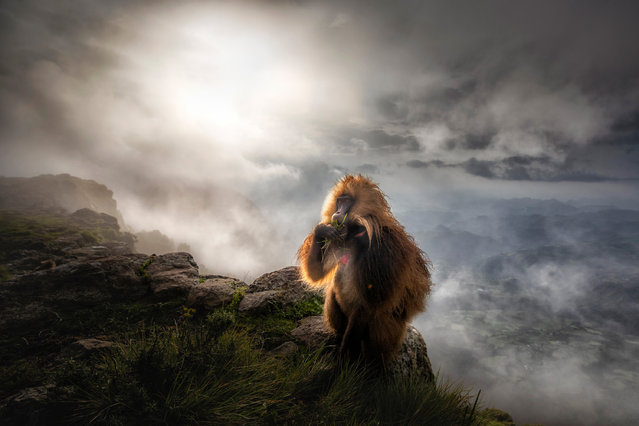
Highly commended, mammals: Gelada after the storm – Marco Gaiotti (Italy). “Gelada baboons are the only monkey species in the world that feed on grasses. They are native to the tableland of Ethiopia. Every morning large family groups wander from their sleeping places in the steep rock face, up to 1,000 metres high, to the feeding grounds at the tablelands. This image clearly depicts their feeding strategy: they pull out bunches of grass, sort the stalks and then lift them to their mouth. This shot was taken towards the end of the rainy season after a heavy storm”. (Photo by Marco Gaiotti/2019 GDT European Wildlife Photographer of the Year)

Highly commended, mammals: Gelada after the storm – Marco Gaiotti (Italy). “Gelada baboons are the only monkey species in the world that feed on grasses. They are native to the tableland of Ethiopia. Every morning large family groups wander from their sleeping places in the steep rock face, up to 1,000 metres high, to the feeding grounds at the tablelands. This image clearly depicts their feeding strategy: they pull out bunches of grass, sort the stalks and then lift them to their mouth. This shot was taken towards the end of the rainy season after a heavy storm”. (Photo by Marco Gaiotti/2019 GDT European Wildlife Photographer of the Year)
Details
31 Oct 2019 00:03:00
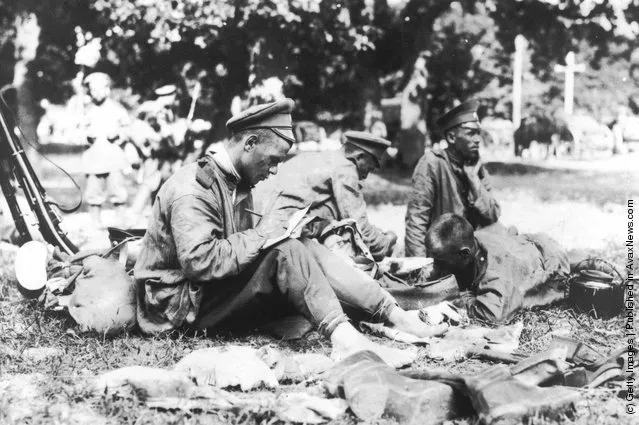
Russian soldiers write home while serving on the Eastern Front during World War I, circa 1915

Russian soldiers write home while serving on the Eastern Front during World War I, circa 1915. (Photo by Hulton Archive/Getty Images)
Details
11 Nov 2011 10:50:00
A man with a glitter beard marches along the San Francisco Pride parade route in San Francisco, California on Sunday, June, 26, 2016. (Photo by Josh Edelson/AFP Photo)

A man with a glitter beard marches along the San Francisco Pride parade route in San Francisco, California on Sunday, June, 26, 2016. (Photo by Josh Edelson/AFP Photo)
Details
28 Jun 2016 12:29:00
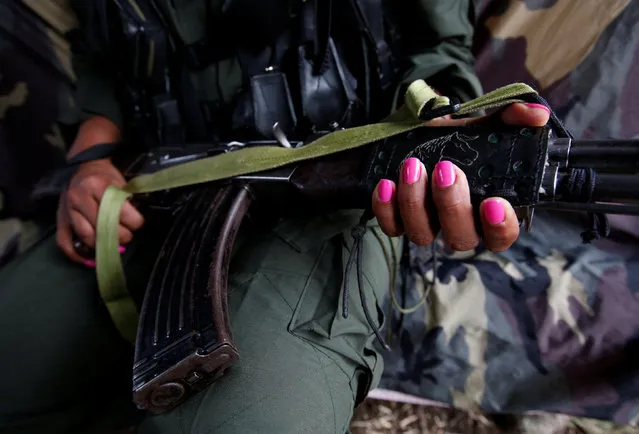
Leidi, a member of the 51st Front of the Revolutionary Armed Forces of Colombia (FARC), poses for a picture at a camp in Cordillera Oriental, Colombia, August 16, 2016. A peace deal will end half a century of war and allow the rebels to reintegrate into Colombian society. (Photo by John Vizcaino/Reuters)

Leidi, a member of the 51st Front of the Revolutionary Armed Forces of Colombia (FARC), poses for a picture at a camp in Cordillera Oriental, Colombia, August 16, 2016. A peace deal will end half a century of war and allow the rebels to reintegrate into Colombian society. (Photo by John Vizcaino/Reuters)
Details
27 Aug 2016 11:05:00
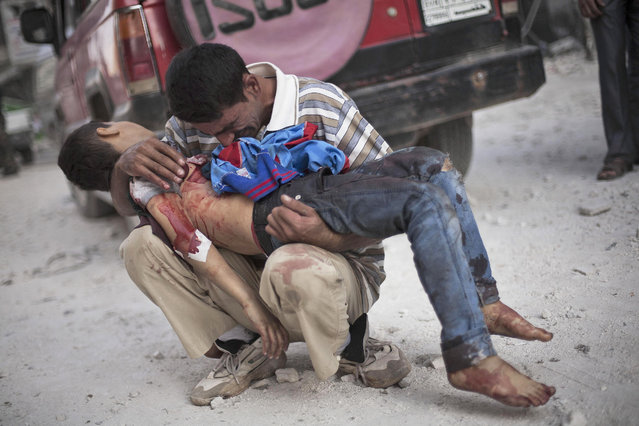
A Syrian man cries while holding the body of his son, killed by the Syrian Army, near Dar El Shifa hospital in Aleppo, Syria, Wednesday, October 3, 2012. (Photo by Manu Brabo/AP Photo)

Manu Brabo was born in Spain in 1981. After studying Photography in The School of Arts and Crafts in Oviedo, he moved to Madrid where he started Journalism in Carlos III University while he was working as a photographer for several humble newspapers and agencies. In 2011, Manu was held captive and then released by by Libyan forces. Brabo, along with fellow AP photographers were awarded the 2013 Pulitzer Prize for Breaking News Photography. Here: a Syrian man cries while holding the body of his son, killed by the Syrian Army, near Dar El Shifa hospital in Aleppo, Syria, Wednesday, October 3, 2012. (Photo by Manu Brabo/AP Photo)
Details
27 Oct 2015 08:04:00
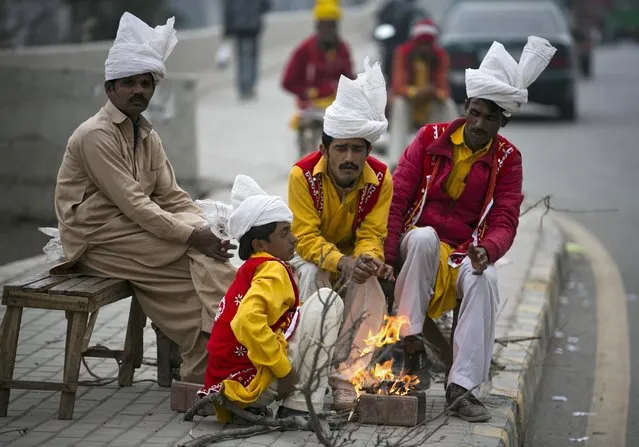
Pakistani street performers sit around fire waiting for customers on a chilly evening in Rawalpindi, Pakistan, Wednesday, February 10, 2016. (Photo by B.K. Bangash/AP Photo)

Pakistani street performers sit around fire waiting for customers on a chilly evening in Rawalpindi, Pakistan, Wednesday, February 10, 2016. (Photo by B.K. Bangash/AP Photo)
Details
24 Feb 2016 12:36:00