Loading...
Done
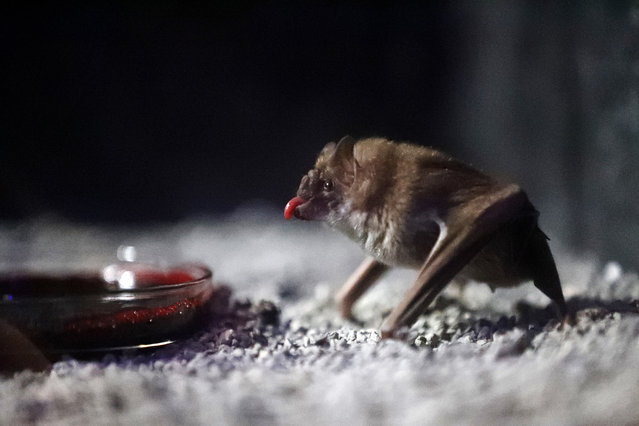
In this Tuesday, March 20, 2018 photo, a Vampire Bat drinks bovine blood in the Criaturas de la Noche (Creatures of the Night) Bat House, the Audubon Zoo's new night house in New Orleans. The various species are all from Central and South America, and the building's interior simulates an abandoned warehouse set up to protect Mayan artifacts during a dig. (Photo by Gerald Herbert/AP Photo)

In this Tuesday, March 20, 2018 photo, a Vampire Bat drinks bovine blood in the Criaturas de la Noche (Creatures of the Night) Bat House, the Audubon Zoo's new night house in New Orleans. The various species are all from Central and South America, and the building's interior simulates an abandoned warehouse set up to protect Mayan artifacts during a dig. (Photo by Gerald Herbert/AP Photo)
Details
25 Mar 2018 00:03:00
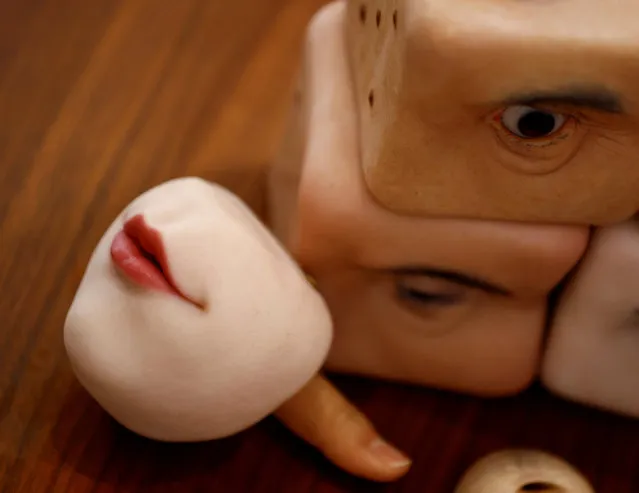
Hyper realistic flesh-like objects created by Masataka Shishido, also known as DJ Doooo, are displayed at his home, during a photo opportunity in Kawasaki, south of Tokyo, Japan on January 26, 2023. (Photo by Kim Kyung-Hoon/Reuters)

Hyper realistic flesh-like objects created by Masataka Shishido, also known as DJ Doooo, are displayed at his home, during a photo opportunity in Kawasaki, south of Tokyo, Japan on January 26, 2023. (Photo by Kim Kyung-Hoon/Reuters)
Details
15 Feb 2023 04:55:00
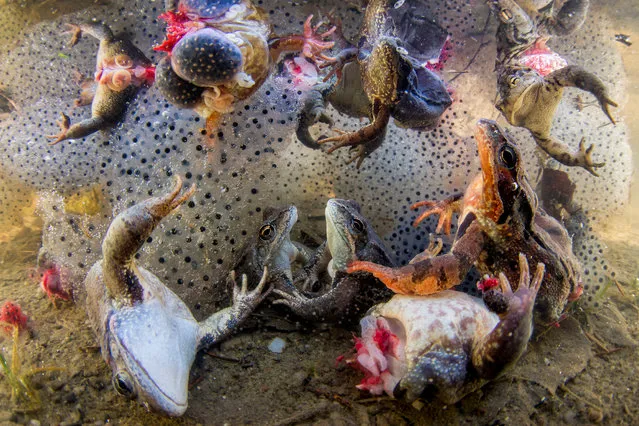
Nature, singles winner: Frogs with their legs severed struggle to the surface, surrounded by frogspawn, after being thrown back into the water in Covasna, Romania. (Photo by Bence Mate/World Press Photo 2019)

Nature, singles winner: Frogs with their legs severed struggle to the surface, surrounded by frogspawn, after being thrown back into the water in Covasna, Romania. (Photo by Bence Mate/World Press Photo 2019)
Details
13 Apr 2019 00:03:00
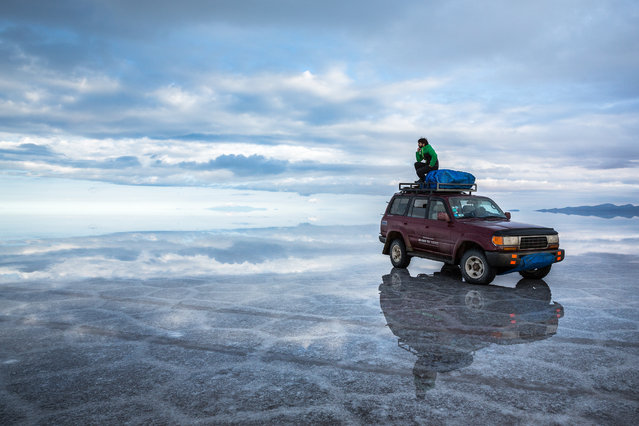
At 10,582 square kilometres, the Bolivian salt flats – otherwise known as Salar de Uyuni – are the largest on the planet and contain between 50 and 70% of the world’s lithium reserves. After exploring Chile and Argentina, photographer Joel Santos decided to travel to Bolivia in January 2017 to check the salt flats off his bucket list. With an electrical storm rolling in, Joel and his two travelling companions were the only souls left on the vast flats and captured the eerie flats without a person in sight. (Photo by Joel Santos/Barcroft Images)

At 10,582 square kilometres, the Bolivian salt flats – otherwise known as Salar de Uyuni – are the largest on the planet and contain between 50 and 70% of the world’s lithium reserves. After exploring Chile and Argentina, photographer Joel Santos decided to travel to Bolivia in January 2017 to check the salt flats off his bucket list. With an electrical storm rolling in, Joel and his two travelling companions were the only souls left on the vast flats and captured the eerie flats without a person in sight. (Photo by Joel Santos/Barcroft Images)
Details
12 Aug 2019 00:03:00
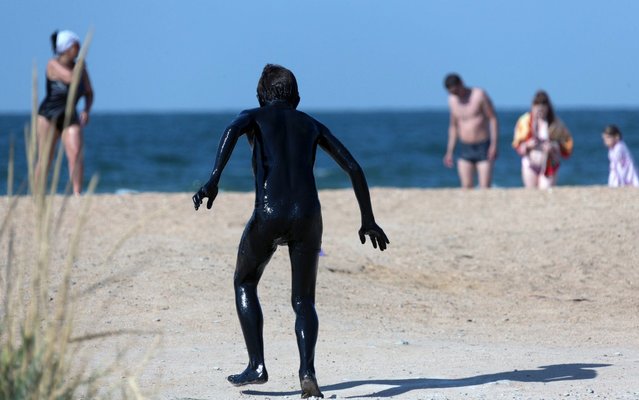
A child covered in mud on Lake Chokrak near the village of Kurortnoye, Leninsky District of Crimea in Russia on July 4, 2019. (Photo by Sergei Malgavko/TASS)

A child covered in mud on Lake Chokrak near the village of Kurortnoye, Leninsky District of Crimea in Russia on July 4, 2019. (Photo by Sergei Malgavko/TASS)
Details
08 Jul 2019 00:05:00
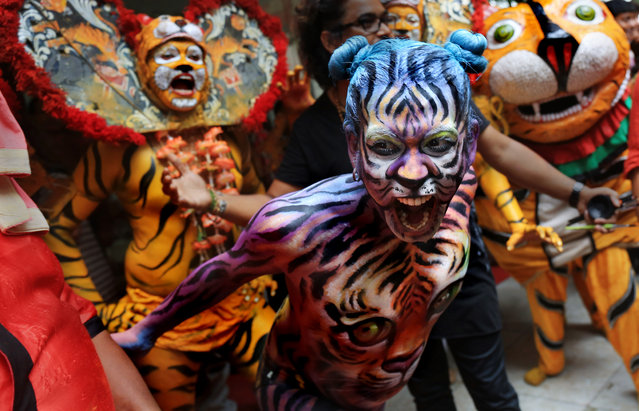
Indian dancers paint their body like tigers as they perform a Tiger dance during the International day of the Tiger in Calcutta, India, July 29, 2015. Students of Calcutta are taking part in an awareness campaign aiming to draw attention to the threats that tigers face due to habitat loss and poaching. (Photo by Piyal Adhikary/EPA)

Indian dancers paint their body like tigers as they perform a Tiger dance during the International day of the Tiger in Calcutta, India, July 29, 2015. Students of Calcutta are taking part in an awareness campaign aiming to draw attention to the threats that tigers face due to habitat loss and poaching. (Photo by Piyal Adhikary/EPA)
Details
30 Jul 2015 12:47:00
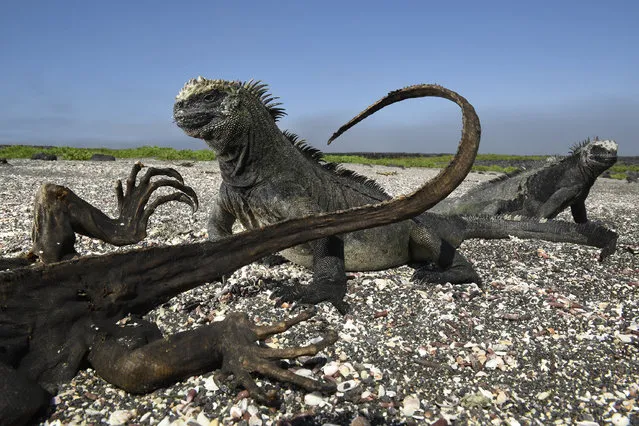
Galapagos – Rocking the Cradle: Four major ocean currents converge along the Galapagos archipelago, creating the conditions for an extraordinary diversity of animal life, April 25, 2016. The islands are home to at least 7,000 flora and fauna species, of which 97 percent of the reptiles, 80 percent of the land birds, 50 percent of the insects and 30 percent of the plants are endemic. The local ecosystem is highly sensitive to the changes in temperature, rainfall and ocean currents that characterize the climatic events known as El Niño and La Niña. These changes cause marked fluctuations in weather and food availability. Many scientists expect the frequency of El Niño and La Niña to increase as a result of climate change, making the Galapagos a possible early-warning location for its effects. (Photo by Thomas P. Peschak for National Geographic/World Press Photo)

Galapagos – Rocking the Cradle: Four major ocean currents converge along the Galapagos archipelago, creating the conditions for an extraordinary diversity of animal life, April 25, 2016. The islands are home to at least 7,000 flora and fauna species, of which 97 percent of the reptiles, 80 percent of the land birds, 50 percent of the insects and 30 percent of the plants are endemic. (Photo by Thomas P. Peschak for National Geographic/World Press Photo)
Details
16 Apr 2018 00:01:00
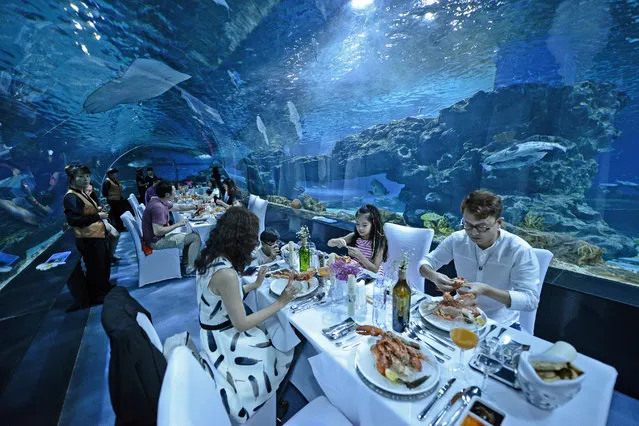
Aquarium visitors attend a dinner party in an underwater tunnel in Tianjin, China on September 15, 2016. (Photo by Feature China/Barcroft Images)

Aquarium visitors attend a dinner party in an underwater tunnel in Tianjin, China on September 15, 2016. Tianjin Haichang Polar Ocean World opened in the city of Tianjin, southeast of Beijing, in 2010. It gives visitors a chance to see more than 150 large animals from the Arctic and Antarctic regions, including polar bears. (Photo by Feature China/Barcroft Images)
Details
16 Sep 2016 11:18:00