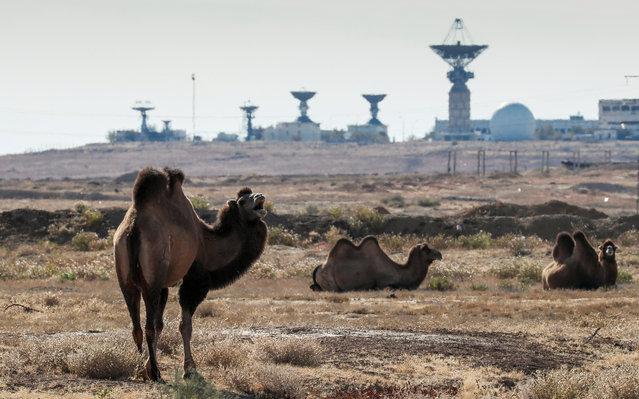
Camels graze in front of a spacecraft tracking station ahead of the Soyuz MS-10 upcoming launch at the Baikonur Cosmodrome, Kazakhstan, October 9, 2018. (Photo by Shamil Zhumatov/Reuters)
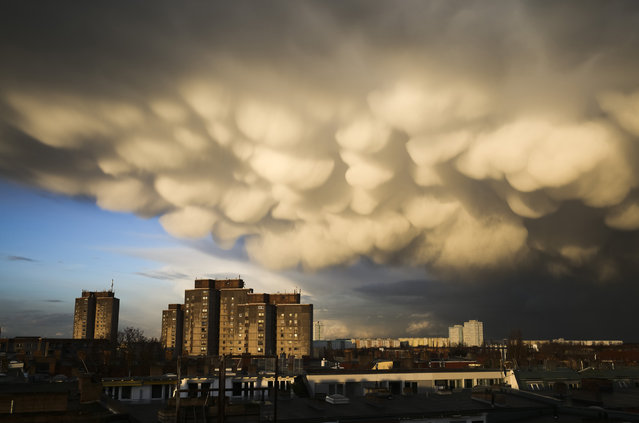
Clouds cover the sky over the Ernst-Taehlmann-Park housing estate after a thunderstorm in Berlin, Germany, Thursday, March 11, 2021. (Photo by Markus Schreiber/AP Photo)
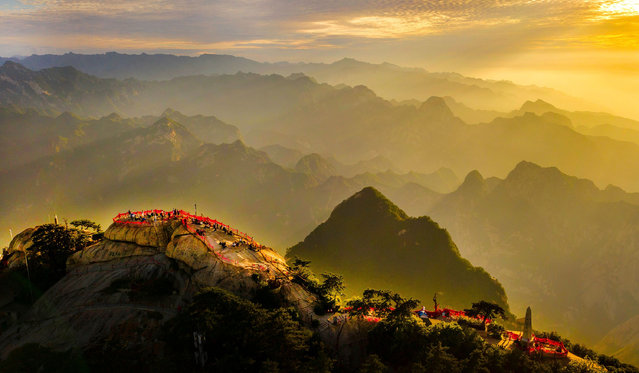
Aerial photo taken on June 19, 2021 shows the scenery of Mount Huashan in northwest China's Shaanxi Province. (Photo by Xinhua News Agency/Rex Features/Shutterstock)
A boy kicks a football in Dudley Page Reserve as storm clouds gather over the city skyline on September 30, 2021 in Sydney, Australia. The Bureau of Meteorology has issued severe storm warnings for the city. (Photo by Mark Evans/Getty Images)
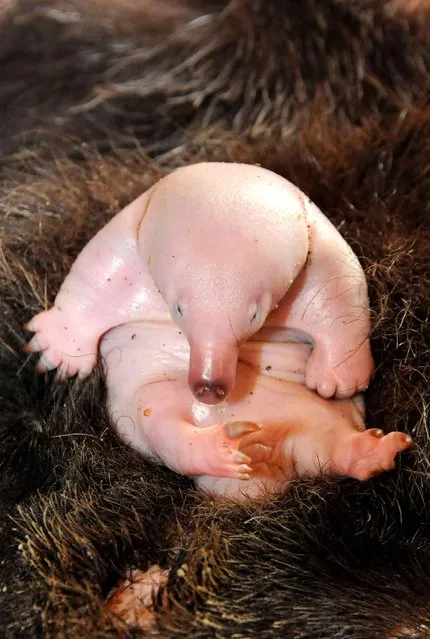
It's a 30-day-old Echidna baby, known as a “puggle” – one of only 24 ever bred in captivity. The proud parents are Tippy and Pickle of Australia Zoo. The tiny baby, whose s*x has not yet been identified, hatched from a soft egg and will continue to develop and nurse inside Tippy's warm pouch. (Photo by Australia Zoo/Rex/Sipa Press)
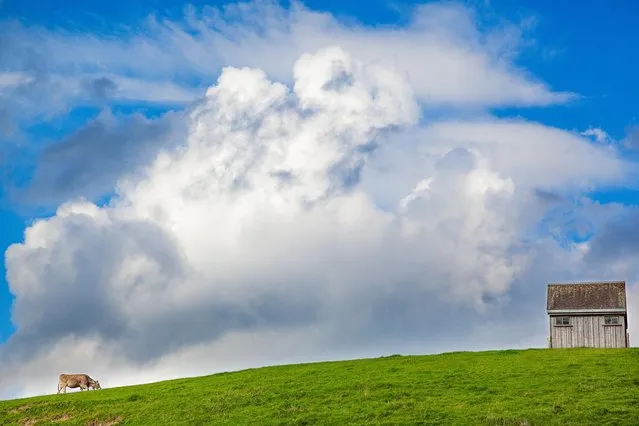
“Sniff out the Appenzell Cheese”. Alexander Hunter, 30, of Greenwich, Conn., took this photo in Appenzell, Switzerland, in September 2014. (Photo by Alexander Hunter)
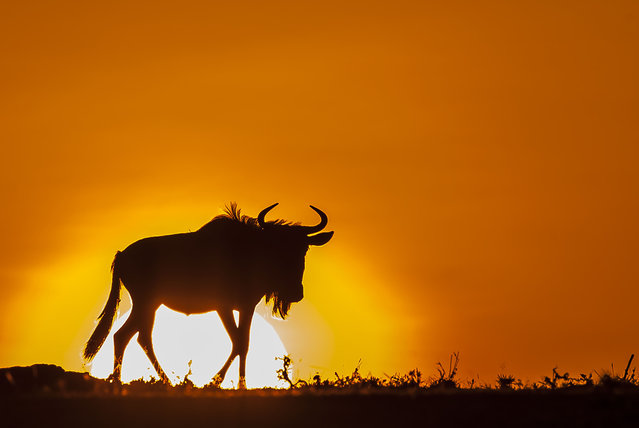
These images show off some of the world's most majestic creatures silhouetted against the beautiful rising and setting sun. The vibrant pictures feature a variety of animals in the wild and were taken by a host of photographers at locations around the world. The striking images all have one thing in common: the photographers' awe-inspiring ability to perfectly capture the silhouettes of earth's beautiful creatures. Here: a blue wildebeest moves through grassland at dawn with the sun in the background in Mara Naboisho Conservancy, Kenya, Africa. (Photo by Renato Granieri/Caters News/Ardea)
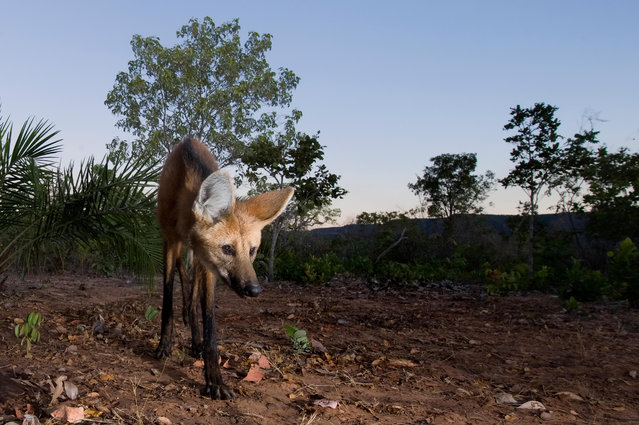
Global wildlife populations will decline by 67% by 2020 unless urgent action is taken to reduce human impact on species and ecosystems, warns the biennial Living Planet Index report from WWF (World Wide Fund for Nature) and ZSL (Zoological Society of London). From elephants to eels, here are some of the wildlife populations most affected by human activity. Here: The maned wolf is among the large mammals in the Brazilian Cerrado that are threatened by the increasing conversion of grasslands into farmland for grazing and growing crops. (Photo by Ben Cranke/Nature Picture Library/Alamy Stock Photo)