Loading...
Done
“Fly cap for a vine snake”. A fly lands on the head of a vine snake in the Choco of Colombia. (Photo and caption by Robin Moore/National Geographic Traveler Photo Contest)

“Fly cap for a vine snake”. A fly lands on the head of a vine snake in the Choco of Colombia. (Photo and caption by Robin Moore/National Geographic Traveler Photo Contest)

ATTENTION! All pictures are presented in high resolution. To see Hi-Res images – just TWICE click on any picture. In other words, click small picture – opens the BIG picture. Click BIG picture – opens VERY BIG picture.
Details
24 Jun 2013 11:36:00
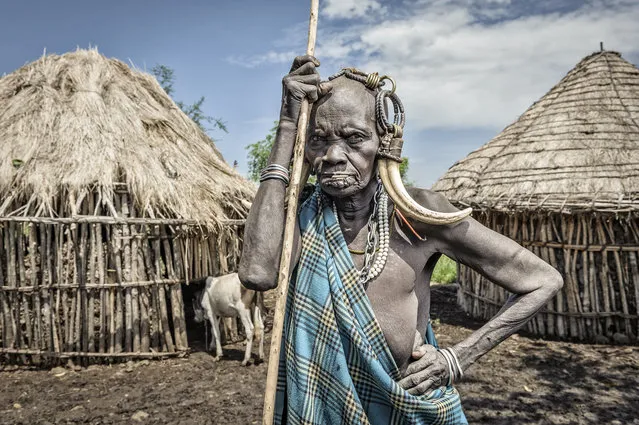
“Old Mursi woman”. Old woman by the huts of her village. Location: Marenke, Omo valley, Ethiopia. (Photo and caption by Jorge Fernandez/National Geographic Traveler Photo Contest)

“Old Mursi woman”. Old woman by the huts of her village. Location: Marenke, Omo valley, Ethiopia. (Photo and caption by Jorge Fernandez/National Geographic Traveler Photo Contest)

ATTENTION! All pictures are presented in high resolution. To see Hi-Res images – just TWICE click on any picture. In other words, click small picture – opens the BIG picture. Click BIG picture – opens VERY BIG picture.
Details
24 Jun 2013 09:55:00
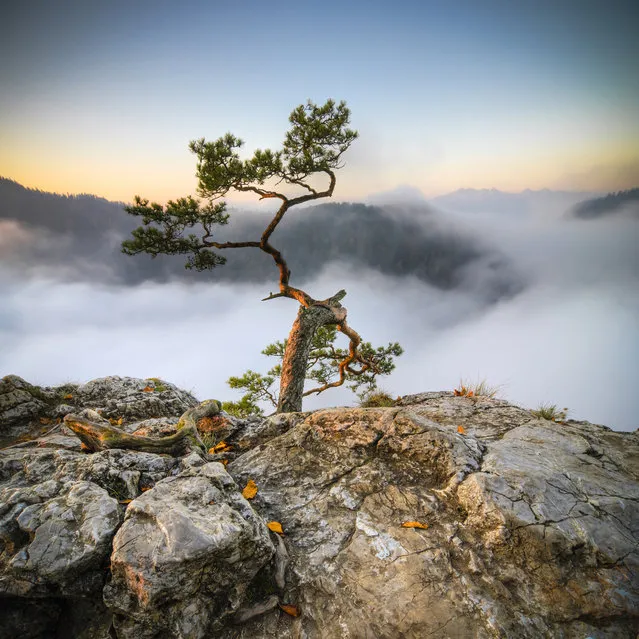
“Sokolica”. Sokolica, Poland. (Photo and caption by Marcin Kęsek/National Geographic Traveler Photo Contest)

“Sokolica”. Sokolica, Poland. (Photo and caption by Marcin Kęsek/National Geographic Traveler Photo Contest)

ATTENTION! All pictures are presented in high resolution. To see Hi-Res images – just TWICE click on any picture. In other words, click small picture – opens the BIG picture. Click BIG picture – opens VERY BIG picture.
Details
25 Jun 2013 09:13:00
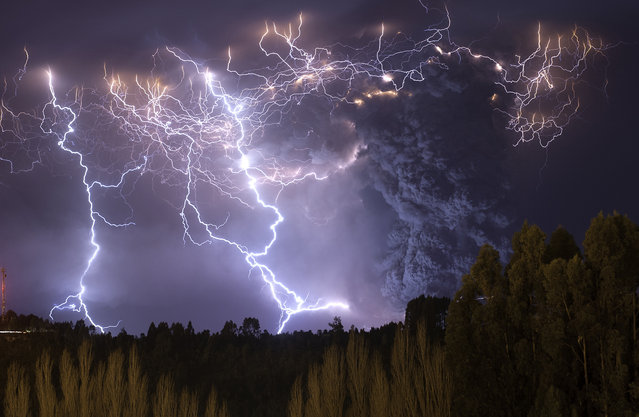
The eruption of Cordon Caulle began on June 4, 2011, located in the Region of Los Rios in Chile. For about 12 months, people and animals became accustomed to living with the daily fall of ash, which also caused problems in the air traffic in South America. The explosions and lightning during first days of the eruption could be seen from hundreds of miles around. This photograph was taken on the second night of eruption from the town of Lago Ranco. (Photo and caption by Francisco Negroni/National Geographic Traveler Photo Contest)

The eruption of Cordon Caulle began on June 4, 2011, located in the Region of Los Rios in Chile. For about 12 months, people and animals became accustomed to living with the daily fall of ash, which also caused problems in the air traffic in South America. The explosions and lightning during first days of the eruption could be seen from hundreds of miles around. This photograph was taken on the second night of eruption from the town of Lago Ranco. (Photo and caption by Francisco Negroni/National Geographic Traveler Photo Contest)

ATTENTION! All pictures are presented in high resolution. To see Hi-Res images – just TWICE click on any picture. In other words, click small picture – opens the BIG picture. Click BIG picture – opens VERY BIG picture.
Details
23 Jun 2013 11:24:00
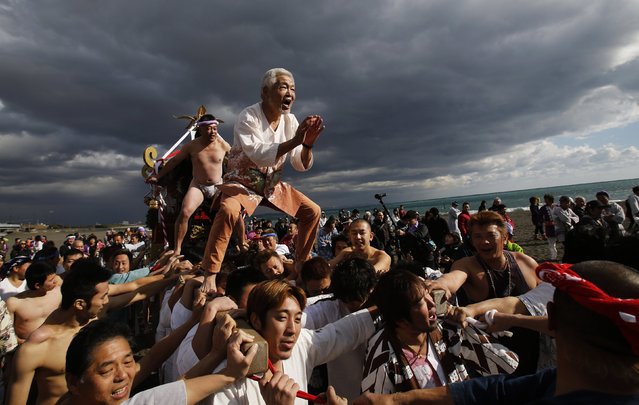
Men ride on a “mikoshi” or portable shrine as local people carry it into the sea during a festival to wish peace in the ocean and good fortune in the new year in Oiso, west of Tokyo, January 1, 2015. (Photo by Yuya Shino/Reuters)

Men ride on a “mikoshi” or portable shrine as local people carry it into the sea during a festival to wish peace in the ocean and good fortune in the new year in Oiso, west of Tokyo, January 1, 2015. (Photo by Yuya Shino/Reuters)
Details
02 Jan 2015 12:27:00
A performer takes part in the opening of the Temple Fair, part of Chinese New Year celebrations at Ditan Park, also known as the Temple of Earth, in Beijing, February 18, 2015. (Photo by Kim Kyung-Hoon/Reuters)

A performer takes part in the opening of the Temple Fair, part of Chinese New Year celebrations at Ditan Park, also known as the Temple of Earth, in Beijing, February 18, 2015. (Photo by Kim Kyung-Hoon/Reuters)
Details
19 Feb 2015 15:03:00
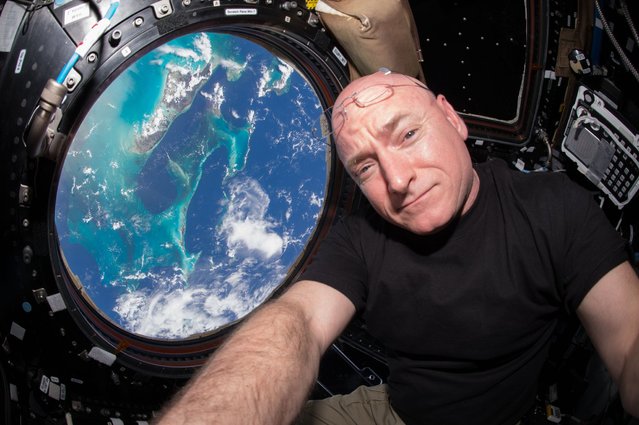
Expedition 44 flight engineer and NASA astronaut Scott Kelly seen inside the Cupola, a special module which provides a 360-degree viewing of the Earth and the International Space Station. Kelly is one of two crew members spending an entire year in space. (Photo by Scott Kelly/NASA)

Expedition 44 flight engineer and NASA astronaut Scott Kelly seen inside the Cupola, a special module which provides a 360-degree viewing of the Earth and the International Space Station. Kelly is one of two crew members spending an entire year in space. (Photo by Scott Kelly/NASA)
Details
25 Feb 2016 12:05:00
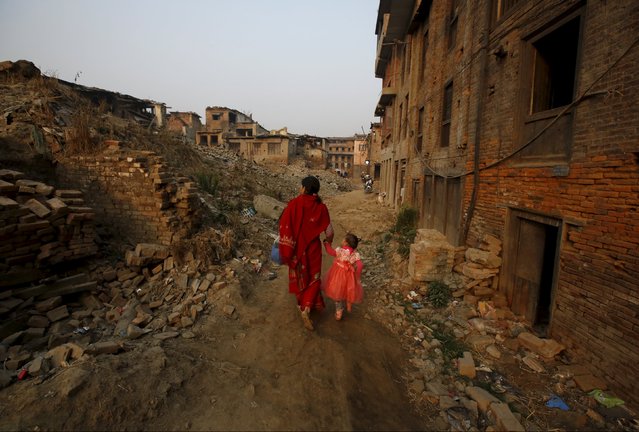
A woman and a child walk past the remains of collapsed houses damaged during the April 2015 earthquake, in Bhaktapur, Nepal March 18, 2016. The two devastating earthquakes that struck Nepal last year killed almost 9,000 people across the country. Inside the Kathmandu Valley almost 2,000 died, and some of the area's most important cultural and heritage sites were completely destroyed. As Kathmandu inhabitants prepare to mark the one-year anniversary of the event, thousands are still displaced and millions are living in temporary shelters. (Photo by Navesh Chitrakar/Reuters)

A woman and a child walk past the remains of collapsed houses damaged during the April 2015 earthquake, in Bhaktapur, Nepal March 18, 2016. The two devastating earthquakes that struck Nepal last year killed almost 9,000 people across the country. Inside the Kathmandu Valley almost 2,000 died, and some of the area's most important cultural and heritage sites were completely destroyed. As Kathmandu inhabitants prepare to mark the one-year anniversary of the event, thousands are still displaced and millions are living in temporary shelters. (Photo by Navesh Chitrakar/Reuters)
Details
25 Apr 2016 09:19:00