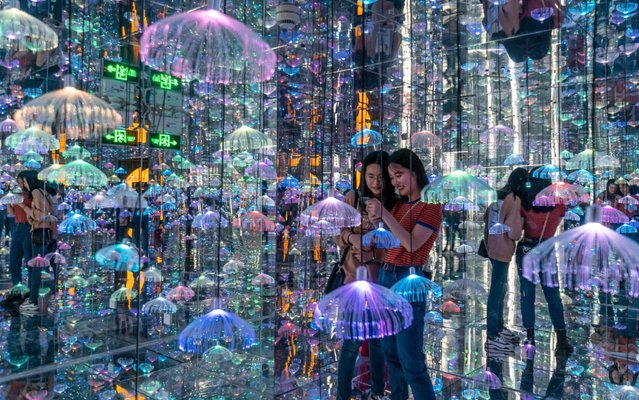
Visitors browse in the starry Art Museum. Shanghai, China, May 13, 2020. The exhibition hall uses a large number of mirror devices, combined with the layout of acousto-optic, to create a visual scene and spatial effect. (Photo by Costfoto/Barcroft Media via Getty Images)
A pro-government supporter scuffles with an anti-extradition supporter outside the office of pro-China lawmaker Junius Ho in Tsuen Wan in Hong Kong, China on July 22, 2019. Hong Kong demonstrators gathered for another weekend of protests against the controversial extradition bill and with a growing list of grievances, maintaining pressure on Chief Executive Carrie Lam. (Photo by Edgar Su/Reuters)
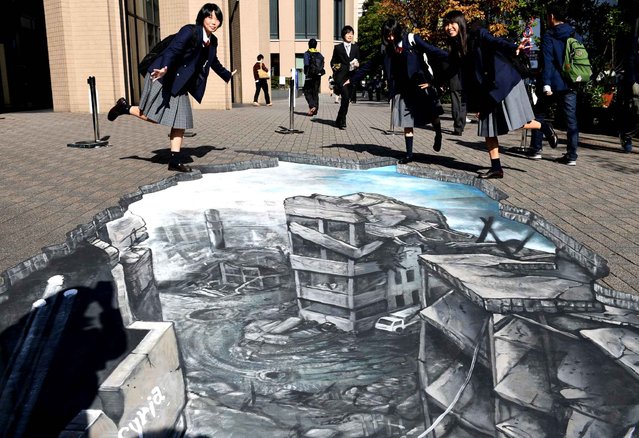
Students pose for a picture with a 3- D optical illusion artwork of a devastated cityscape in Aleppo, Syria at the campus of the Meiji University in Tokyo on November 18, 2016. The Japanese branch of the human rights organisation Amnesty International displayed the artwork to encourage people to think about the Syrian civil war. (Photo by Toshifumi Kitamura/AFP Photo)
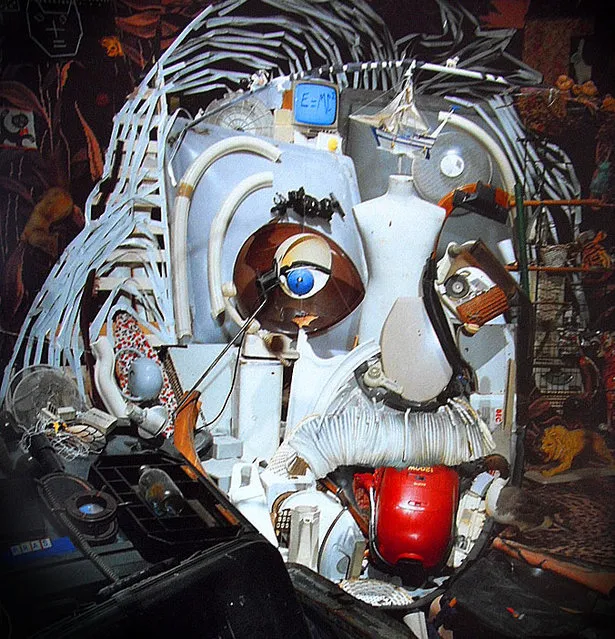
Bernard Pras uses objects and materials he finds in landfills to create his incredible anamorphic sculptures. His sculptures are often recreations of famous works of art, but he puts his own unique spin on these classics with his amazing optical illusion stacking technique.
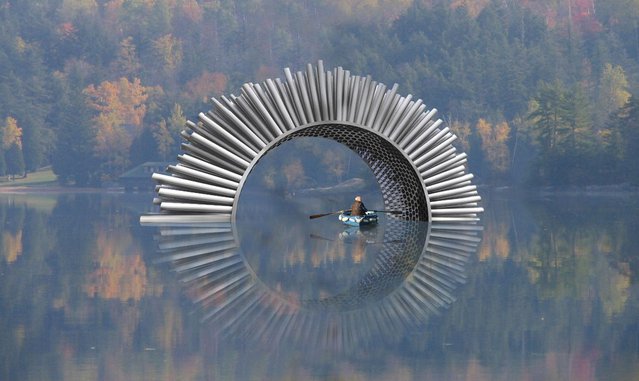
Aeolus is a giant stringed musical instrument, an acoustic and optical pavilion designed to make audible the silent shifting patterns of the wind and to visually amplify the ever changing sky.
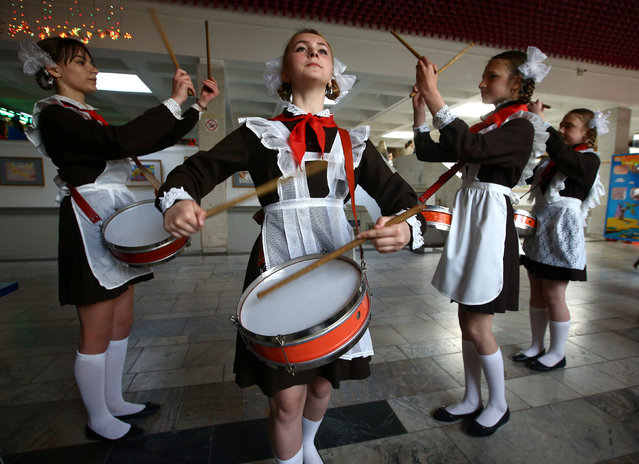
Belarusian schoolchildren, who are members of a pro-government Young Pioneer movement, perform with drums as they take part in a meeting to mark the 95th anniversary of their organisation in Minsk, Belarus May 19, 2017. (Photo by Vasily Fedosenko/Reuters)
Waka Tsukiyama and Sayaka Unagi compete during the Women's Pro-Wrestling “Stardom” at Korakuen Hall on September 06, 2021 in Tokyo, Japan. (Photo by Etsuo Hara/Getty Images)