Loading...
Done
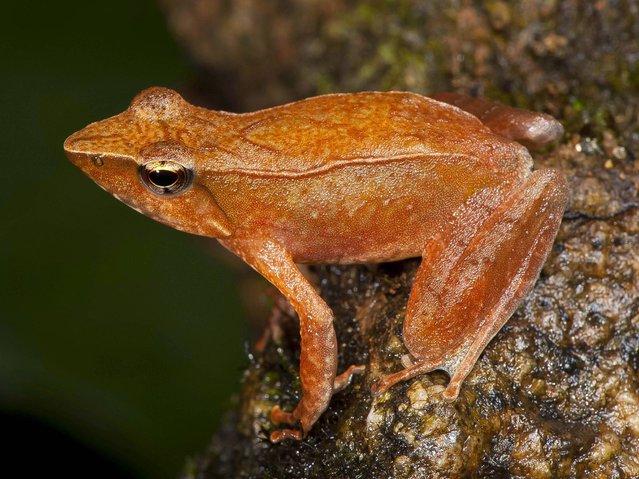
Orange dancing frog discovered by a team headed by University of Delhi professor Sathyabhama Das Biju in the jungle mountains of southern India. (Photo by Satyabhama Das Biju/AP Photo)

This undated photograph shows one of the 14 new species of so-called dancing frogs discovered by a team headed by University of Delhi professor Sathyabhama Das Biju in the jungle mountains of southern India. The study listing the new species brings the number of known Indian dancing frogs to 24 and attempts the first near-complete taxonomic sampling of the single-genus family found exclusively in southern India's lush mountain range called the Western Ghats, which stretches 1,600 kilometers (990 miles) from the west state of Maharashtra down to the country's southern tip. (Photo by Satyabhama Das Biju/AP Photo)
Details
09 May 2014 08:50:00
Bonbibi, Treehouse Point, Fall City, WA. The Bonbibi is balanced on two steel yokes. The yokes spread out the load and allow for tree growth and movement in the wind. A small deck hangs from the beams below and uses the treehouse itself to shelter guests. (Photo by Pete Nelson)

Bonbibi, Treehouse Point, Fall City, WA. The Bonbibi is balanced on two steel yokes. The yokes spread out the load and allow for tree growth and movement in the wind. A small deck hangs from the beams below and uses the treehouse itself to shelter guests. (Photo by Pete Nelson)
Details
16 May 2014 16:00:00


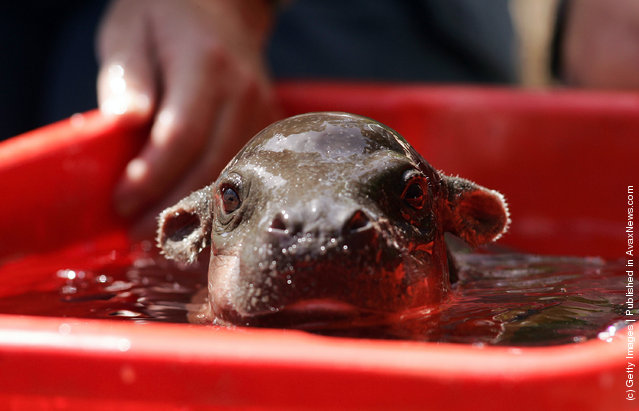
“The pygmy hippopotamus (Choeropsis liberiensis or Hexaprotodon liberiensis) is a large mammal native to the forests and swamps of western Africa (the specific name liberiensis means “of Liberia”, as this is where the vast majority live). The pygmy hippo is reclusive and nocturnal. It is one of only two extant species in the Hippopotamidae family, the other being its much larger cousin the common hippopotamus”. – Wikipedia

Photo: Monifa, a one month old baby Pygmy Hippopotamus takes a morning bath at Taronga Zoo on November 7, 2008 in Sydney, Australia. Monifa is the first Pygmy Hippopotamus to be born at Taronga Zoo in the past twenty three years. (Photo by Sergio Dionisio/Getty Images)
Details
11 Apr 2011 08:11:00

Proud Boys and Antifa fight after the “Million MAGA March” from Freedom Plaza to the US Capitol in Washington, DC, United States on December 12, 2020. Rally held to back President Donald Trump's unsubstantiated claims of voter fraud in the US election. (Photo by Tayfun Coskun/Anadolu Agency via Getty Images)

Proud Boys and Antifa fight after the “Million MAGA March” from Freedom Plaza to the US Capitol in Washington, DC, United States on December 12, 2020. Rally held to back President Donald Trump's unsubstantiated claims of voter fraud in the US election. (Photo by Tayfun Coskun/Anadolu Agency via Getty Images)
Details
14 Dec 2020 00:01:00
A reveller drinks wine while waiting for the launch of the “Chupinazo” rocket, to mark the official opening of the 2023 San Fermín fiestas in Pamplona, Spain, Thursday, July 6, 2023. (Photo by Alvaro Barrientos/AP Photo)

A reveller drinks wine while waiting for the launch of the “Chupinazo” rocket, to mark the official opening of the 2023 San Fermín fiestas in Pamplona, Spain, Thursday, July 6, 2023. (Photo by Alvaro Barrientos/AP Photo)
Details
24 Oct 2024 04:37:00
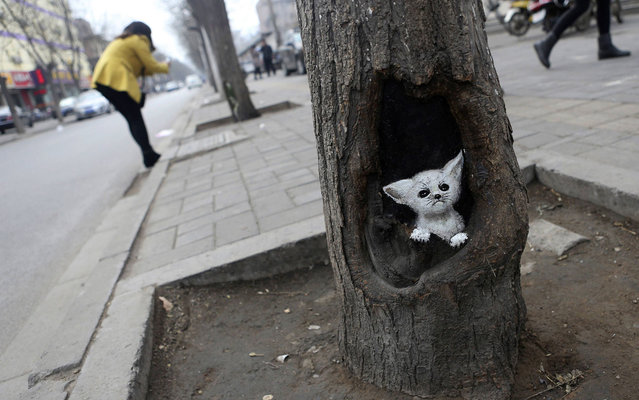
An image of a Fennec fox painted on a tree hole by Wang Yue is seen in Shijiazhuang, on March 13, 2013. Wang Yue, a senior at Dalian Industry University, uses her paintbrush to turn ugly tree holes into lovely views in Shijiazhuang, capital city of Hebei Province, China. Wang and her companions call the tree-hole paintings “meitu”, which means “beautiful journey”. The paintings on the trees have brightened the city during the dull, grey winter. (Photo by Pillar Lee/Reuters)

An image of a Fennec fox painted on a tree hole by Wang Yue is seen in Shijiazhuang, on March 13, 2013. Wang Yue, a senior at Dalian Industry University, uses her paintbrush to turn ugly tree holes into lovely views in Shijiazhuang, capital city of Hebei Province, China. Wang and her companions call the tree-hole paintings “meitu”, which means “beautiful journey”. The paintings on the trees have brightened the city during the dull, grey winter. (Photo by Pillar Lee/Reuters)

P.S. All pictures are presented in high resolution. To see Hi-Res images – just TWICE click on any picture. In other words, click small picture – opens the BIG picture. Click BIG picture – opens VERY BIG picture (if available; this principle works anywhere on the site AvaxNews).
Details
16 Mar 2013 11:27:00
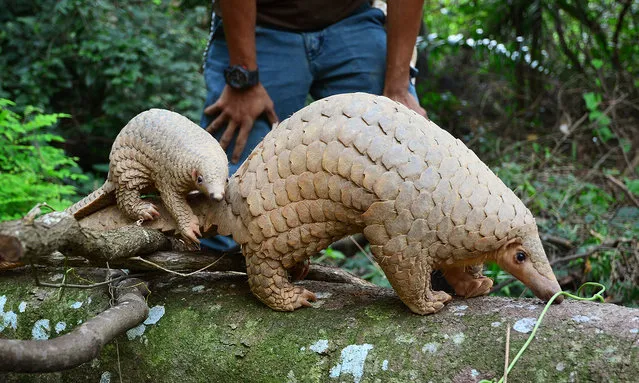
Radin the Sunda pangolin hitches a ride on Nita as their keeper looks on. The elusive and nocturnal Sunda pangolin produces only one or two offspring a year and Radin is the third pangolin baby born in Night Safari since 2011. (Photo by Wildlife Reserves Singapore)

Radin the Sunda pangolin hitches a ride on Nita as their keeper looks on. The elusive and nocturnal Sunda pangolin produces only one or two offspring a year and Radin is the third pangolin baby born in Night Safari since 2011. (Photo by Wildlife Reserves Singapore)
Details
07 Oct 2014 11:42:00
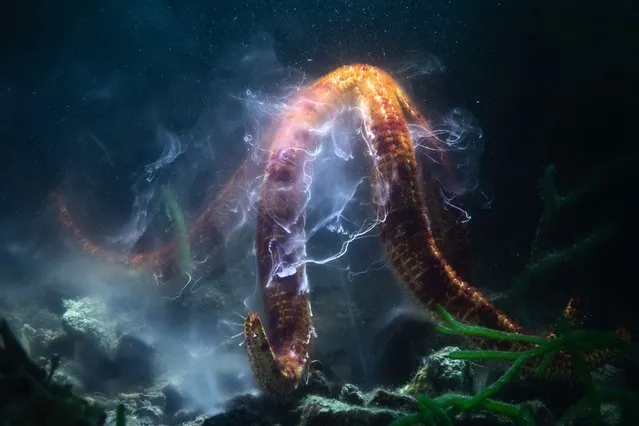
Shooting star by Tony Wu, US/Japan. Winner, underwater. The electrifying reproductive dance of a giant sea star. As the surrounding water filled with sperm and eggs from spawning sea stars, Wu faced several challenges. Stuck in a small, enclosed bay with only a macro lens for photographing small subjects, he backed up to squeeze the undulating sea star into his field of view. The dancing posture of spawning sea stars rising and swaying may help release eggs and sperm, or may help sweep the eggs and sperm into the currents where they fertilise together in the water. Kinko Bay, Japan. (Photo by Tony Wu/Wildlife Photographer of the Year)

Shooting star by Tony Wu, US/Japan. Winner, underwater. The electrifying reproductive dance of a giant sea star. As the surrounding water filled with sperm and eggs from spawning sea stars, Wu faced several challenges. Stuck in a small, enclosed bay with only a macro lens for photographing small subjects, he backed up to squeeze the undulating sea star into his field of view. The dancing posture of spawning sea stars rising and swaying may help release eggs and sperm, or may help sweep the eggs and sperm into the currents where they fertilise together in the water. Kinko Bay, Japan. (Photo by Tony Wu/Wildlife Photographer of the Year)
Details
15 Oct 2022 03:50:00