Loading...
Done
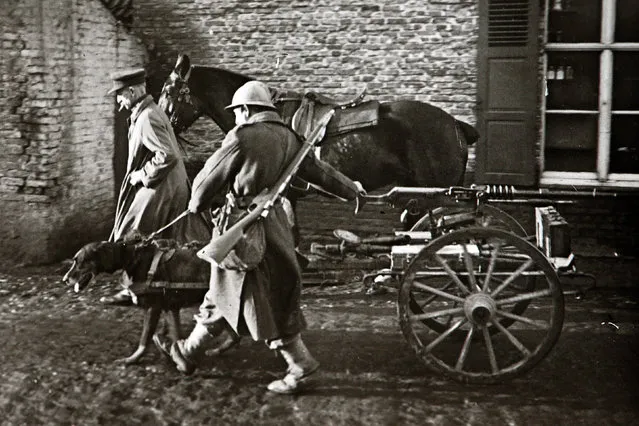
An undated archive picture shows a dog pulling a Belgian machine gun at an unknown location in northern France. (Photo by Collection Odette Carrez/Reuters)

An undated archive picture shows a dog pulling a Belgian machine gun at an unknown location in northern France. A Viscount in the Armoured Cavalry Branch of the French Army left behind a collection of hundreds of glass plates taken during World War One (WWI) that have never before been published. The images, by an unknown photographer, show the daily life of soldiers in the trenches, destruction of towns and military leaders. The year 2014 marks the 100th anniversary of the start of WWI. (Photo by Collection Odette Carrez/Reuters)
Details
23 May 2014 09:11:00
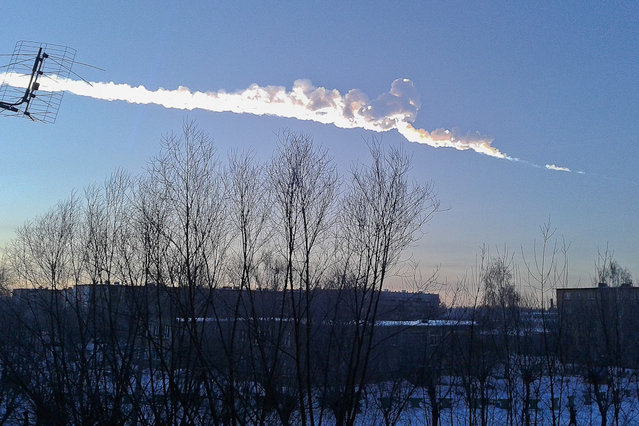
Meteor falls in Russia's Chelyabinsk region on February 15 , 2013. (Photo by Alexey Bulaew/RIA Nowosti)

“A meteor streaked across the sky above Russia's Ural Mountains on Friday morning, causing sharp explosions and injuring more than 500 people (20 had been hospitalized in serious condition), many of them hurt by broken glass. “There was panic. People had no idea what was happening. Everyone was going around to people's houses to check if they were OK”, said Sergey Hametov, a resident of Chelyabinsk, about 1500 kilometres (930 miles) east of Moscow, the biggest city in the affected region”. (Photo by Alexey Bulaew/RIA Nowosti)
Details
15 Feb 2013 12:04:00
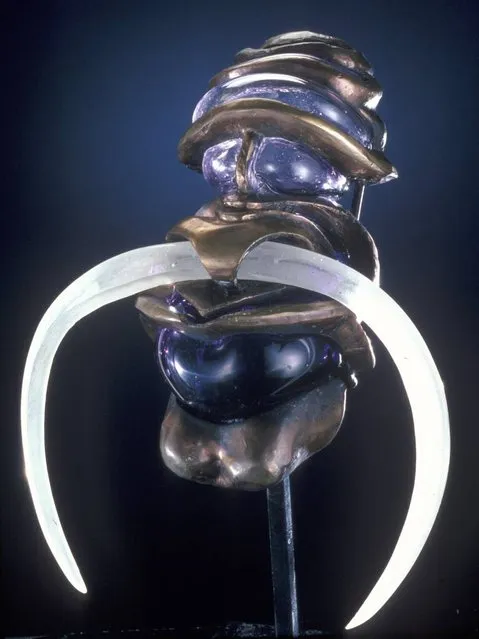
Sculpture By Miles Van Rensselaer

Miles Van Rensselaer using everything from glass and crystal to bronze and iron, from gold and silver to tooth and bone, from steel, copper and lead to wood, clay, feather and hair. He has been fortunate enough to work – and humbled by working – with and among talented artists from all over the world. His work is his homage to these people and their vanishing ways of life, his translation of their technique, imagery, idea of “primitive” art into modern Western materials.
Details
14 Sep 2015 07:55:00
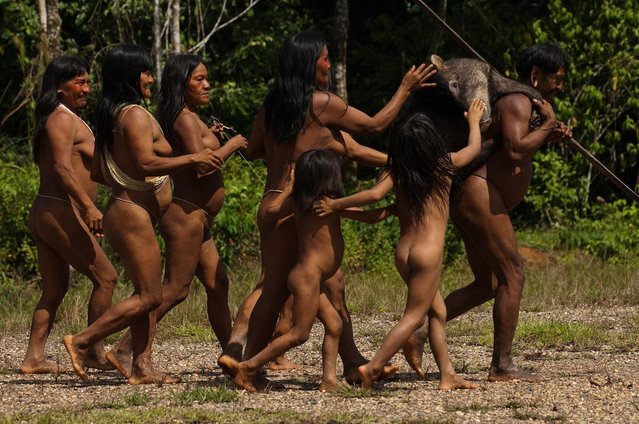
Spectacular images offering insight into the lives of the Huaorani people in the Ecuadorian Amazon have been revealed showing how they use traditional methods to hunt monkeys for food. The stunning pictures were taken by conservation photographer Pete Oxford from Torquay, Devon in the Ecuadorian Amazon. “The Huaorani Indians are a forest people highly in tune with their environment. Many are now totally acculturated since the 1950s by missionaries”, said Pete. “Today they face radical change to their culture to the proximity of oil exploration within their territory and the Yasuni National Park and Biosphere Reserve, they are vastly changed. Some still live very traditionally and for this shoot, through my Huaorani friend, a direct relative of those photographed he wanted to depict them as close to their original culture as possible. They still largely hunt with blow pipes and spears eating a lot of monkeys and peccaries”. The Huaorani are also known as the Waorani, Waodani or the Waos and are native Amerindians. Their lands are located between the Curaray and Napo rivers and speak the Huaorani language. Pete says that during his visit he was welcomed into the group and hopes that ancient cultures can be saved. Here: The tribe were seen celebrating after a hunter returned to camp with a wild pig. (Photo by Pete Oxford/Mediadrumworld.com)

Spectacular images offering insight into the lives of the Huaorani people in the Ecuadorian Amazon have been revealed showing how they use traditional methods to hunt monkeys for food. The stunning pictures were taken by conservation photographer Pete Oxford from Torquay, Devon in the Ecuadorian Amazon. Here: The tribe were seen celebrating after a hunter returned to camp with a wild pig. (Photo by Pete Oxford/Mediadrumworld.com)
Details
20 Jan 2017 07:58:00
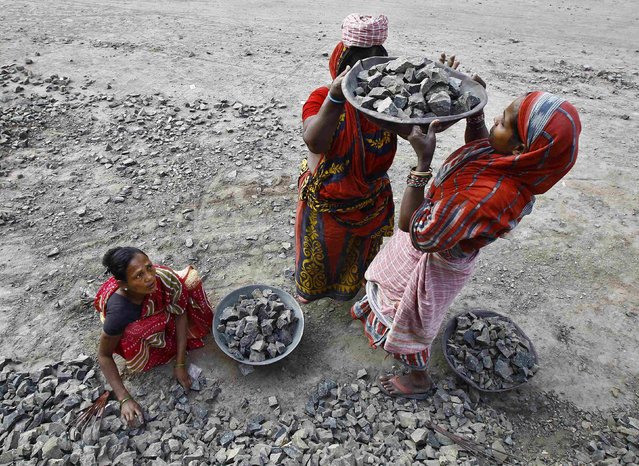
Women labourers work at the construction site of a road in Kolkata January 8, 2015. Across towns and cities in India, it is not uncommon to see women cleaning building sites, carrying bricks and or shoveling gravel - helping construct the infrastructure necessary for the country's economic and social development. (Photo by Rupak De Chowdhuri/Reuters)

Women labourers work at the construction site of a road in Kolkata January 8, 2015. Across towns and cities in India, it is not uncommon to see women cleaning building sites, carrying bricks and or shoveling gravel – helping construct the infrastructure necessary for the country's economic and social development. They help build roads, railway tracks, airports, and offices. They lay pipes for clean water supplies, cables for telecommunications, and dig the drains for sewage systems. But although women make up at least 20 percent of India's 40 million construction workers, they are less recognized than male workers with lower pay and often prone to safety hazards and sexual harassment. They are often unaware of their rights or scared to complain, say activists now trying to campaign for better treatment of women in the construction industry. (Photo by Rupak De Chowdhuri/Reuters)
Details
15 Jan 2015 13:47:00
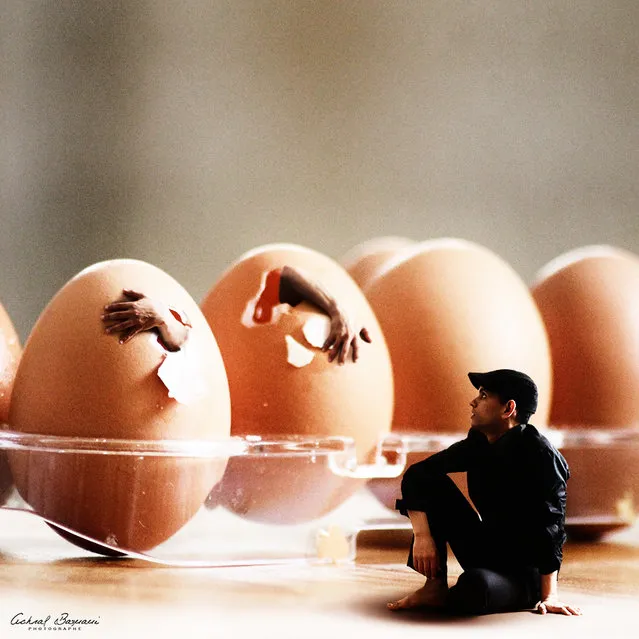
Inside My Dreams By Achraf Baznani

Moroccan photographer and filmmaker Achraf Baznani carries on the traditions of Surrealism with his wild, imaginative, and wholly impractical imagery. Among his inventive scenarios, small human figures—often the artist himself—appear trapped within glass jars or the size of a camera lens; in other works, Baznani more or less dissects his body, as for example, in one, he cleanly removes his brain from his cranium, or in another, twists off his hand, much as if it were a light bulb. Imparted throughout such works are strong senses of humor and wonder, and as such, Baznani’s art offers a Surrealistic take on life experience in the digital age.
Details
03 Aug 2014 12:04:00
Watchdog Group Mocks Google On Capitol Hill

J. Schwartz (C) and Marianne Wittelsberger (2nd R) of Consumer Watchdog dress as members of the “Google Track Team” in a hallway of the Dirksen Senate Office Building prior to a hearing on Google September 21, 2011 on Capitol Hill in Washington, DC. Members of Consumer Watchdog attended the antitrust hearing dressed as the “Google Track Team” in white tracksuits emblazoned with Google's motto, “Don't be evil”, wearing “Wi-Spy” glasses and pretending to track unsuspecting people during the event. (Photo by Alex Wong/Getty Images)
Details
23 Sep 2011 10:26:00
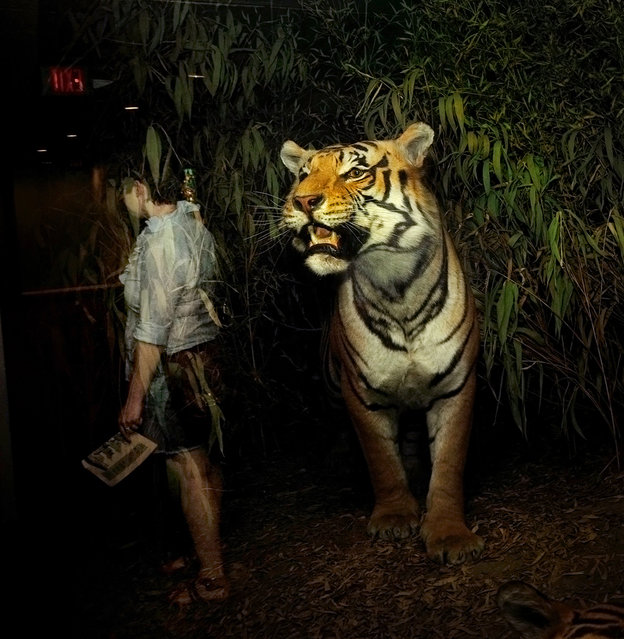
“Natural History”: Tiger. (Photo by Traer Scott)

“Natural History” is a series of completely candid single exposure images that merge the living and the dead to create allegorical narratives of our troubled co-existence with nature. Ghost-like reflections of modern visitors viewing wildlife dioramas are juxtaposed against the antique taxidermied subjects housed behind thick glass, their faces molded into permanent expressions of fear, aggression or fleeting passivity. After decades of over-hunting, climate change, poaching and destruction of habitat, many of these long dead diorama specimens now represent endangered or completely extinct species”. – Traer Scott. (Photo by Traer Scott)
Details
27 Oct 2014 11:39:00