Loading...
Done
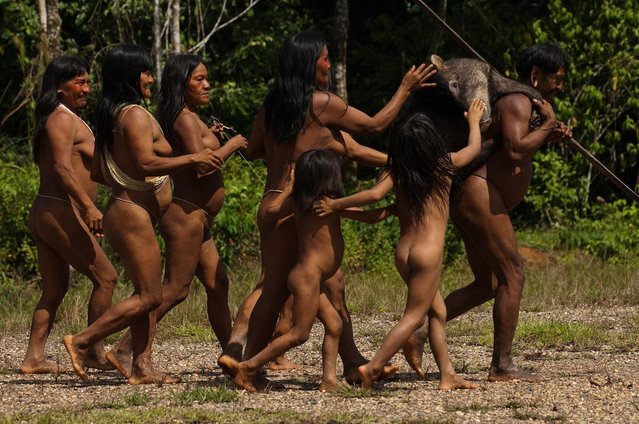
Spectacular images offering insight into the lives of the Huaorani people in the Ecuadorian Amazon have been revealed showing how they use traditional methods to hunt monkeys for food. The stunning pictures were taken by conservation photographer Pete Oxford from Torquay, Devon in the Ecuadorian Amazon. “The Huaorani Indians are a forest people highly in tune with their environment. Many are now totally acculturated since the 1950s by missionaries”, said Pete. “Today they face radical change to their culture to the proximity of oil exploration within their territory and the Yasuni National Park and Biosphere Reserve, they are vastly changed. Some still live very traditionally and for this shoot, through my Huaorani friend, a direct relative of those photographed he wanted to depict them as close to their original culture as possible. They still largely hunt with blow pipes and spears eating a lot of monkeys and peccaries”. The Huaorani are also known as the Waorani, Waodani or the Waos and are native Amerindians. Their lands are located between the Curaray and Napo rivers and speak the Huaorani language. Pete says that during his visit he was welcomed into the group and hopes that ancient cultures can be saved. Here: The tribe were seen celebrating after a hunter returned to camp with a wild pig. (Photo by Pete Oxford/Mediadrumworld.com)

Spectacular images offering insight into the lives of the Huaorani people in the Ecuadorian Amazon have been revealed showing how they use traditional methods to hunt monkeys for food. The stunning pictures were taken by conservation photographer Pete Oxford from Torquay, Devon in the Ecuadorian Amazon. Here: The tribe were seen celebrating after a hunter returned to camp with a wild pig. (Photo by Pete Oxford/Mediadrumworld.com)
Details
20 Jan 2017 07:58:00
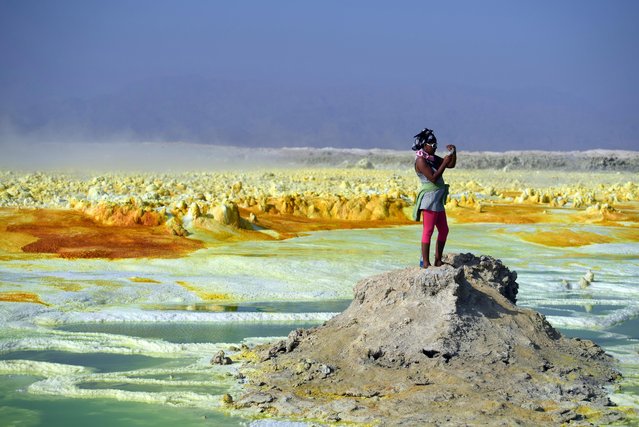
A tourist take a photograph of a sulphur lake in the Danakil Depression on January 23, 2017 near Dallol, Ethiopia. (Photo by Carl Court/Getty Images)

A tourist take a photograph of a sulphur lake in the Danakil Depression on January 23, 2017 near Dallol, Ethiopia. The depression lies 100 metres below sea level and is one of the hottest and most inhospitable places on Earth. Despite the gruelling conditions, Ethiopians continue a centuries old industry of mining salt from the ground by hand in temperatures that average 34.5 degrees centigrade but have risen to over 50 degrees. (Photo by Carl Court/Getty Images)
Details
25 Jan 2017 11:36:00
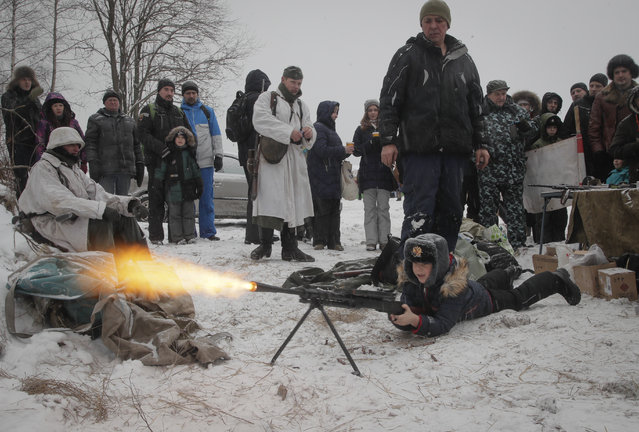
A boy shoots a World War II machine gun armed with blanks at an weapon exhibition during a military show near Kirovsk, about 30 kilometers (19 miles) east of St. Petersburg, Russia, Sunday, January 21, 2018. (Photo by Dmitri Lovetsky/AP Photo)

A boy shoots a World War II machine gun armed with blanks at an weapon exhibition during a military show near Kirovsk, about 30 kilometers (19 miles) east of St. Petersburg, Russia, Sunday, January 21, 2018. (Photo by Dmitri Lovetsky/AP Photo)
Details
22 Jan 2018 09:19:00
Abdulahi Yaroow, 13, smokes a cigarette while chewing khat at the same time in Mogadishu August 10, 2014. (Photo by Thomas Mukoya/Reuters)

Abdulahi Yaroow, 13, smokes a cigarette while chewing khat at the same time in Mogadishu August 10, 2014. Grown on plantations in the highlands of Kenya and Ethiopia, tonnes of khat, or qat, dubbed “the flower of paradise” by its users, are flown daily into Mogadishu airport, to be distributed from there in convoys of lorries to markets across Somalia. Britain, whose large ethnic Somali community sustained a lucrative demand for the leaves, banned khat from July as an illegal drug. This prohibition jolted the khat market, creating a supply glut in Somalia and pushing down prices, to the delight of the many connoisseurs of its amphetamine-like high. (Photo by Thomas Mukoya/Reuters)
Details
28 Aug 2014 10:35:00
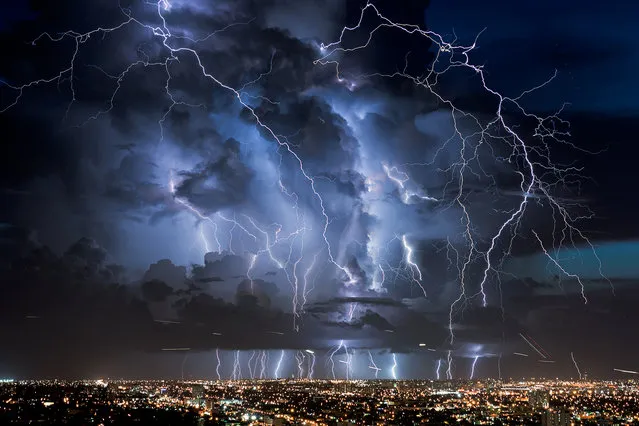
“Everglades lightning”. Miami, 2013. (Photo by lostINmia)

“Everglades lightning”. Miami, 2013. (Photo by lostINmia)
Details
29 Oct 2013 11:08:00
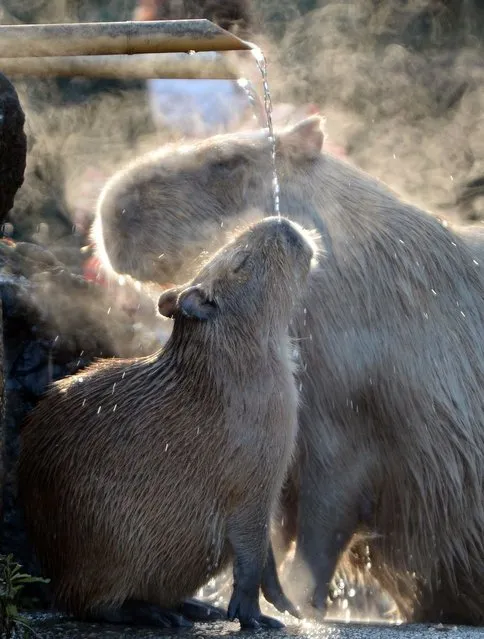
Capybaras bathe in the hot spring water at the Saitama Children's zoo in Higashi Matsuyama city, Saitama prefecture on December 25, 2013. 13 capybaras in the zoo, originally from South America, enjoyed the hot spring water. (Photo by Toshifumi Kitamura/AFP Photo)

Capybaras bathe in the hot spring water at the Saitama Children's zoo in Higashi Matsuyama city, Saitama prefecture on December 25, 2013. 13 capybaras in the zoo, originally from South America, enjoyed the hot spring water. (Photo by Toshifumi Kitamura/AFP Photo)
Details
28 Dec 2013 12:46:00
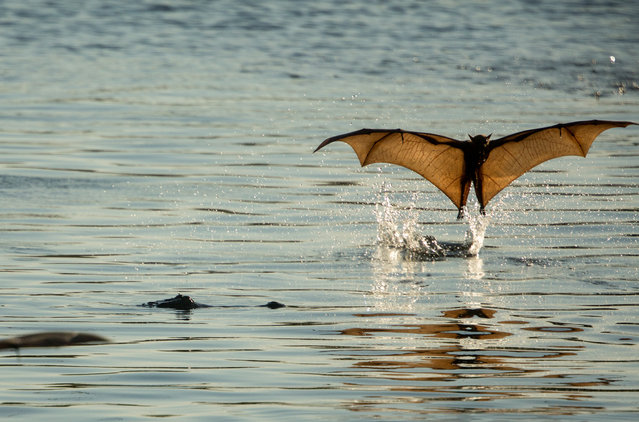
A little red flying fox dips a toe in a lake at the mouth of Katherine gorge in the Northern Territory, Nitmiluk national park, Australia on September 20, 2017. (Photo by Glenn Campbell/AAP)

A little red flying fox dips a toe in a lake at the mouth of Katherine gorge in the Northern Territory, Nitmiluk national park, Australia on September 20, 2017. (Photo by Glenn Campbell/AAP)
Details
24 Sep 2017 06:28:00
A girl dressed up as a emissary of the Three Wise Men poses for a photo as she waits for their arrival in a helicopter to take part in the traditional Epiphany parade in Ronda, Spain, January 5, 2018. (Photo by Jon Nazca/Reuters)

A girl dressed up as a emissary of the Three Wise Men poses for a photo as she waits for their arrival in a helicopter to take part in the traditional Epiphany parade in Ronda, Spain, January 5, 2018. (Photo by Jon Nazca/Reuters)
Details
08 Jan 2018 08:39:00