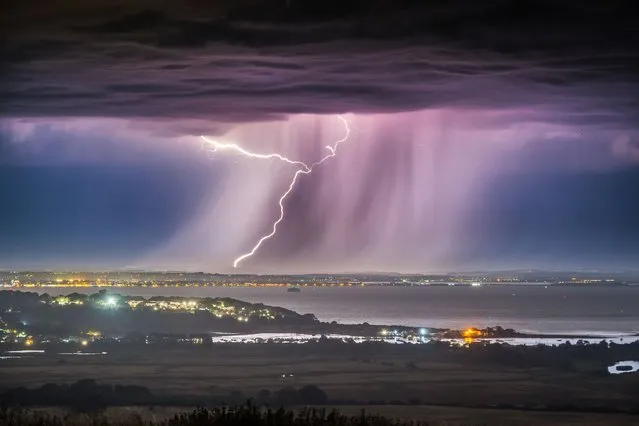
Dramatic thunder and lightning striking Portsmouth in Hampshire, South East England last night, July 9, 2023, captured from the Isle of Wight. (Photo by Jamie Russell/Bournemouth News)
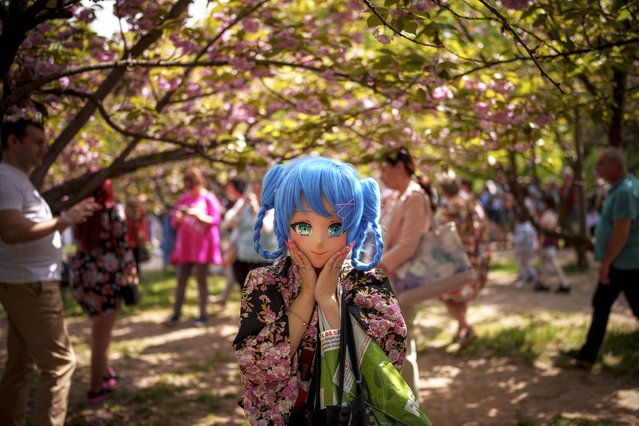
A woman wearing a sweet girl cosplay mask strikes a pose during a flower watching or Hanami event, in the Japanese Garden of Bucharest, Romania, April 13, 2024. (Photo by Andreea Alexandru/AP Photo)
The story of 20 children born or living with illness or health conditions is being told by Toronto photographer and artist Shawn Van Daele, by transforming their drawings into magical photographs.
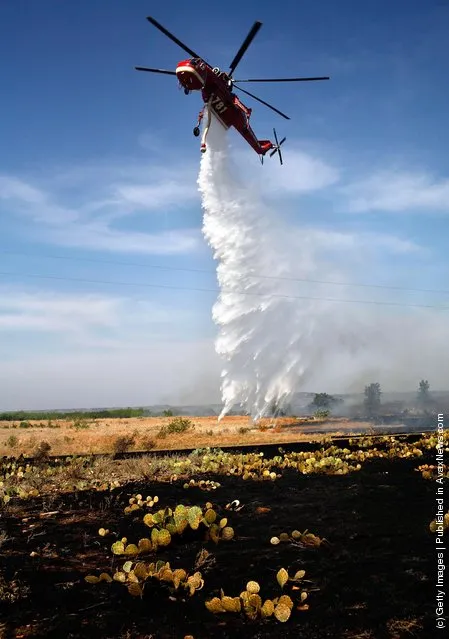
Emergency crews battle a running wildfire on April 19, 2011 in Strawn, Texas. Dozens of area homes have been destroyed in the wildfires that have been fueled by dry conditions, high winds, and low humidity. (Photo by Tom Pennington/Getty Images)
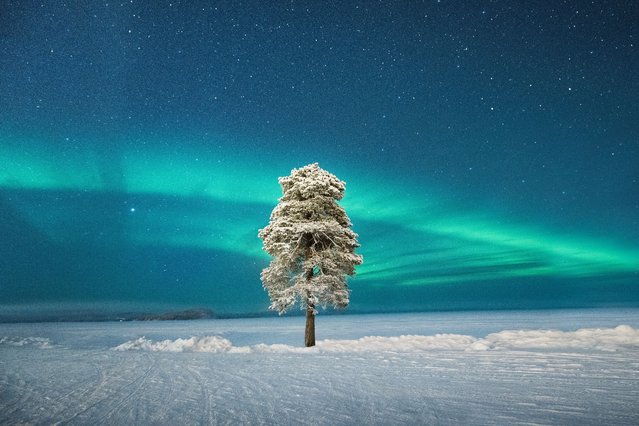
Aurorae category runner-up: Lone Tree under a Scandinavian Aurora by Tom Archer (UK). The photographer decided to explore the area around the hotel on a very crisp -35C evening in Finnish Lapland. When he found this tree, he decided to wait for the misty conditions to change and could not believe his luck when the sky cleared and the aurora came out in the perfect spot. Archer spent about an hour photographing it before his camera started to lock up because of the harsh conditions, but by then he was happy to call it a night. (Photo by Tom Archer/2020 Astronomy Photographer of the Year)
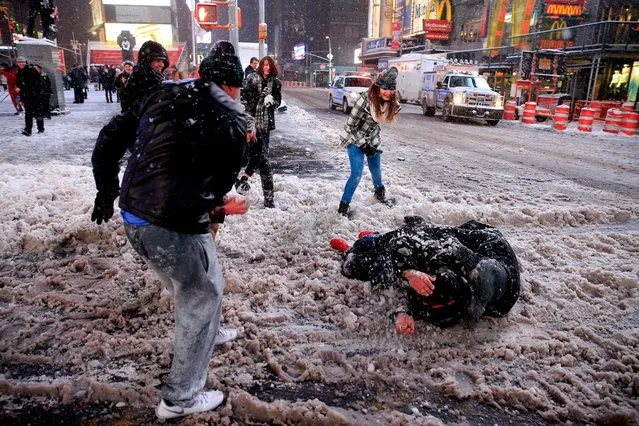
Pedestrians have a snowball fight in Times Square following a mandatory shutdown of the streets at 11 p.m. on January 26, 2015 in New York City. New York, and much of the Northeast, is bracing for a major winter storm which is expected to bring blizzard conditions and 10 to 30 inches of snow to the area. (Photo by Alex Trautwig/AFP Photo)
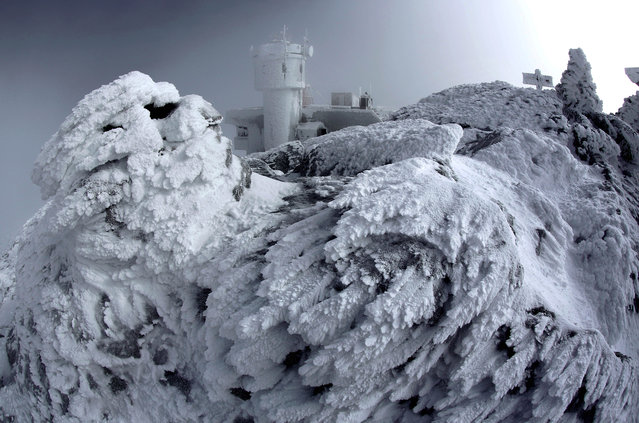
In this Tuesday, March 10, 2015 photo, rime ice covers rocks on the summit of Mount Washington in New Hampshire. Rime ice occurs when freezing fog hits stationary objects in frigid conditions. (Photo by Robert F. Bukaty/AP Photo)
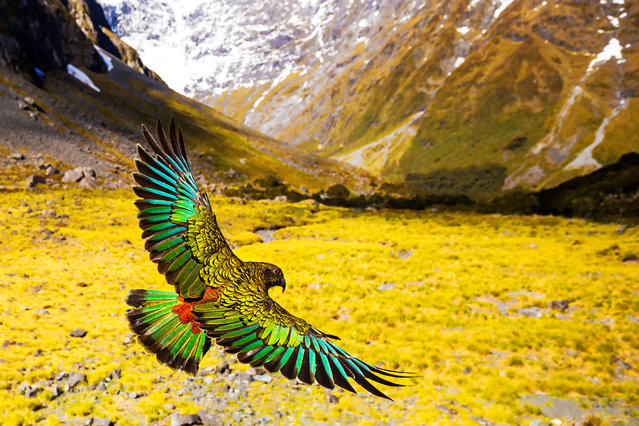
Kea are the only true alpine parrots in the world and thrive as cunning opportunists in the freezing conditions of the Southern Alps. Kea are thought to have developed their wide array of food-finding strategies during the last great ice age, where they learned to adapt using their unusual powers of curiosity. (Photo by Tom Walker/BBC Pictures/The Guardian)