Loading...
Done
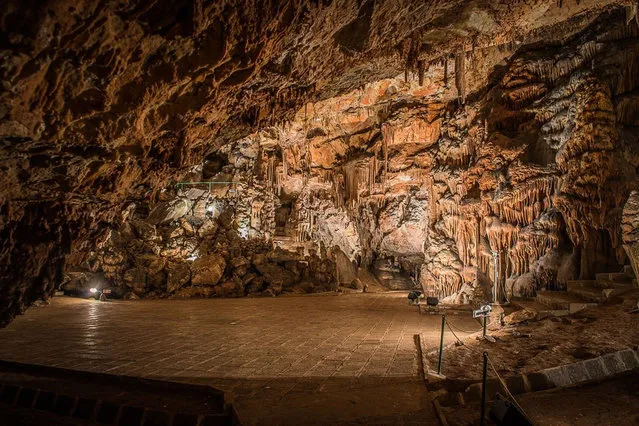
Saeva Dupka Cave

Saeva dupka (Bulgarian: Съева дупка) is a cave in Northern Bulgaria near the village of Brestnitsa, Lovech Province (43°2′N 24°11′E). Its five halls and 400 metres of corridors offer some of the most beautiful cave formations in the country. Besides that the cave has hosted many Choral music performances, thanks to the excellent acoustic conditions. Saeva dupka was named after two brothers Seyu and Sae who used it as a hiding place during the Ottoman occupation of Bulgaria. Recent excavations have showed the cave was inhabited since Roman times. Currently Saeva dupka is one of the 100 Tourist Sites of Bulgaria.
Details
20 Feb 2013 11:30:00
Black Rock Desert

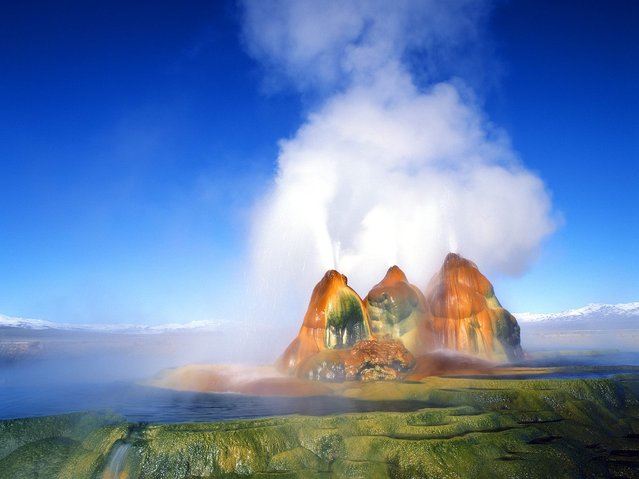
The Black Rock Desert is an arid region of lava beds and playa, or alkali flats, situated in the Black Rock Desert-High Rock Canyon Emigrant Trails National Conservation Area, a silt playa 100 miles north of Reno that encompasses more than 300,000 acres of land and contains more than 120 miles of historic trails. It is in the northern Nevada section of the Great Basin with a lakebed that is a dry remnant of Pleistocene Lake Lahontan.
Details
22 Mar 2013 11:01:00
Indonesia Lakes of Mount Kelimutu

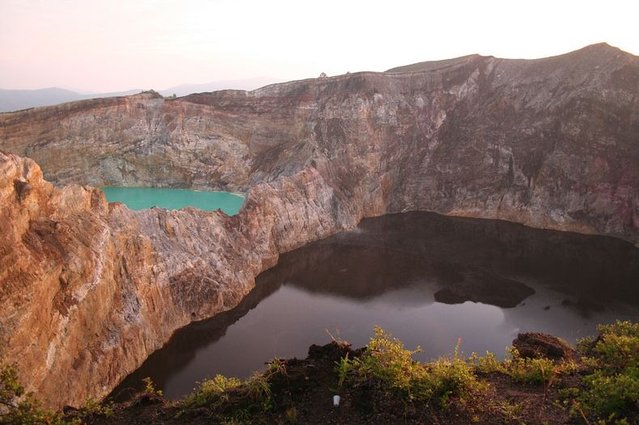
Kelimutu is a volcano, close to the small town of Moni about 50 km to the east of Ende, Indonesia in central Flores Island of Indonesia.
Details
27 Jun 2013 11:31:00
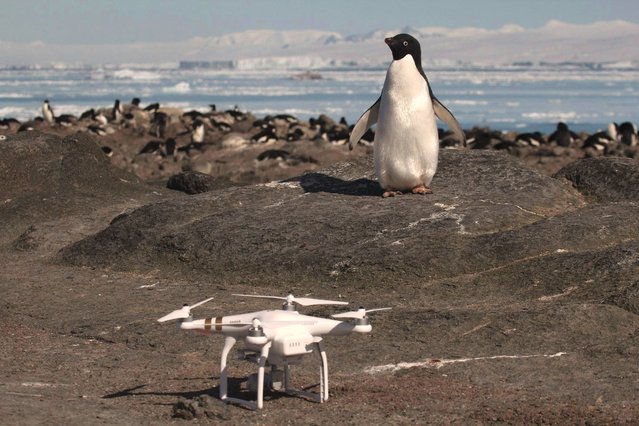
This undated handout photograph released by Stony Brook University/ Louisiana State University on March 2, 2018, shows an Adélie penguin (R) looking at a drone at breeding colony on Heroina Island, Danger Islands, Antarctica. A thriving “hotspot” of some 1.5 million Adelie penguins has been discovered on the remote Danger Islands in the east Antarctic, surprised scientists announced on March 2, 2018. (Photo by Rachael Herman/AFP Photo/Louisiana State University AND Stony Brook University)

This undated handout photograph released by Stony Brook University/ Louisiana State University on March 2, 2018, shows an Adélie penguin looking at a drone at breeding colony on Heroina Island, Danger Islands, Antarctica. A thriving “hotspot” of some 1.5 million Adelie penguins has been discovered on the remote Danger Islands in the east Antarctic, surprised scientists announced on March 2, 2018. (Photo by Rachael Herman/AFP Photo/Louisiana State University AND Stony Brook University)
Details
04 Mar 2018 00:03:00
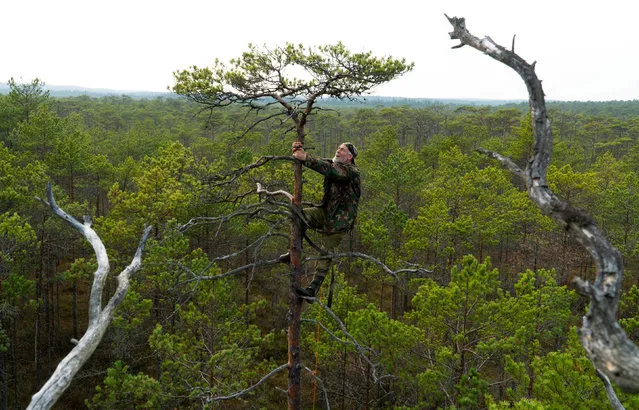
Belarusian ornithologist Vladimir Ivanovski, 72, stands on a tree as he builds an artificial nest for birds of prey from tree branches, in a marsh near the village of Kazyany, Belarus on October 20, 2019. (Photo by Vasily Fedosenko/Reuters)

Belarusian ornithologist Vladimir Ivanovski, 72, stands on a tree as he builds an artificial nest for birds of prey from tree branches, in a marsh near the village of Kazyany, Belarus on October 20, 2019. (Photo by Vasily Fedosenko/Reuters)
Details
10 Dec 2019 00:03:00
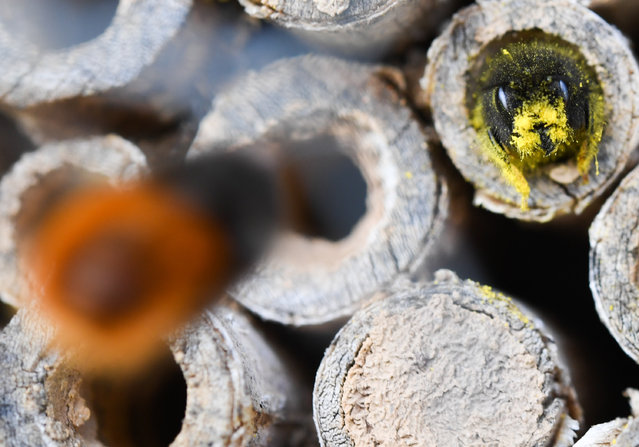
A mason bee deposits its collected pollen in an elderberry stick near Hessen, Germany on March 27, 2020. The food supply is sufficient for the eleven-month development of the brood from the egg to the finished bee. Wild bees are active in March and April and die before their offspring hatch. (Photo by Arne Dedert/dpa)

A mason bee deposits its collected pollen in an elderberry stick near Hessen, Germany on March 27, 2020. The food supply is sufficient for the eleven-month development of the brood from the egg to the finished bee. Wild bees are active in March and April and die before their offspring hatch. (Photo by Arne Dedert/dpa)
Details
22 Jul 2020 00:03:00
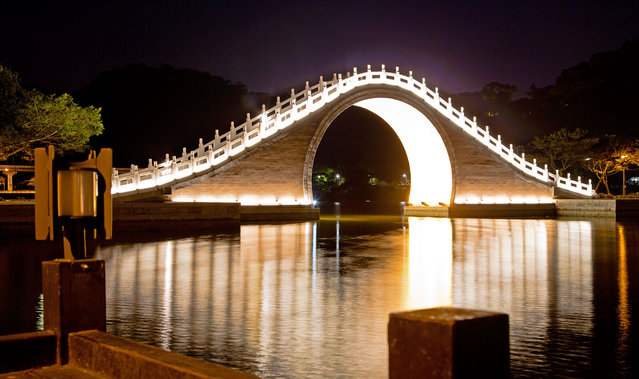
Jade Belt Bridge In Chine

The Jade Belt Bridge, also known as the Camel's Back Bridge, is an 18th-century pedestrian Moon bridge located on the grounds of the Summer Palace in Beijing, China. It is famous for its distinctive tall thin single arch.
Details
05 Sep 2014 09:46:00
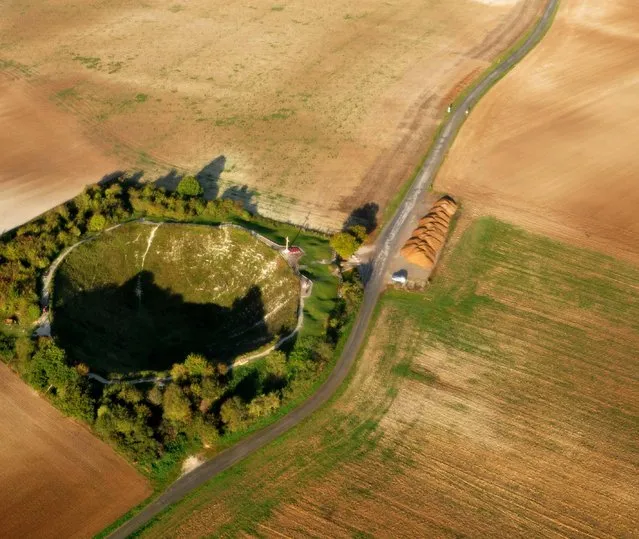
Lochnagar Crater Somme In France

It is amazing how much the humanity can change the face of the earth. Not only can it create huge craters, which look a lot like craters from meteors, they leave a big enough impact that it can be seen from space. Though this crater, caused by a massive explosion on 1 July 1916, looks large, being 90 feet deep and 300 feet across; it is nowhere big enough to be viewed for space. A common misconception is that the Great Wall of China can be seen from space. In reality, however, it is impossible. Not only is it of the same color as the earth near it, it is also not that wide. Deforestation, on the other hand, can be clearly seen from space. Also, at night, all the lights that the large cities produce are also very visible.
Details
17 Nov 2014 12:48:00