Loading...
Done


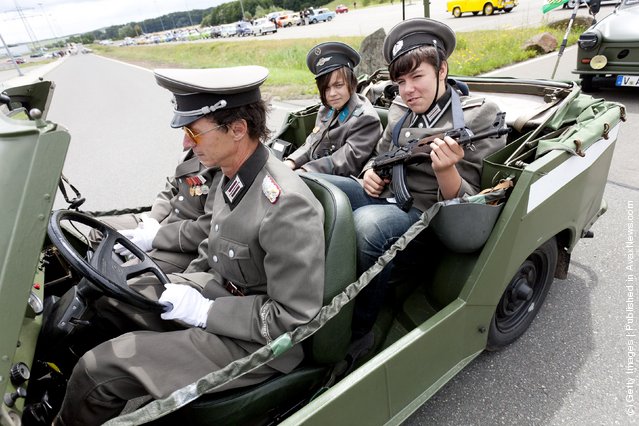
“The Trabant is a car that was produced by former East German auto maker VEB Sachsenring Automobilwerke Zwickau in Zwickau, Sachsen. It was the most common vehicle in East Germany, and was also exported to countries both inside and outside the communist bloc. The main selling points was that it had room for four adults and luggage in a compact, light and durable shell and that it was fast (when introduced) and durable. With its mediocre performance, smoky two-stroke engine, and production shortages, the Trabant is often cited as an example of the disadvantages of centralized planning; on the other hand, it is regarded with derisive affection as a symbol of the failed former East Germany and of the fall of communism (in former West Germany, as many East Germans streamed into West Berlin and West Germany in their Trabants after the opening of the Berlin Wall in 1989). It was in production without any significant changes for nearly 30 years with 3,096,099 Trabants produced in total”. – Wikipedia

Photo: Enthusiasts weared in uniforms of the former eastern german army trive in a military Trabant car as fans and owners of East German-era Trabant cars gather at the 2011 International Trabantfahrer Treffen (International Trabant Drivers Meeting) on June 26, 2011 in Zwickau, Germany. The Trabant, also known as the Trabi, was among the main cars produced in communist East Germany and built by VEB Sachsenring Automobilwerke in Zwickau for 30 years until 1989. Today the car has cult status for many followers and one company, IndiKar, is even seeking to revive the brand in a modern, electric version. (Photo by Carsten Koall/Getty Images)
Details
27 Jun 2011 12:21:00
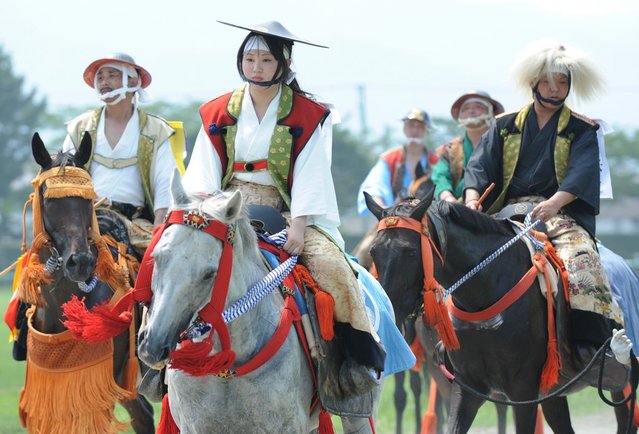
A young woman (C) clad in samurai costume leads other local poeple as she rides her horse during a parade at the annual Soma Nomaoi festival in Minamisoma, Fukushima Prefecture, on July 28, 2012.  The traditional full-scale festival kicked off for the first time after the accident of the Fukushima Dai-ichi Nuclear Power Plant following the massive earthquake and the tsunami on March 11, 2011. (Photo by Toru Yamanaka/AFP Photo)

Soma-Nomaoi is a festival that recreates a battle scene from more than 1,000 years ago. It is annually held for 4 days from July 22 to 25 in Haramachi City, Fukushima Prefecture, in the eastern part of Japan. In this historical event, 600 mounted samurai in traditional Japanese armor, with long swords at their side and ancestral flagstaffs streaming from their backs, ride across open fields. Soma-Nomaoi has been designated an Important Intangible Folk Cultural Property.

Photo: A young woman (C) clad in samurai costume leads other local poeple as she rides her horse during a parade at the annual Soma Nomaoi festival in Minamisoma, Fukushima Prefecture, on July 28, 2012. The traditional full-scale festival kicked off for the first time after the accident of the Fukushima Dai-ichi Nuclear Power Plant following the massive earthquake and the tsunami on March 11, 2011. (Photo by Toru Yamanaka/AFP Photo)
Details
02 Aug 2012 12:59:00
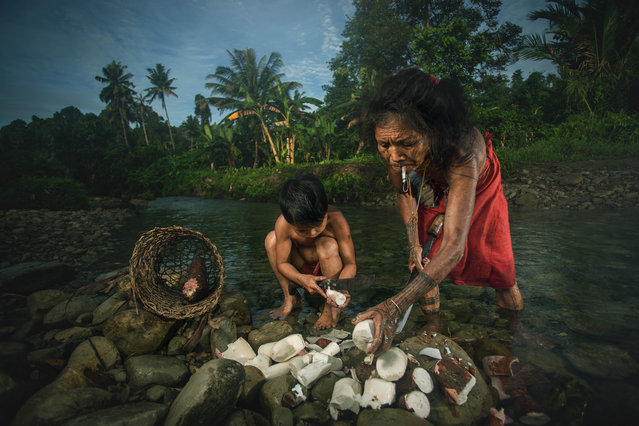
These stunning images document the everyday lives of the men, women and children of the Mentawai tribe. The Mentawai people, a native population in Indonesia, are famous for their decorative tattoos and for living a semi-nomadic life on the Mentawai Islands in West Sumatra. Shot by professional photographer Mohammed Saleh Bin Dollah, the series captures a glimpse of life on the island as the Mentawai men smoke and hunt for food and the children play in the river. (Photo by Muhamad Saleh Dollah/Barcroft Media)

These stunning images document the everyday lives of the men, women and children of the Mentawai tribe. The Mentawai people, a native population in Indonesia, are famous for their decorative tattoos and for living a semi-nomadic life on the Mentawai Islands in West Sumatra. Shot by professional photographer Mohammed Saleh Bin Dollah, the series captures a glimpse of life on the island as the Mentawai men smoke and hunt for food and the children play in the river. Here: A young boy helps a woman to prepare food taken on July 19, 2014 on the Mentawai Islands, Indonesia. (Photo by Muhamad Saleh Dollah/Barcroft Media)
Details
06 Feb 2016 13:09:00
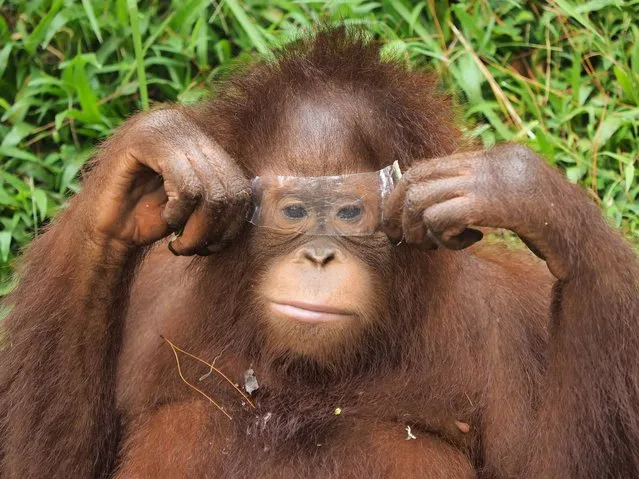
This sumatran orangutan named Kulsum was captured playing with a piece of broken bottle making a pair of makeshift sunglasses to ward off the sun in Jakarta, Indonesia in November 2022. Sumatran orangutans are critically endangered of the three orangutan species and are only found in the north of the Indonesian Island of Sumatra. An orangutan has a long lifespan and can live up to 30 years in the wild with many living up to 50. (Photo by Syahrul Ramadan/Media Drum Images)

This sumatran orangutan named Kulsum was captured playing with a piece of broken bottle making a pair of makeshift sunglasses to ward off the sun in Jakarta, Indonesia in November 2022. Sumatran orangutans are critically endangered of the three orangutan species and are only found in the north of the Indonesian Island of Sumatra. An orangutan has a long lifespan and can live up to 30 years in the wild with many living up to 50. (Photo by Syahrul Ramadan/Media Drum Images)
Details
15 Dec 2022 02:10:00
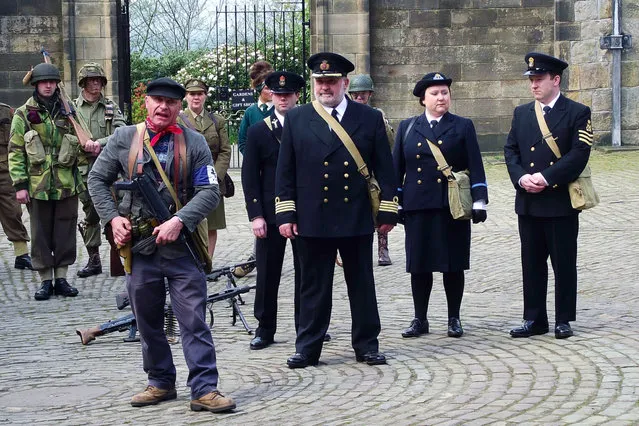
Hoghton Towers 1940

Living History comes to Hoghton Tower with the sights and sounds of the 1940's.
Details
28 May 2012 01:40:00
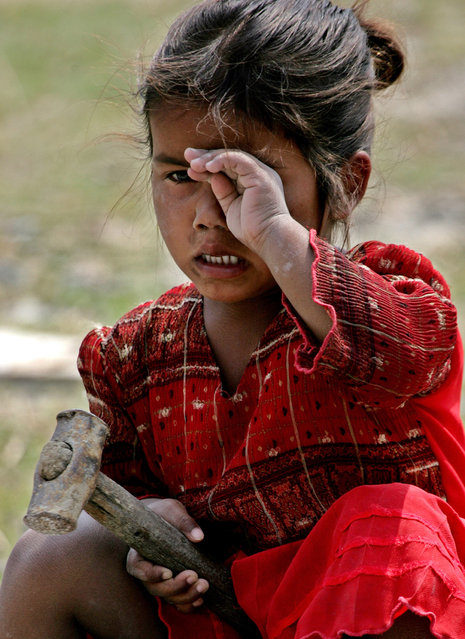
5-year-old Rina Kumari rubs her eye while cracking stones on the banks of Mahananda river in Siliguri, northeast India, March 5, 2005. Over 400 million people in India live below the internationally agreed poverty line (living on less than US $1 per day). According to estimates, several hundred thousand children work as labourers and beg on the streets in India. Photo taken on March 5, 2005. (Photo by Desmond Boylan/Reuters)

5-year-old Rina Kumari rubs her eye while cracking stones on the banks of Mahananda river in Siliguri, northeast India, March 5, 2005. Over 400 million people in India live below the internationally agreed poverty line (living on less than US $1 per day). According to estimates, several hundred thousand children work as labourers and beg on the streets in India. (Photo by Desmond Boylan/Reuters)
Details
13 Jun 2014 12:07:00
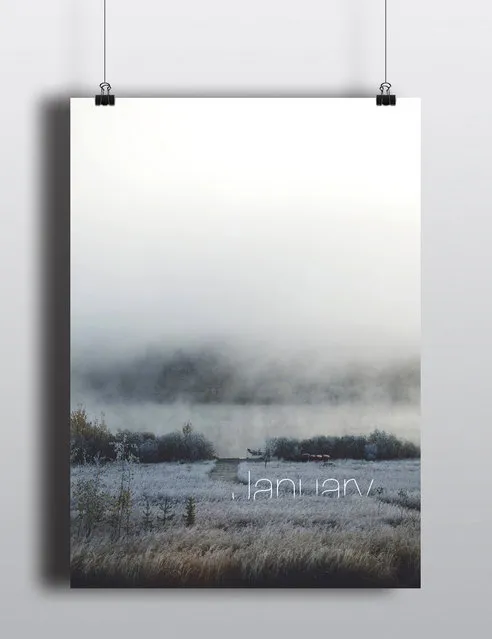
Perpetual Calendar By Arina Pozdnyak

We place too much value into something as elusive as time. This is the lesson that Arina Pozdnyak, the creator of Perpetual Calendar, is trying to teach us. Days fly by, and even months are mere speckles of sand in an hourglass of eternity. People do not realize that the time given to us by fate cannot be measured using months or even years. It is measured using emotions and impressions. If a person lives to be 150 years old without experiencing any emotions, he might as well have lived one day, for all it’s worth. On the other hand, a person who lived an exciting, fulfilling life, read countless books and cherished every moment that he had, is actually the one who lived a longer life, even if in reality his flame was snuffed out much too soon. (Photo by Arina Pozdnyak)
Details
30 Oct 2014 13:33:00
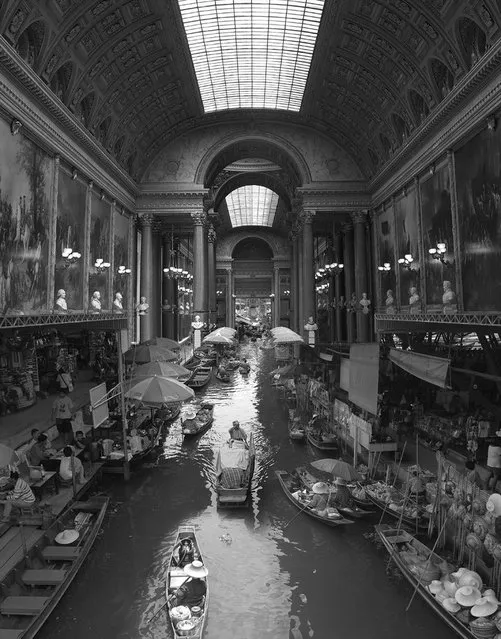
Art By Thomas Barbey

Thomas Barbèy grew up in Geneva, Switzerland, across the street from the “Caran D'ache” factory, the largest manufacturer of art supplies. He started drawing seriously at the age of 13, using black “encre de Chine” and gouaches for color. His influences were Philippe Druillet, Roger Dean and H.R. Giger. After living in Geneva for 17 years and designing posters for musical bands, he decided to move to Italy, where he lived in Milan for 15 years making a living as a successful recording artist, lyricist and fashion photographer.
Details
26 Sep 2013 10:31:00