Loading...
Done
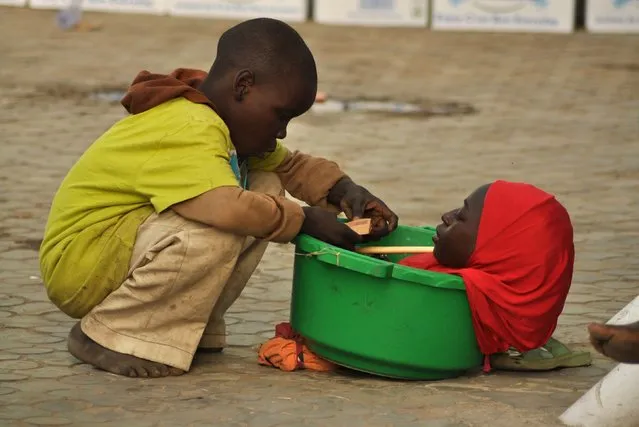
A physically challenged girl looks at her brother as she is kept in a basin to seek alms from people on the street in Kano, Nigeria December 30, 2015. (Photo by Reuters/Stringer)

A physically challenged girl looks at her brother as she is kept in a basin to seek alms from people on the street in Kano, Nigeria December 30, 2015. The girl has suffered from her condition since birth. (Photo by Reuters/Stringer)
Details
02 Jan 2016 11:18:00
Photo by Polixeni Papapetrou

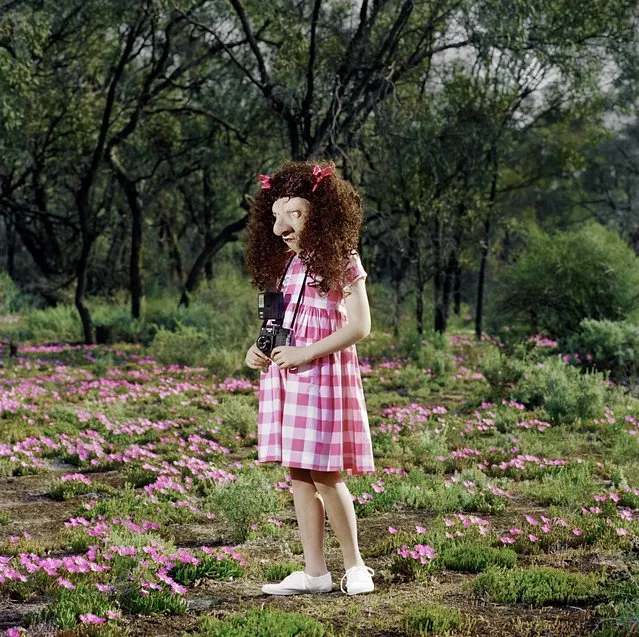
Australian artist Polixeni Papapetrou trends the line between fantasy/theatre, mythology/reality, archetype/play, male/female, child/adult and animal/human. As with all her work the series The Dreamkeepers tells a story that includes her autobiographical relationship with her children, but it also says a lot more about the condition of childhood - its place in our culture and how we react to images of children in photography.

Details
06 Aug 2012 08:09:00
Atavism

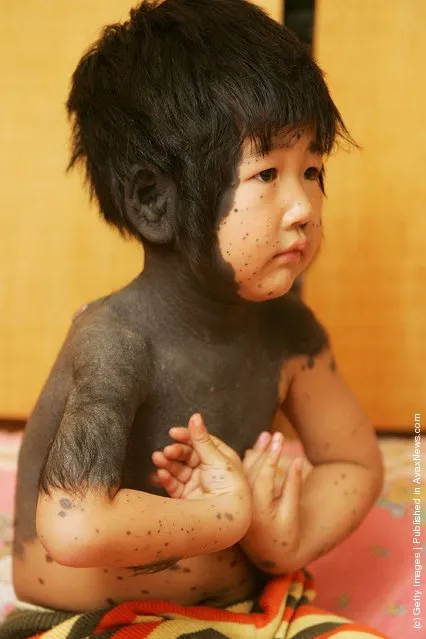
Four-year-old Chinese girl Jiaxue, who suffers from hairy black moles, sits on a bed at home November 4, 2006 in Changchun of Jilin Province, China. Jiaxue was born with black moles covering part of her back, breast, neck and face. Experts said the condition may be an atavism. (Photo by China Photos/Getty Images)
Details
12 Aug 2011 11:33:00
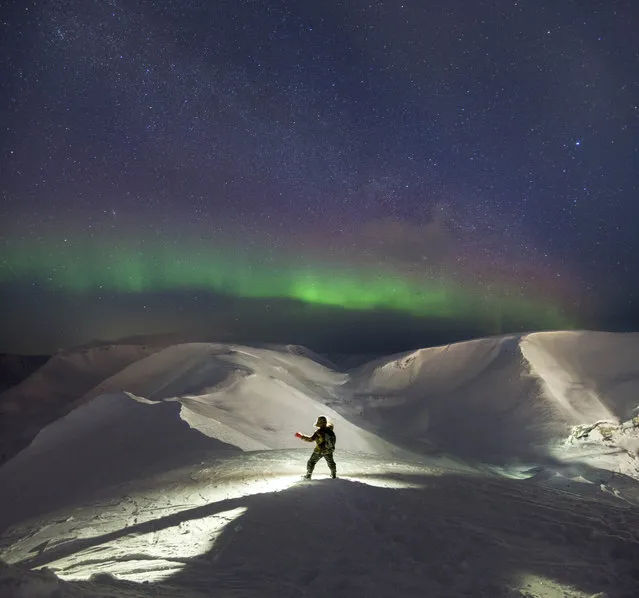
“I spend time trying to get the exposure right”, Vitaly Istomin explained. (Photo by Vitaly Istomin/Caters News Agency)

These Northern Lights “rainbows” have turned the sky greener than the Earth below. Vitaly Istomin, 26, spent several nights in freezing conditions under the stars in northern Russia’s Khibiny Mountains to capture the aurora’s “rainbows”. (Photo by Vitaly Istomin/Caters News Agency)
Details
22 Feb 2018 00:02:00
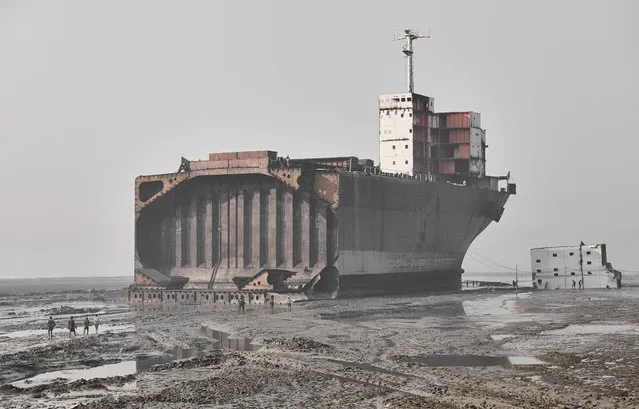
Anything not recycled in industry is sold on stalls along the neighbouring highway in Sitakunda Beach, Bangladesh, February 2012. (Photo by Jan Møller Hansen/Barcroft Images)

Anything not recycled in industry is sold on stalls along the neighbouring highway in Sitakunda Beach, Bangladesh, February 2012. A look inside Bangladesh’s ship breaking yards reveal the brutal conditions workers are subjected to everyday. (Photo by Jan Møller Hansen/Barcroft Images)
Details
27 Jan 2017 12:25:00
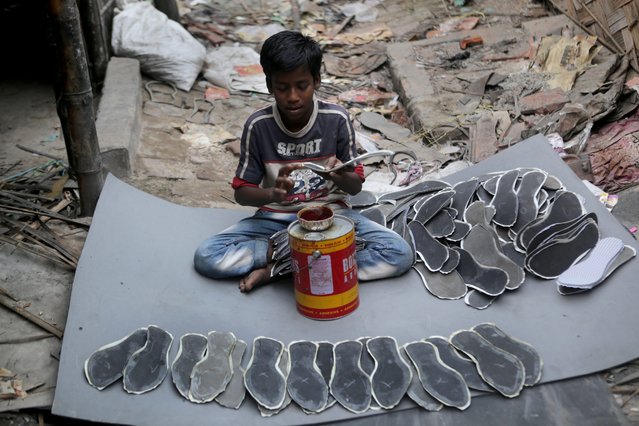
Indian boy Hassan Malik works in a leather shoe factory at Topsia in Calcutta, eastern India, 19 November 2013. (Photo by Piyal Adhikary/EPA)

Indian boy Hassan Malik works in a leather shoe factory at Topsia in Calcutta, eastern India, 19 November 2013. The leather industry occupies an important place in the Indian economy. It is an employment intensive sector with a vast potential for growth and exports but also a pollution intensive industry that relies on cheap labor. One of the major production centers for leather and leather products is located in Calcutta, West Bengal. Hundreds of tanneries are operated in the city’s Tiljala, Topsia and Tangra districts. They are mostly run by local families living and working under poor conditions. (Photo by Piyal Adhikary/EPA)
Details
20 Mar 2014 09:40:00
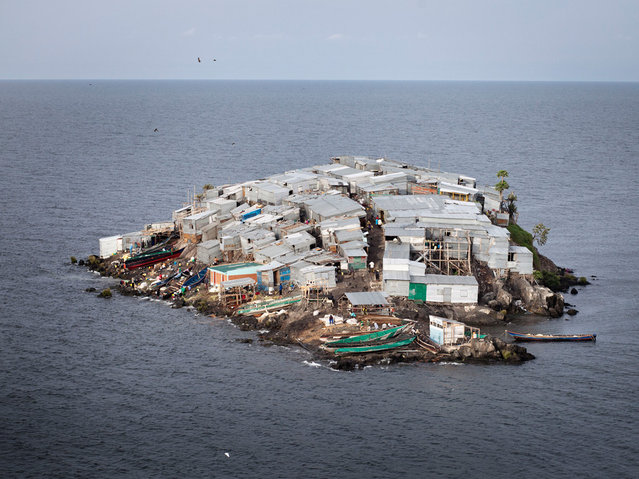
The Tiny Fishing Community On Migingo Island

Migingo is a tiny 2,000-square-metre (0.49-acre; 0.20-hectare) island, about half the size of a football pitch, in Lake Victoria. Migingo is a tiny rock island, less than half-an-acre or about half the size of a football field, located in Lake Victoria, the largest lake in Africa and the largest tropical lake in the world. Although tiny in size, the island is home to 131 people (according to 2009 census) living in crammed huts made of corrugated sheets and wood. Despite shabby living conditions, Migingo Island boasts of five bars, a beauty salon, a pharmacy as well as several hotels and numerous brothels.
Details
19 Feb 2014 16:18:00
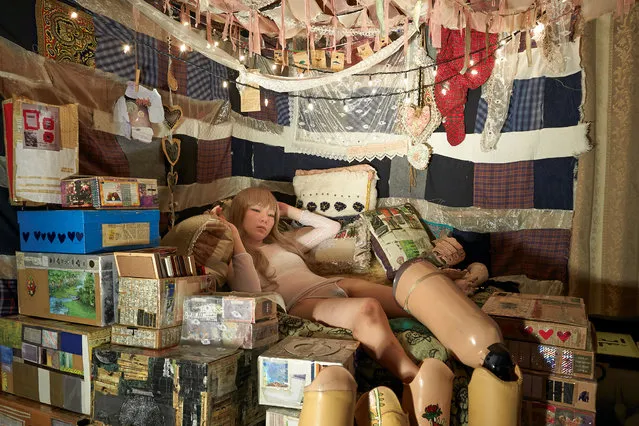
Ophelia (2013). From a series of photos of imagined women exhibited at the 2013 Aichi Triennale. Here, Katayama invokes Hamlet’s tragic heroine, after the painting by British pre-Raphaelite John Everett Millais. (Photo by Mari Katayama/The Guardian)

Born with a rare condition, the artist has chronicled her life in portraits – capturing everything from her tattooed prosthetics to the tentacled creature she stitched together on the shores of Naoshima. Here: Ophelia (2013). From a series of photos of imagined women exhibited at the 2013 Aichi Triennale. Here, Katayama invokes Hamlet’s tragic heroine, after the painting by British pre-Raphaelite John Everett Millais. (Photo by Mari Katayama/The Guardian)
Details
07 Mar 2017 00:04:00