Loading...
Done
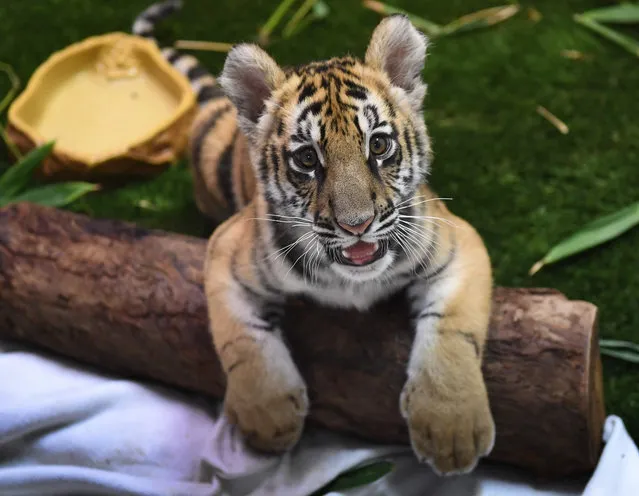
A young Bengal tiger cub smuggled into the US and seized at the Mexico border is displayed for the media during Operation Jungle Book at the US Fish and Wildlife Service in Torrance, California on October 20, 2017. Operation Jungle Book, a law enforcement initiative led by the US Fish and Wildlife Service that targeted wildlife smuggling, resulting in federal criminal charges against defendants who allegedly participated in the illegal importation and/ or transportation of numerous animal species – including a tiger, monitor lizards, cobras, Asian “lucky” fish, exotic songbirds and several coral species. (Photo by Mark Ralston/AFP Photo)

A young Bengal tiger cub smuggled into the US and seized at the Mexico border is displayed for the media during Operation Jungle Book at the US Fish and Wildlife Service in Torrance, California on October 20, 2017. Operation Jungle Book, a law enforcement initiative led by the US Fish and Wildlife Service that targeted wildlife smuggling, resulting in federal criminal charges against defendants who allegedly participated in the illegal importation and/ or transportation of numerous animal species – including a tiger, monitor lizards, cobras, Asian “lucky” fish, exotic songbirds and several coral species. (Photo by Mark Ralston/AFP Photo)
Details
29 Oct 2017 08:30:00
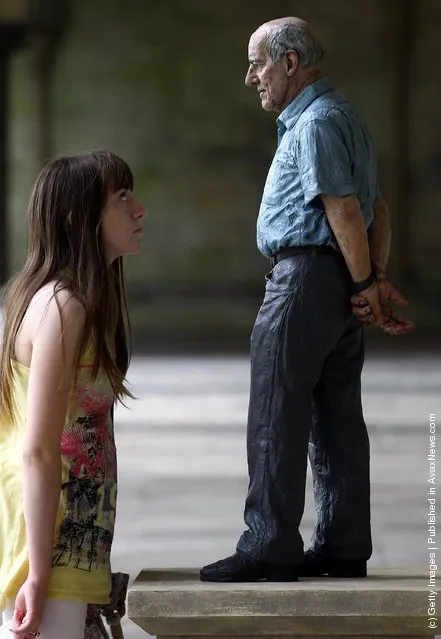
Visitors to Salisbury Cathedral stop to look at Sean Henry's sculpture Standing Man

Visitors to Salisbury Cathedral stop to look at Sean Henry's sculpture Standing Man (2007) currently being exhibited in the Cloisters on August 2, 2011 in Salisbury, United Kingdom. The exhibition, “Conflux: A Union of the Sacred and the Anonymous”, features over 20 contemporary sculptures of dramatically different scales occupying vacant plinths and open spaces on both the inside and exterior of the iconic 13th century building. This exhibition brings to the Cathedral the biggest single group of polychrome sculpture since the Reformation and runs until the end of October. (Photo by Matt Cardy/Getty Images)
Details
03 Aug 2011 11:28:00
Pope Francis looks at an acrobat of the “Black Blues Brothers” performing during his weekly general audience in St. Peter's Square at The Vatican, Wednesday, Nov. 30, 2022. (Photo by Andrew Medichini/AP Photo)

Pope Francis looks at an acrobat of the “Black Blues Brothers” performing during his weekly general audience in St. Peter's Square at The Vatican, Wednesday, Nov. 30, 2022. (Photo by Andrew Medichini/AP Photo)
Details
11 Jan 2023 05:46:00
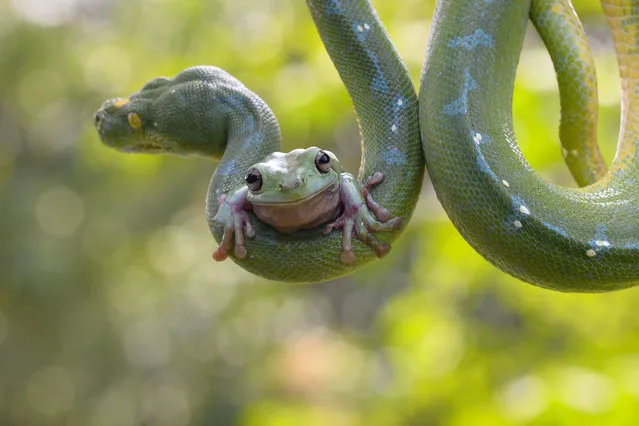
The frog and snake. Clinging on with sticky toes, a green tree frog sits bravely on its unlikely friend – a large tree python. Curled around the branches of a small coconut tree, the snake appears relatively undisturbed by the bold passenger that has clambered onto its skin. Grown in captivity together, the pair display no signs of aggression or fear, comfortable with their encounters high up in the leafy branches.  Photo enthusiast Fahmi Bhs watched in surprise as the frog slowly climbed along the scales of the metre long snake in a zoo in Jakarta, Indonesia. (Photo by Fahmi Bhs/Solent News/SIPA Press)

Clinging on with sticky toes, a green tree frog sits bravely on its unlikely friend – a large tree python. Curled around the branches of a small coconut tree, the snake appears relatively undisturbed by the bold passenger that has clambered onto its skin. Grown in captivity together, the pair display no signs of aggression or fear, comfortable with their encounters high up in the leafy branches. Photo enthusiast Fahmi Bhs watched in surprise as the frog slowly climbed along the scales of the metre long snake in a zoo in Jakarta, Indonesia. (Photo by Fahmi Bhs/Solent News/SIPA Press)
Details
08 Aug 2014 11:09:00
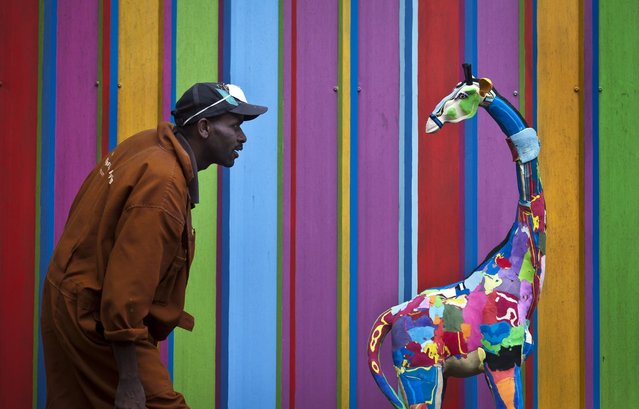
In this photo taken Monday, April 29, 2013, carver Jackson Mbatha, 40, poses next to a an unfinished large toy giraffe he is making from pieces of discarded flip-flops, in front of a painted workshop wall at the Ocean Sole flip-flop recycling company in Nairobi, Kenya. The company is cleaning the East African country's beaches of used, washed-up flip-flops and the dirty pieces of rubber that were once cruising the Indian Ocean's currents are now being turned into colorful handmade giraffes, elephants and other toy animals. (Ben Curtis/AP Photo)

In this photo taken Monday, April 29, 2013, carver Jackson Mbatha, 40, poses next to a an unfinished large toy giraffe he is making from pieces of discarded flip-flops, in front of a painted workshop wall at the Ocean Sole flip-flop recycling company in Nairobi, Kenya. The company is cleaning the East African country's beaches of used, washed-up flip-flops and the dirty pieces of rubber that were once cruising the Indian Ocean's currents are now being turned into colorful handmade giraffes, elephants and other toy animals. (Ben Curtis/AP Photo)
Details
09 May 2013 09:01:00
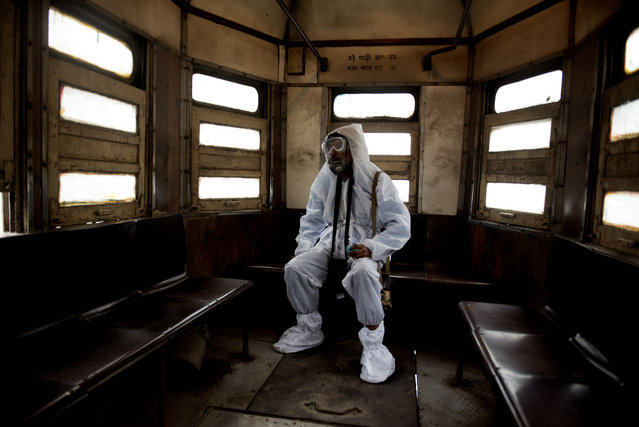
Fighting Infections (single image) | Fighting Pandemic by Sudipto Das. “It’s exhausting. A tram conductor in Kolkata, India, wears protective clothing from head to toe even in the heat of a summer afternoon. This was when restrictions were easing after India’s first Covid-19 lockdown – public transport was running, but staff were advised to suit up like this. We’ve all grown used to saluting the efforts of healthcare workers, but plenty of other people in public-facing jobs have performed gruelling duties too to keep people safe”. (Photo by Sudipto Das/Wellcome Photography Prize 2021)

Fighting Infections (single image) | Fighting Pandemic by Sudipto Das. “It’s exhausting. A tram conductor in Kolkata, India, wears protective clothing from head to toe even in the heat of a summer afternoon. This was when restrictions were easing after India’s first Covid-19 lockdown – public transport was running, but staff were advised to suit up like this. We’ve all grown used to saluting the efforts of healthcare workers, but plenty of other people in public-facing jobs have performed gruelling duties too to keep people safe”. (Photo by Sudipto Das/Wellcome Photography Prize 2021)
Details
29 Jun 2021 09:49:00
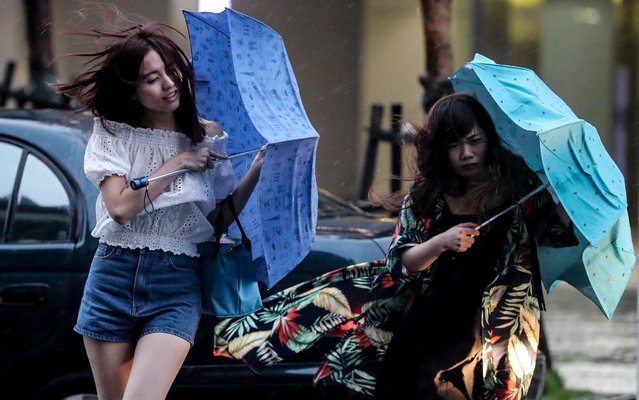
People struggle with the wind as they cross the street under the rain as typhoon Mitag is expected to hit northern Taiwan, in Keelung, Taiwan, 30 September 2019. According to report, Typhoon Mitag will disrupt air, land and water traffic. Mitag is located at sea about 290 kilometers off the south-southeast of Yilan County, moving at 27 kilometers per hour at a northwesterly direction, with maximum sustained winds of 126 kilometers per hour, with gusts of up to 162 kilometers per hour, and with a radius of 180 kilometers, according to Taiwan Central Weather Bureau. (Photo by Ritchie B. Tongo/EPA/EFE/Rex Features/Shutterstock)

People struggle with the wind as they cross the street under the rain as typhoon Mitag is expected to hit northern Taiwan, in Keelung, Taiwan, 30 September 2019. According to report, Typhoon Mitag will disrupt air, land and water traffic. Mitag is located at sea about 290 kilometers off the south-southeast of Yilan County, moving at 27 kilometers per hour at a northwesterly direction, with maximum sustained winds of 126 kilometers per hour, with gusts of up to 162 kilometers per hour, and with a radius of 180 kilometers, according to Taiwan Central Weather Bureau. (Photo by Ritchie B. Tongo/EPA/EFE/Rex Features/Shutterstock)
Details
02 Oct 2019 00:05:00
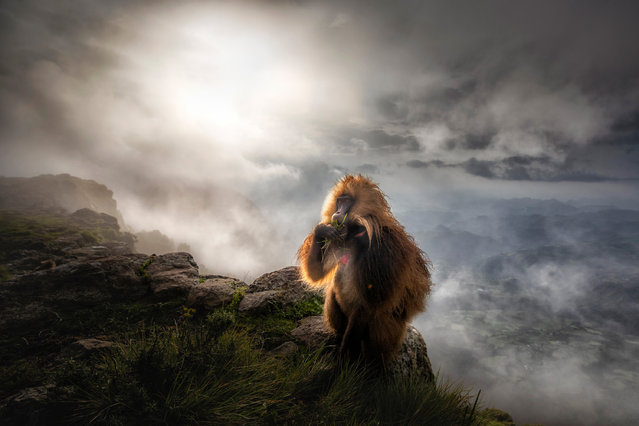
Highly commended, mammals: Gelada after the storm – Marco Gaiotti (Italy). “Gelada baboons are the only monkey species in the world that feed on grasses. They are native to the tableland of Ethiopia. Every morning large family groups wander from their sleeping places in the steep rock face, up to 1,000 metres high, to the feeding grounds at the tablelands. This image clearly depicts their feeding strategy: they pull out bunches of grass, sort the stalks and then lift them to their mouth. This shot was taken towards the end of the rainy season after a heavy storm”. (Photo by Marco Gaiotti/2019 GDT European Wildlife Photographer of the Year)

Highly commended, mammals: Gelada after the storm – Marco Gaiotti (Italy). “Gelada baboons are the only monkey species in the world that feed on grasses. They are native to the tableland of Ethiopia. Every morning large family groups wander from their sleeping places in the steep rock face, up to 1,000 metres high, to the feeding grounds at the tablelands. This image clearly depicts their feeding strategy: they pull out bunches of grass, sort the stalks and then lift them to their mouth. This shot was taken towards the end of the rainy season after a heavy storm”. (Photo by Marco Gaiotti/2019 GDT European Wildlife Photographer of the Year)
Details
31 Oct 2019 00:03:00