Loading...
Done


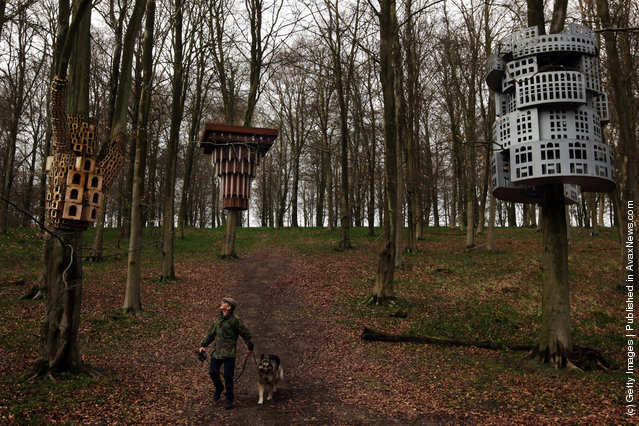
CHALLOCK, ENGLAND - MARCH 31: Tony Hall walks with his dog through an installation entitled 'Super Kingdom', which hangs in trees in King's Wood as part of the Stour Valley Arts project on March 31, 2011 in Challock, England. The works by artists Bruce Gilchrist and Jo Joelson of 'London Fieldworks' consist of a series of interesting animal habitats, modelled on the palaces of Stalin, Ceauscescu and Mussolini, and offer nesting sites to many native and migrant species. (Photo by Dan Kitwood/Getty Images)
Details
20 Nov 2011 19:03:00
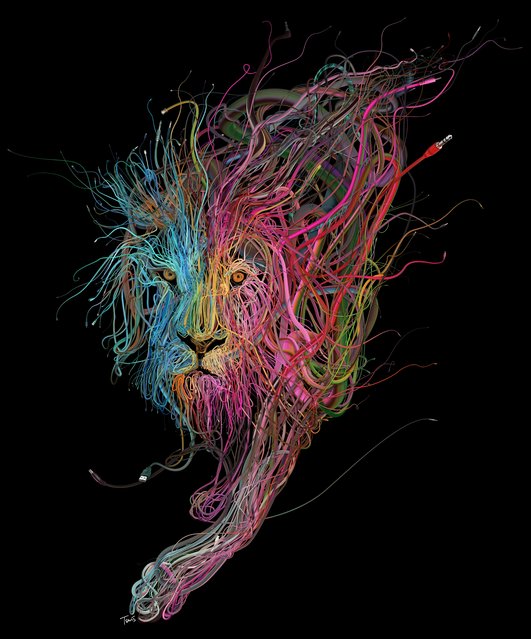
“The Conquering Lion: Plug into the power of Reggae”. (Photo by Charis Tsevis)

Greece-based illustrator, Charis Tsevis took his fascination with our wired world to develop his series of colorful and detailed wire illustrations. He uses all types of wires, including USB cords and phone cables, and creates form figures, faces and animals by tangling them together. Tsevis says, “All of them have to do with the relationship between the network and the human body and spirit”. Photo: “The Conquering Lion: Plug into the power of Reggae”. (Photo by Charis Tsevis)
Details
02 Apr 2014 10:01:00


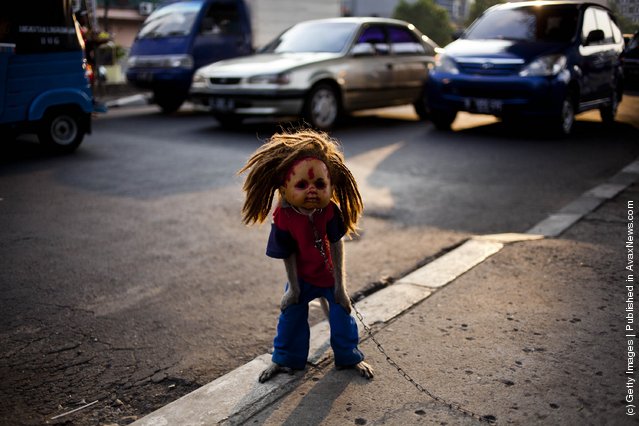
Ucil, a trained monkey, takes part in a street performance on June 1, 2011 in Jakarta, Indonesia. The street performances usually involve the monkeys wearing masks, such as dolls' heads or attire to mimic humans, with the monkeys trained to act out human activities such as shopping, riding bicycles or other simulations of human behaviour. Poverty drives the handlers to exploit the monkeys in the hope of earning small change, but the effect and cruelty to the monkeys is a cause that charities such as the Jakarta Animal Aid Network are increasingly taking up. (Photo by Ulet Ifansasti/Getty Images)
Details
02 Jun 2011 12:14:00
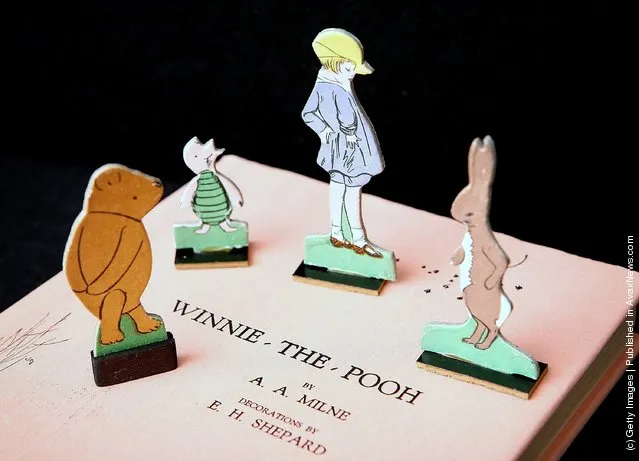
Winnie-The-Pooh

“Alan Alexander “A. A.” Milne (18 January 1882 – 31 January 1956) was an English author. Milne is most famous for his two Pooh books about a boy named Christopher Robin after his son, and various characters inspired by his son's stuffed animals, most notably the bear named Winnie-the-Pooh”. – Wikipedia

Photo: A rare American first edition of a Winnie-the-Pooh book signed by the author A.A. Milne and illustrator E. H. Shephard is displayed with Pooh characters form a 1930's game at a press preview at Sotheby's Auctioneers on December 15, 2008 in London. (Photo by Peter Macdiarmid/Getty Images)
Details
28 Aug 2011 13:34:00
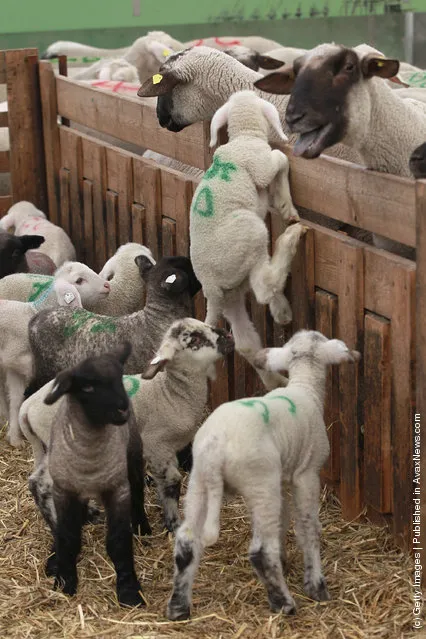
Easter Lamb

A merino lamb attempts to jump out of its enclosure to find its mother shortly before feeding time at the Educational and Reserach Station for Animal Breeding (Lehr- und Versuchsanstalt fuer Tierzucht und Tierhaltung, or LVAT) in Brandenburg state on January 27, 2012 in Gross Kreutz, Germany. Hundreds of lambs have been born at the LVAT in recent weeks in the midst of the station's lambing season. Many of the lambs will be sold just before Easter, when they will have grown to a weight of over 40kg, as lamb is the traditional German Easter meal. (Photo by Sean Gallup/Getty Images)
Details
29 Jan 2012 12:12:00
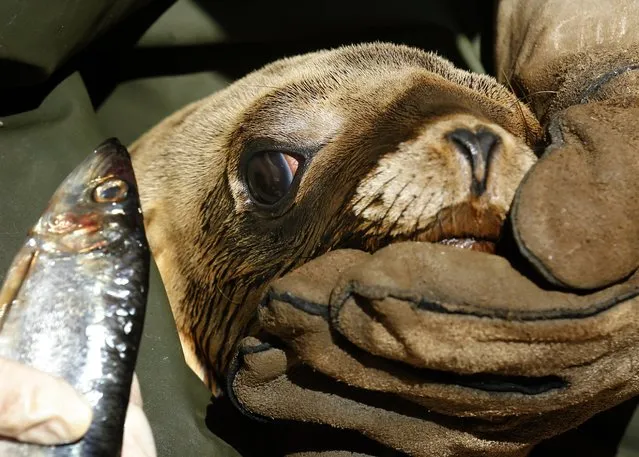
A rescued malnourished sea lion is manually fed a fish at Sea World in San Diego, California March 17, 2015. (Photo by Mike Blake/Reuters)

A rescued malnourished sea lion is manually fed a fish at Sea World in San Diego, California March 17, 2015. Animal rescue centers in California are being inundated with stranded, starving sea lion pups, raising the possibility that the facilities could soon be overwhelmed, the federal agency coordinating the rescue said. (Photo by Mario Anzuoni/Reuters)
Details
19 Mar 2015 13:58:00
Bloodwood Tree

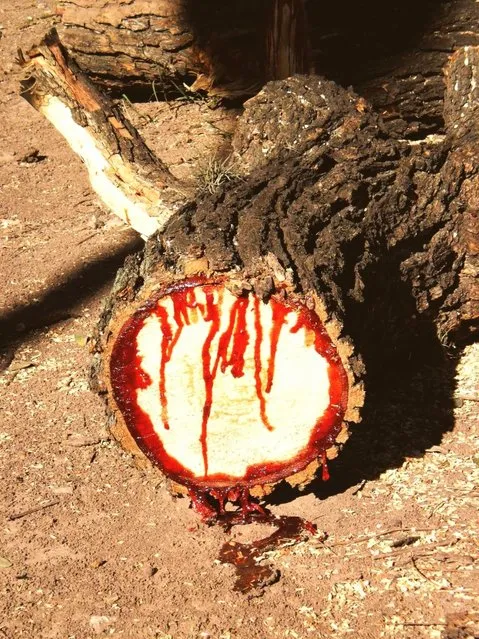
The bloodwood tree (Pterocarpus angolensis) is a deciduous tree with a high canopy, reaching about 15m in height and has dark bark. The red sap is used traditionally as a dye and in some areas mixed with animal fat to make a cosmetic for faces and bodies. It is also believed to have magical properties for the curing of problems concerning blood, apparently because of its close resemblance to blood. The name bloodwood for these trees stems from the dark red to brown sap that accumulates on wounds on the trunks.
Details
14 May 2014 12:44:00
 Flying Squirrel

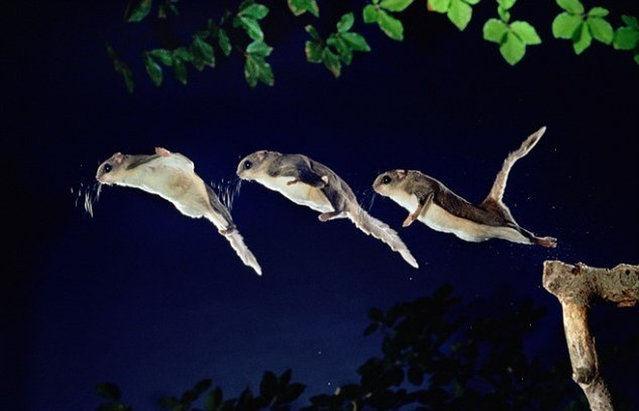
Flying squirrels are not capable of powered flight like birds or bats; instead, they glide between trees. They are capable of obtaining lift within the course of these flights, with flights recorded to 90 meters (295 ft). The direction and speed of the animal in midair is varied by changing the positions of its two arms and legs, largely controlled by small cartilaginous wrist bones. This changes the tautness of the patagium, a furry parachute-like membrane that stretches from wrist to ankle. It has a fluffy tail that stabilizes in flight. The tail acts as an adjunct airfoil, working as an air brake before landing on a tree trunk.
Details
07 Aug 2012 16:29:00