Loading...
Done
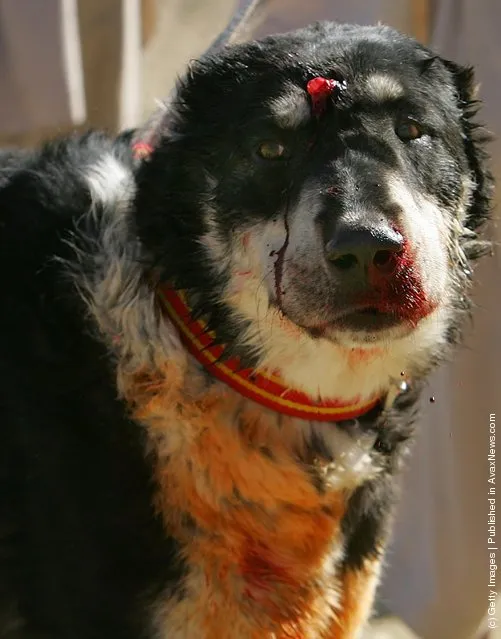
Afghan Dog Fighting

“Dog fighting is a form of blood sport in which game dogs are made to fight, sometimes to the death. It is illegal in most developed countries. Dog fighting is used for entertainment and may also generate revenue from stud fees, admission fees and gambling”. – Wikipedia

Photo: A bloody Afghan dog is bleeding with many wounds after he lost a dog fight November 24, 2006 in Kabul, Afghanistan. While the Afghan government is trying to ban the violent use of dogs for fighting, the unofficial sport remains a regular weekly event. Afghan dog fighting is popular among Afghan men who gamble on the dogs making upwards of 15,000 Afghanie (300 USD). (Photo by Paula Bronstein/Getty Images)
Details
07 Aug 2011 11:47:00
Katjinga, a Rhodesian ridgeback dog who lives on a 20-acre farm in Germany, adopted an abandoned pot-bellied piglet in August 2009. The tiny black piglet, named Paulinchen, had been so small at birth that her mother likely overlooked it. Katjinga's owner, Roland Adam, found the piglet alone and cold and brought it to his 8-year-old dog

Katjinga, a Rhodesian ridgeback dog who lives on a 20-acre farm in Germany, adopted an abandoned pot-bellied piglet in August 2009. The tiny black piglet, named Paulinchen, had been so small at birth that her mother likely overlooked it. Katjinga's owner, Roland Adam, found the piglet alone and cold and brought it to his 8-year-old dog. (Photo by Fame Pictures)
Details
23 Apr 2012 13:45:00
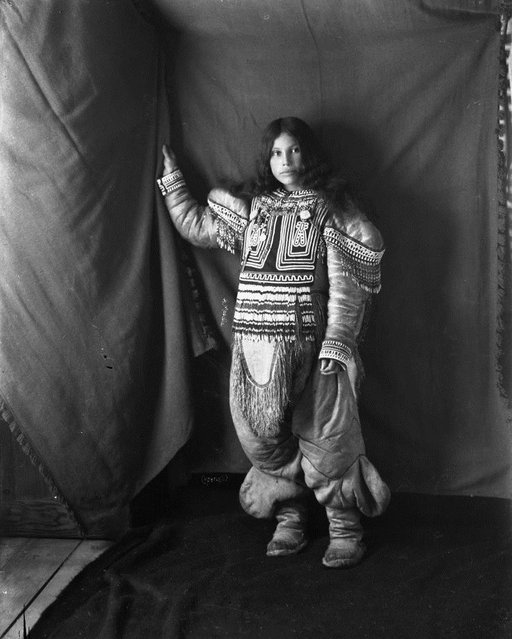
Moodie was born in 1854 in Toronto, and after a move to England she met and married John Douglas Moodie in 1878, and had six children. Here: Inuit woman, Kootucktuck, in her beaded attigi. Fullerton Harbour, Nunavut, February 1905. (Photo by Geraldine Moodie/The Guardian)

Geraldine Moodie overcame harsh conditions to become western Canada’s first professional female photographer, capturing beautiful images in the country’s most remote regions. An exhibition, “North of Ordinary: The Arctic Photographs of Geraldine and Douglas Moodie”, is at Glenbow, Calgary, 18 February – 10 September. Here: Inuit woman, Kootucktuck, in her beaded attigi. Fullerton Harbour, Nunavut, February 1905. (Photo by Geraldine Moodie/The Guardian)
Details
17 Feb 2017 00:04:00
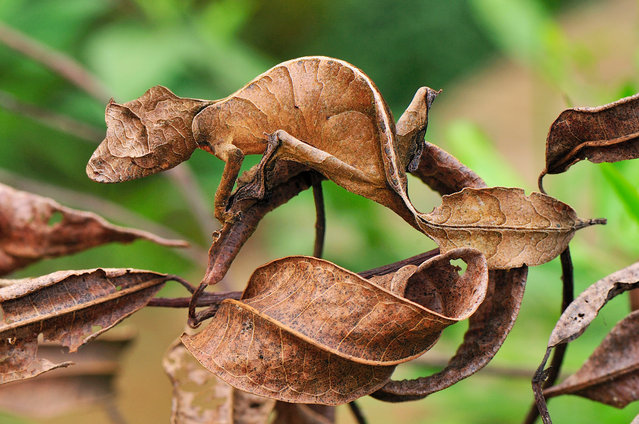
Is it a leaf? Is it tree bark? No, it’s the Satanic leaf-tailed gecko. Cleverly disguised as a rotting leaf, Madagascar’s camouflage king has red eyes, pointy horns and a taste for night hunting: it’s nature’s most devilish deceiver. (Photo by Thomas Marent/ARDEA)

Is it a leaf? Is it tree bark? No, it’s the Satanic leaf-tailed gecko. Cleverly disguised as a rotting leaf, Madagascar’s camouflage king has red eyes, pointy horns and a taste for night hunting: it’s nature’s most devilish deceiver. The twisted body and veiny skin echo the detail of a dry leaf, which ensures the gecko blends in with its forest home. The mottled tail appears to have sections missing, as though it has withered over time. This mini-monster epitomises survival of the fittest, having adapted gradually to become today’s extraordinary leaf impersonator. (Photo by Thomas Marent/ARDEA)
Details
20 Nov 2015 08:03:00
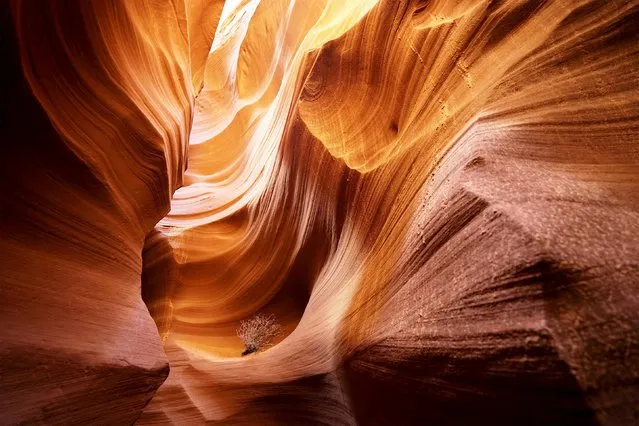
Sandstone sculpted by water and wind erosion is seen in a slot canyon, one of hundreds that surround Lake Powell near Page, Arizona, May 26, 2015. (Photo by Rick Wilking/Reuters)

Sandstone sculpted by water and wind erosion is seen in a slot canyon, one of hundreds that surround Lake Powell near Page, Arizona, May 26, 2015. Lake Powell on the Colorado River provides water for Nevada, Arizona and California. A severe drought in recent years, combined with withdrawals that many believe are not sustainable, has reduced its levels to only about 42 percent of its capacity. (Photo by Rick Wilking/Reuters)
Details
26 Nov 2015 08:01:00
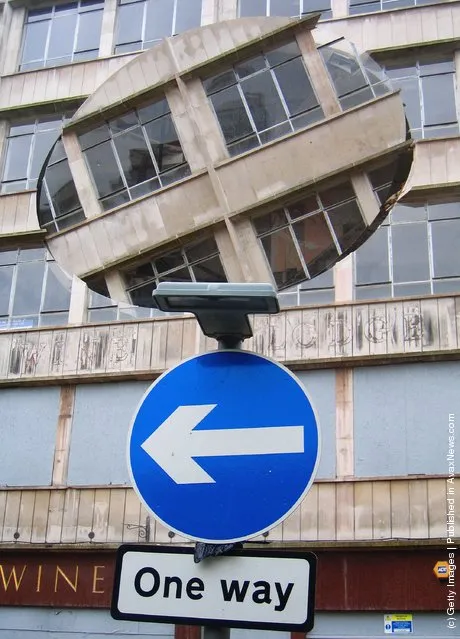
An installation by the artist Richard Wilson, entitled 'Turning the Place Over', is built into the condemned Cross Keys House in Moorfields as part of the Capital of Culture for 2008

“Richard Wilson (born May 24, 1953) is a sculptor, installation artist and musician. Wilson's work is characterised by architectural concerns with volume, illusionary spaces and auditory perception”. – Wikipedia

Photo: An installation by the artist Richard Wilson, entitled “Turning the Place Over”, is built into the condemned Cross Keys House in Moorfields as part of the Capital of Culture for 2008, on June 25, 2007 in Liverpool, England. The piece consists of an 8 metre ovoid cut from the building's facade that oscillates in three dimensions. (Photo by Jim Dyson/Getty Images)
Details
27 Mar 2012 10:31:00
Little tom and his half sister, judy... by DONALD ROLLER WILSON

Little tom and his half sister, judy... by DONALD ROLLER WILSON

Details
22 May 2012 00:04:00
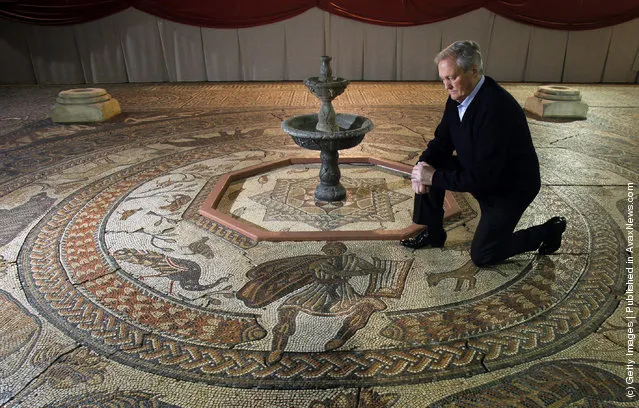
Orpheus Pavement

Bob Woodward looks at the reconstruction he built of the Orpheus Pavement at Prinknash Abbey on March 31, 2010 in Gloucester, England. The replica mosiac, made of more than one-and-a-half million pieces of stone is described as one of the most significant archaeological projects of recent times. (Photo by Matt Cardy/Getty Images)
Details
03 Oct 2011 09:24:00