Loading...
Done
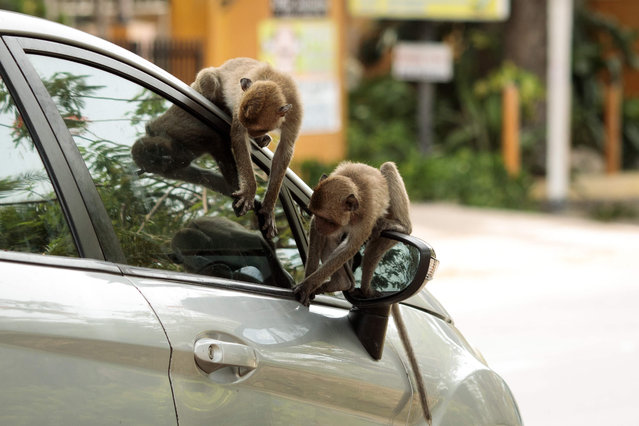
Macaque monkeys sit on a car in Hua Hin on May 29, 2020, as low tourist numbers due to the ongoing COVID-19 novel coronavirus situation have resulted in a decrease in the number of people feeding them. The monkeys in the town are going hungry as a consequence of the drop in tourism as a result of the COVID-19 coronavirus pandemic. (Photo by Jack Taylor/AFP Photo)

Macaque monkeys sit on a car in Hua Hin on May 29, 2020, as low tourist numbers due to the ongoing COVID-19 novel coronavirus situation have resulted in a decrease in the number of people feeding them. The monkeys in the town are going hungry as a consequence of the drop in tourism as a result of the COVID-19 coronavirus pandemic. (Photo by Jack Taylor/AFP Photo)
Details
22 Jun 2020 00:05:00
South Korean performers participate in a re-enactment of the battle of the Korean war during the ceremony to mark the 70th anniversary of the Korean War in Cheorwon, near the border with North Korea on June 25, 2020 in Cheorwon, South Korea. Over 66,000 South Koreans have been separated from their families during the Korean War which started on June 25, 1950, and effectively split the Korean Peninsula into two over the 3-year conflict. The fighting between North and South Korea ended on July 27, 1953, with the signing of the Korean Armistice Agreement and the heavily guarded Demilitarized Zone was created, however, both countries remain technically still at war since no peace agreement was signed and many Koreans died before they could reunite with their loved ones. (Photo by Chung Sung-Jun/Getty Images)

South Korean performers participate in a re-enactment of the battle of the Korean war during the ceremony to mark the 70th anniversary of the Korean War in Cheorwon, near the border with North Korea on June 25, 2020 in Cheorwon, South Korea. Over 66,000 South Koreans have been separated from their families during the Korean War which started on June 25, 1950, and effectively split the Korean Peninsula into two over the 3-year conflict. (Photo by Chung Sung-Jun/Getty Images)
Details
27 Jun 2020 00:03:00
A child yells, “I don't want go!” as a state employee attempts to remove her from another branch of the Orphanage of the Church of Bible Understanding, in the Kenscoff area outside Port-au-Prince, Haiti, Friday, February 14, 2020. (Photo by Dieu Nalio Chery/AP Photo)

A child yells, “I don't want go!” as a state employee attempts to remove her from another branch of the Orphanage of the Church of Bible Understanding, in the Kenscoff area outside Port-au-Prince, Haiti, Friday, February 14, 2020. (Photo by Dieu Nalio Chery/AP Photo)
Details
30 Jun 2020 00:03:00


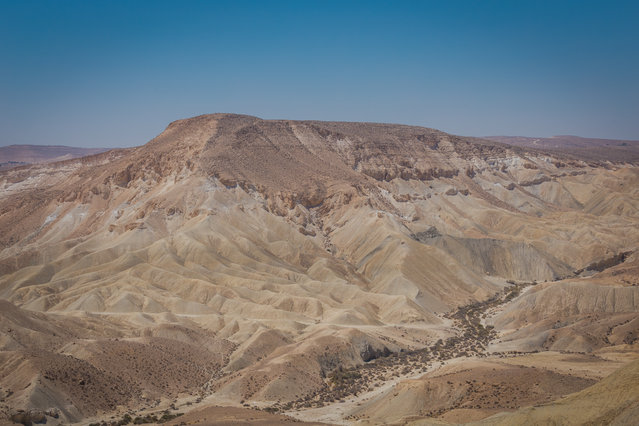
The Negev (Hebrew: הַנֶּגֶב‎, Tiberian vocalization: han-Néḡeḇ ) or Naqab (Arabic: النقب‎‎ an-Naqab) is a desert and semidesert region of southern Israel. (Photo by Torai)


Details
27 Jan 2017 12:50:00
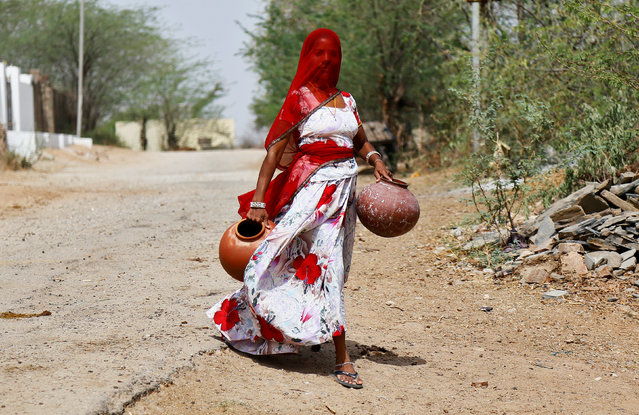
A woman carries earthen pots to fill them with drinking water on a hot summer day, on the outskirts of Ajmer, Rajasthan, India April 25, 2017. (Photo by Himanshu Sharma/Reuters)

A woman carries earthen pots to fill them with drinking water on a hot summer day, on the outskirts of Ajmer, Rajasthan, India April 25, 2017. (Photo by Himanshu Sharma/Reuters)
Details
08 May 2017 08:26:00
A girl poses at an entrance of her house next to a bomb dropped by the U.S. Air Force planes during the Vietnam War, in the village of Ban Napia in Xieng Khouang province, Laos September 3, 2016. (Photo by Jorge Silva/Reuters)

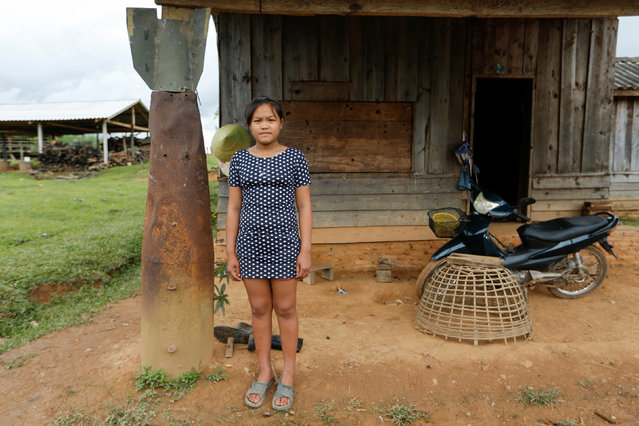
A girl poses at an entrance of her house next to a bomb dropped by the U.S. Air Force planes during the Vietnam War, in the village of Ban Napia in Xieng Khouang province, Laos September 3, 2016. From 1964 to 1973, U.S. warplanes dropped more than 270 million cluster munitions on Laos, one-third of which did not explode, according to the Lao National Regulatory Authority. (Photo by Jorge Silva/Reuters)
Details
06 Sep 2016 10:30:00
This photo provided by Netflix/naturepl.com and WWF-International shows an African Elephant (Loxodonta africana) in front of double rainbow, in Masai Mara, Kenya, included in the Netflix natural history series, “Our Planet”, in collaboration with Silverback Films and WWF. The eight-part series debuts in 2019. (Photo by Andy Rouse/Naturepl.com/WWF-International/Netflix via AP Photo)

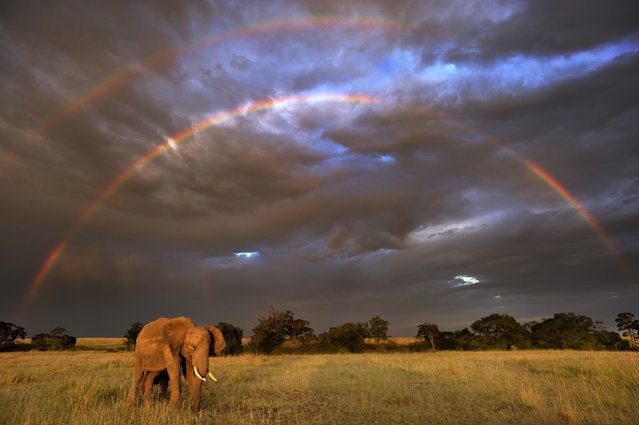
This photo provided by Netflix/naturepl.com and WWF-International shows an African Elephant (Loxodonta africana) in front of double rainbow, in Masai Mara, Kenya, included in the Netflix natural history series, “Our Planet”, in collaboration with Silverback Films and WWF. The eight-part series debuts in 2019. (Photo by Andy Rouse/Naturepl/WWF-International/Netflix via AP Photo)
Details
09 Oct 2015 08:05:00
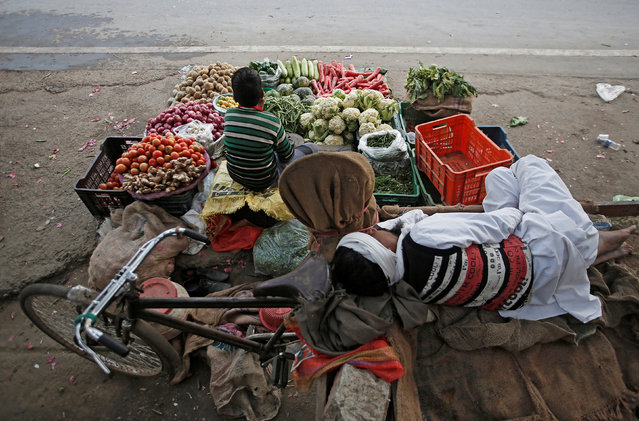
A vendor sleeps as his son waits for customers at their roadside vegetable shop in New Delhi, February 12, 2019. (Photo by Adnan Abidi/Reuters)

A vendor sleeps as his son waits for customers at their roadside vegetable shop in New Delhi, February 12, 2019. (Photo by Adnan Abidi/Reuters)
Details
23 Mar 2019 00:01:00