Loading...
Done
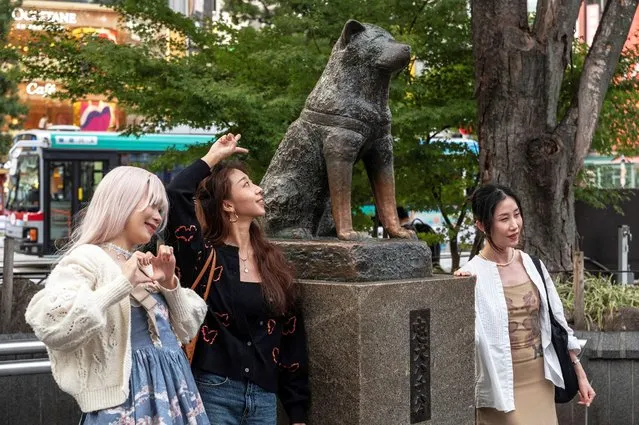
This photo taken on November 6, 2023 shows people posing for photos next to the statue of “Hachiko” in front of Shibuya station in central Tokyo, ahead of the 100th anniversary of the legendary dog's birth this month. A century since its birth, the tale of the loyal companion who had waited at the Shibuya train station for its master to come home – not knowing he had already died – continues to inspire the public, who have made the statue a singular landmark at a glitzy hub of Tokyo's street culture. (Photo by Richard A. Brooks/AFP Photo)

This photo taken on November 6, 2023 shows people posing for photos next to the statue of “Hachiko” in front of Shibuya station in central Tokyo, ahead of the 100th anniversary of the legendary dog's birth this month. A century since its birth, the tale of the loyal companion who had waited at the Shibuya train station for its master to come home – not knowing he had already died – continues to inspire the public, who have made the statue a singular landmark at a glitzy hub of Tokyo's street culture. (Photo by Richard A. Brooks/AFP Photo)
Details
27 Nov 2023 00:06:00
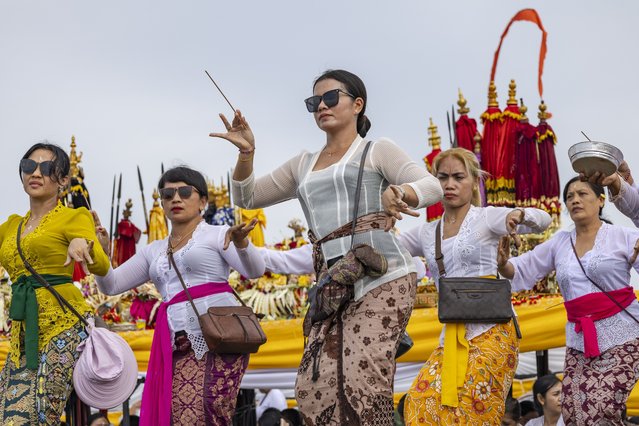
Balinese Hindu people take part in a cleansing ceremony called 'Melasti', in Denpasar, Bali, Indonesia, 25 March 2025. Melasti is a purification ritual where Balinese Hindus cleanse themselves and their sacred objects in the ocean to purify and renew spiritually, symbolizing the washing away of impurities and starting anew. It typically precedes Nyepi, the Day of Silence, marking the Balinese New Year. Balinese will celebrate Nyepi Day on 29 March 2025, during which Hindus on the island of Bali are not allowed to travel, work, light lamps, cook, or do any other activities. (Photo by Made Nagi/EPA)

Balinese Hindu people take part in a cleansing ceremony called “Melasti”, in Denpasar, Bali, Indonesia, 25 March 2025. Melasti is a purification ritual where Balinese Hindus cleanse themselves and their sacred objects in the ocean to purify and renew spiritually, symbolizing the washing away of impurities and starting anew. It typically precedes Nyepi, the Day of Silence, marking the Balinese New Year. Balinese will celebrate Nyepi Day on 29 March 2025, during which Hindus on the island of Bali are not allowed to travel, work, light lamps, cook, or do any other activities. (Photo by Made Nagi/EPA)
Details
07 Apr 2025 02:47:00
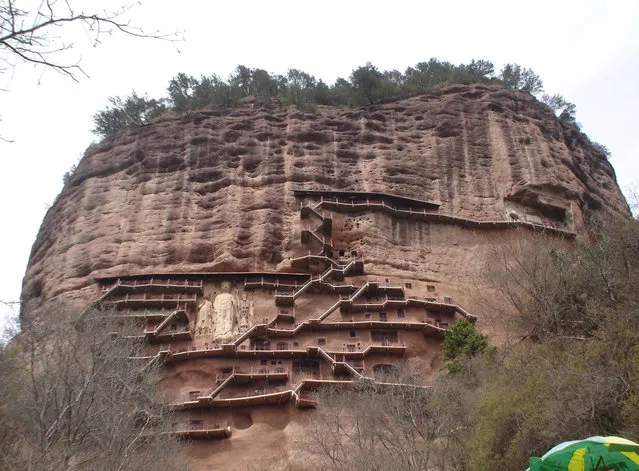
Maijishan Grottoes

The Maijishan Grottoes are a series of 194 caves cut in the side of the hill of Majishan in Tianshui, Gansu Province, northwest China. This example of rock cut architecture contains over 7,200 Buddhist sculptures and over 1,000 square meters of murals. Construction began in the Later Qin era (384-417 CE).
Details
31 May 2015 11:48:00
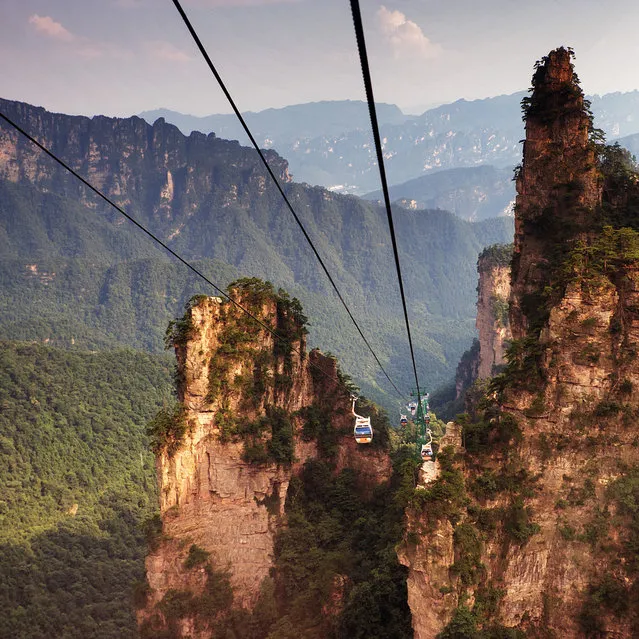
Zhangjiajie National Forest Park

The Zhangjiajie National Forest Park is a unique national forest park located in Zhangjiajie City in northern Hunan Province in the People's Republic of China. It is one of several national parks within the Wulingyuan Scenic Area.
Details
27 May 2014 12:21:00
Chinese Handmade Firecrackers For The Lunar New Year

A Chinese worker makes handmade firecrackers in the traditional way on February 1, 2005 in Liuan, Anhui Province, China. Chinese have the tradition of setting off firecrackers to celebrate the lunar New Year. (Photo by Cancan Chu/GettyImages)
Details
24 Dec 2011 12:57:00


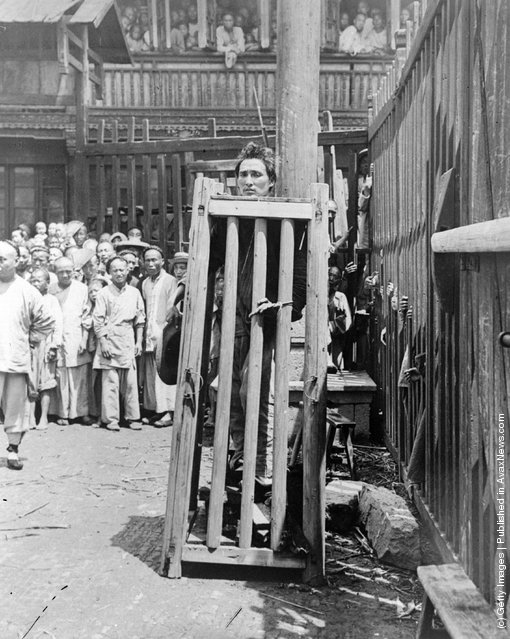
Two guards perform an execution in China, one holding the gun, the other holding a mask over the victim's face. (Photo by General Photographic Agency/Getty Images). Circa 1925
Details
23 Jun 2011 10:43:00
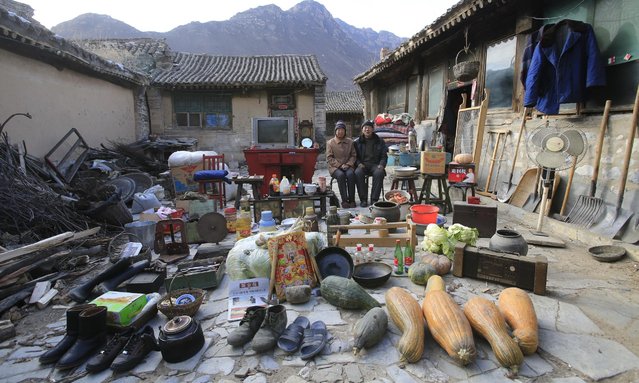
A couple with their belongings and vegetables in Hebei Huailai county. (Photo by Ma Hongjie)

Photographer Ma Hongjie has spent 11 years documenting families in various parts of China for his upcoming book The Family Belongings of Chinese People. Here: a couple with their belongings and vegetables in Hebei Huailai county. (Photo by Ma Hongjie)
Details
18 Nov 2015 08:03:00
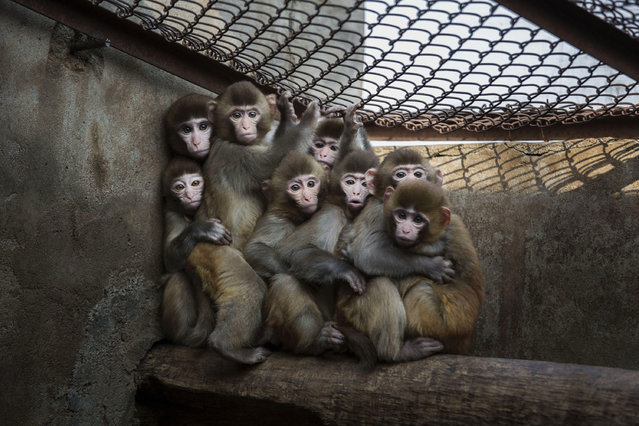
Macaque monkeys crowd together in their cage at a monkey farm on February 3, 2016 in Xinye county, Henan province, China. The area boasts a centuries-long and lucrative history of raising and training monkeys for performance. In Xinye, villagers are seeing an increase in business with the lunar calendar's “Year of the Monkey”. Farmers say most of the monkeys are bred and raised for domestic zoos, circuses, and performing groups, but add that some are also sold for medical research in China and the United States. Despite the popularity of the tradition, critics contend the training methods and conditions constitute animal cruelty. (Photo by Kevin Frayer/Getty Images)

Macaque monkeys crowd together in their cage at a monkey farm on February 3, 2016 in Xinye county, Henan province, China. The area boasts a centuries-long and lucrative history of raising and training monkeys for performance. In Xinye, villagers are seeing an increase in business with the lunar calendar's “Year of the Monkey”. Farmers say most of the monkeys are bred and raised for domestic zoos, circuses, and performing groups, but add that some are also sold for medical research in China and the United States. Despite the popularity of the tradition, critics contend the training methods and conditions constitute animal cruelty. (Photo by Kevin Frayer/Getty Images)
Details
31 Dec 2016 09:56:00