Loading...
Done
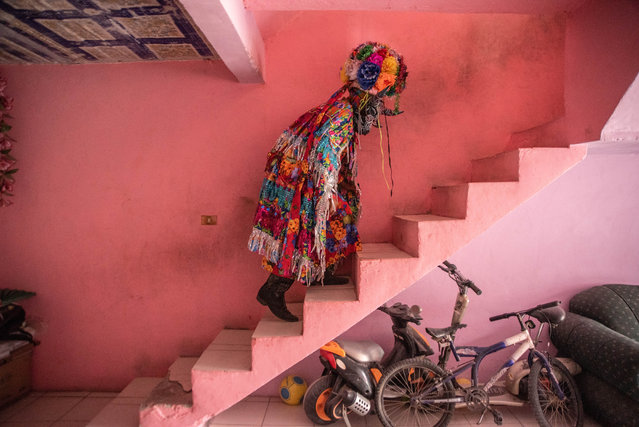
Inhabitants of the community of Coyolillo celebrate their Afro-descendant carnival in Veracruz, Mexico on February 25, 2020. This carnival has more than 100 years of history and is the heritage of the African workers who arrived in that area more than 300 years ago to work in the sugar cane fields. The event is known for the colourful robes, capes and animal masks – of bulls, deer, goats and cows – worn by participants. As such, the carnival is a unique expression of African-Mexican folk art. (Photo by Hector Adolfo Quintanar Perez/ZUMA Wire/Rex Features/Shutterstock)

Inhabitants of the community of Coyolillo celebrate their Afro-descendant carnival in Veracruz, Mexico on February 25, 2020. This carnival has more than 100 years of history and is the heritage of the African workers who arrived in that area more than 300 years ago to work in the sugar cane fields. (Photo by Hector Adolfo Quintanar Perez/ZUMA Wire/Rex Features/Shutterstock)
Details
05 Mar 2020 00:03:00
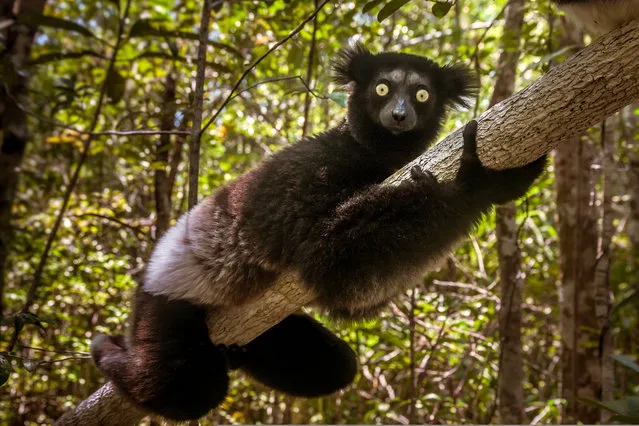
The secretive indri (Indri indri) of Madagascar, the largest living lemur. It is also critically endangered and highly evolutionarily distinct with no close relatives, which makes its branch one of most precarious on the mammal evolutionary tree. In the likely event that the indri goes extinct, we will lose 19m years of unique evolutionary history from the mammal tree of life. (Photo by Pierre-Yves Babelon/Aarhus University)

The secretive indri (Indri indri) of Madagascar, the largest living lemur. It is also critically endangered and highly evolutionarily distinct with no close relatives, which makes its branch one of most precarious on the mammal evolutionary tree. In the likely event that the indri goes extinct, we will lose 19m years of unique evolutionary history from the mammal tree of life. (Photo by Pierre-Yves Babelon/Aarhus University)
Details
18 Nov 2018 00:02:00
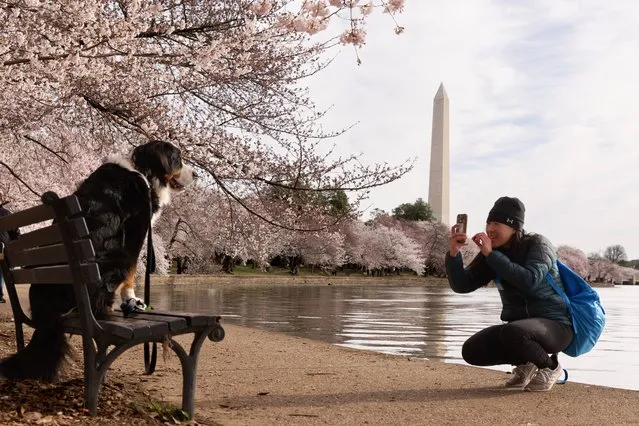
Adrienne Yip takes a picture of her Burmese mountain dog named “Walter”, beneath the cherry blossoms in peak bloom at the Tidal Basin with the Washington Monument seen behind, in Washington, DC, USA, 18 March 2024. Peak bloom, as defined when seventy percent of the cherry blossoms are open, is occuring this week. This year's peak bloom, beginning the 17th of March, is tied for the second earliest in history and is seen as a reflection of warming temperatures. (Photo by Michael Reynolds/EPA/EFE/Rex Features/Shutterstock)

Adrienne Yip takes a picture of her Burmese mountain dog named “Walter”, beneath the cherry blossoms in peak bloom at the Tidal Basin with the Washington Monument seen behind, in Washington, DC, USA, 18 March 2024. Peak bloom, as defined when seventy percent of the cherry blossoms are open, is occuring this week. This year's peak bloom, beginning the 17th of March, is tied for the second earliest in history and is seen as a reflection of warming temperatures. (Photo by Michael Reynolds/EPA/EFE/Rex Features/Shutterstock)
Details
31 Mar 2024 05:48:00
Chris Hondros RetrospectivePart2

Chris Hondros, a Getty Images photographer, was fatally wounded on April 20, 2011, in a mortar attack by government forces while covering the civil war in Libya. Hondros' work is woven in our history as he covered everything from politics to marathons. A new film will focus on his life as told through his images. Here's a look at some of his finest and final work. Some of these images are graphic in nature
Details
23 Aug 2013 17:38:00
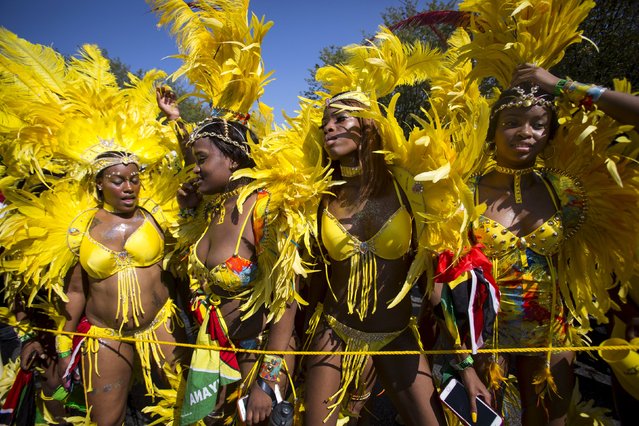
Women dance in costume during the West Indian Day Parade in Brooklyn, New York September 7, 2015. (Photo by Andrew Kelly/Reuters)

Women dance in costume during the West Indian Day Parade in Brooklyn, New York September 7, 2015. The parade, which takes place annually, celebrates Caribbean culture and history. (Photo by Andrew Kelly/Reuters)
Details
08 Sep 2015 11:56:00
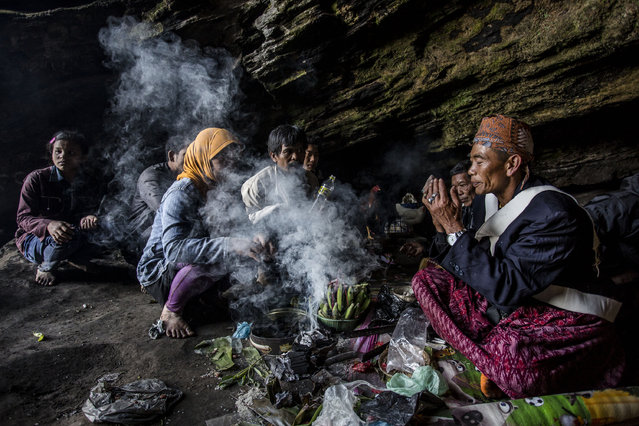
A Tenggerese shaman praying for worshippers at Widodaren cave during the Tenggerese Hindu Yadnya Kasada festival on July 31, 2015 in Probolinggo, East Java, Indonesia. The festival is the main festival of the Tenggerese people and lasts about a month. On the fourteenth day, the Tenggerese make the journey to Mount Bromo to make offerings of rice, fruits, vegetables, flowers and livestock to the mountain gods by throwing them into the volcano's caldera. (Photo by Ulet Ifansasti/Getty Images)

A Tenggerese shaman praying for worshippers at Widodaren cave during the Tenggerese Hindu Yadnya Kasada festival on July 31, 2015 in Probolinggo, East Java, Indonesia. The festival is the main festival of the Tenggerese people and lasts about a month. On the fourteenth day, the Tenggerese make the journey to Mount Bromo to make offerings of rice, fruits, vegetables, flowers and livestock to the mountain gods by throwing them into the volcano's caldera. The origin of the festival lies in the 15th century when a princess named Roro Anteng started the principality of Tengger with her husband Joko Seger, and the childless couple asked the mountain Gods for help in bearing children. The legend says the Gods granted them 24 children but on the provision that the 25th must be tossed into the volcano in sacrifice. The 25th child, Kesuma, was finally sacrificed in this way after initial refusal, and the tradition of throwing sacrifices into the caldera to appease the mountain Gods continues today. (Photo by Ulet Ifansasti/Getty Images)

Details
01 Aug 2015 12:07:00
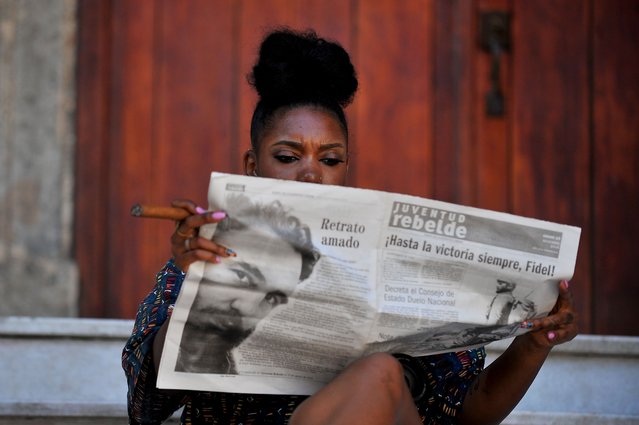
A woman smokes a cigar as she reads the newspaper in a street of Havana, on November 26, 2016, the day after Cuban revolutionary leader Fidel Castro died aged 90. One of the world's longest-serving rulers and modern history's most singular characters, Castro defied 11 US administrations and hundreds of assassination attempts. (Photo by Yamil Lage/AFP Photo)

A woman smokes a cigar as she reads the newspaper in a street of Havana, on November 26, 2016, the day after Cuban revolutionary leader Fidel Castro died aged 90. One of the world's longest-serving rulers and modern history's most singular characters, Castro defied 11 US administrations and hundreds of assassination attempts. (Photo by Yamil Lage/AFP Photo)
Details
27 Nov 2016 09:13:00
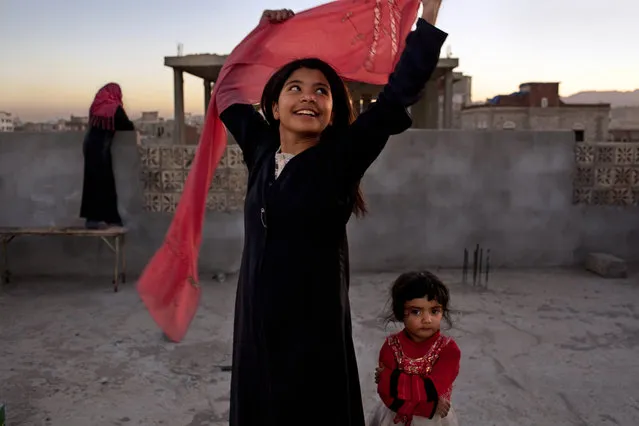
Some of the most powerful narratives of the past decade have been produced by a forward-thinking generation of women photojournalists as different as the places and the subjects they have covered. National Geographic's “Women of Vision” exhibit features the work of 11 photographers and is on display at the Fernbank Museum of Natural History in Atlanta until January 3, 2016. (Photo by Stephanie Sinclair/National Geographic)

Some of the most powerful narratives of the past decade have been produced by a forward-thinking generation of women photojournalists as different as the places and the subjects they have covered. National Geographic's “Women of Vision” exhibit features the work of 11 photographers and is on display at the Fernbank Museum of Natural History in Atlanta until January 3, 2016. Here: Nujood Ali stunned the world in 2008 by obtaining a divorce at age 10 in Yemen, striking a blow against forced marriage. (Photo by Stephanie Sinclair/National Geographic)
Details
11 Dec 2015 08:05:00