Loading...
Done
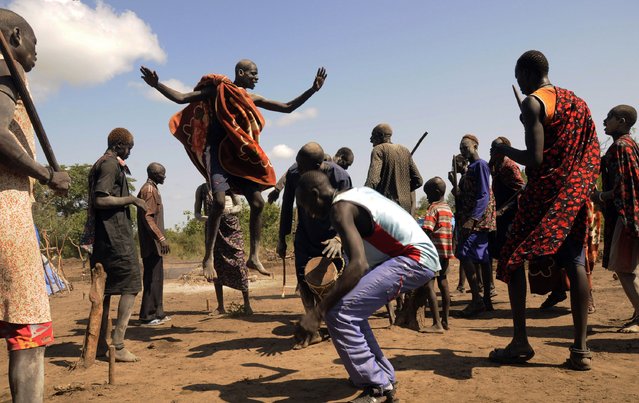
Cattle keepers from the Dinka tribe perform a traditional dance after a prayer session for peace and good health along the route to Rajaf Payam outside the capital Juba October 18, 2014. (Photo by Jok Solomon/Reuters)

Cattle keepers from the Dinka tribe perform a traditional dance after a prayer session for peace and good health along the route to Rajaf Payam outside the capital Juba October 18, 2014. (Photo by Jok Solomon/Reuters)
Details
25 Oct 2014 13:12:00
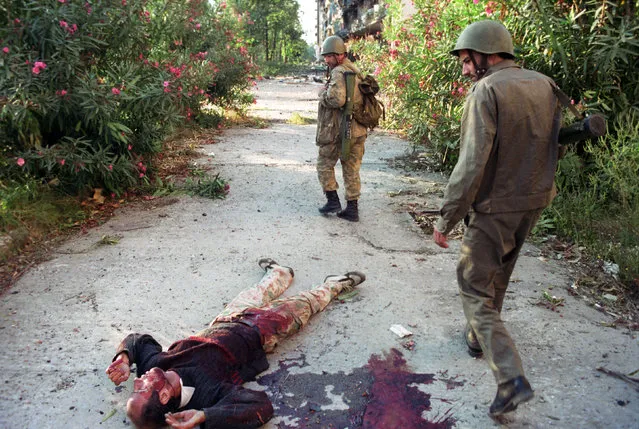
Abkhazia. Sukhumi, 1993. A house-to-house combat. (Photo by Andrei Solovyov/ITAR-TASS)

The War in Abkhazia from 1992 to 1993 was fought between Georgian government forces for the most part, and Abkhaz separatist forces, Russian armed forces and North Caucasian militants. Ethnic Georgians who lived in Abkhazia fought largely on the side of Georgian government forces. Ethnic Armenians and Russians within Abkhazia's population largely supported the Abkhazians, and many fought on their side. The separatists received support from thousands of North Caucasus and Cossack militants and from the Russian Federation forces stationed in and near Abkhazia. Here: Abkhazia. Sukhumi, 1993. A house-to-house combat. (Photo by Andrei Solovyov/ITAR-TASS)
Details
29 Sep 2017 07:31:00


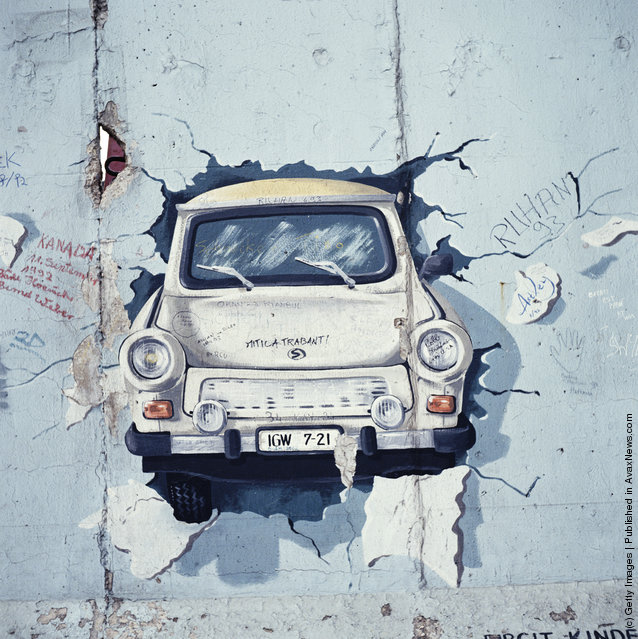
A painting of a Trabant car bursting through a wall in post unification Berlin, August 1993. (Photo by Steve Eason/Hulton Archive/Getty Images)
Details
27 Mar 2011 11:02:00
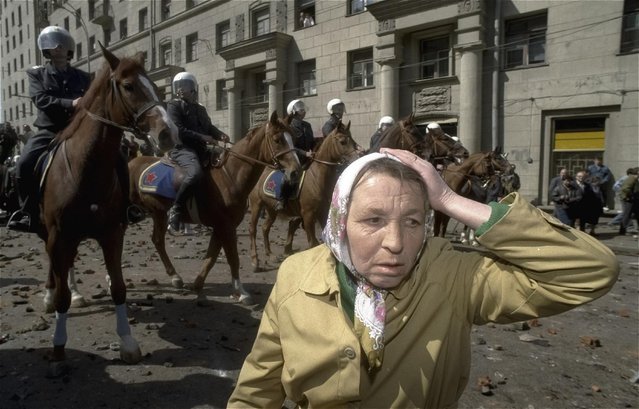
In this file photo taken on Saturday May 1, 1993, an elderly communist woman clutches her head as police on horseback patrol the streets in Moscow. When Alexander Zemlianichenko started working as an AP photographer in Moscow, the Soviet Union was nearing its demise. (Photo by Alexander Zemlianichenko/AP Photo)

In this file photo taken on Saturday May 1, 1993, an elderly communist woman clutches her head as police on horseback patrol the streets in Moscow. When Alexander Zemlianichenko started working as an AP photographer in Moscow, the Soviet Union was nearing its demise. (Photo by Alexander Zemlianichenko/AP Photo)
Details
01 Jan 2017 09:37:00
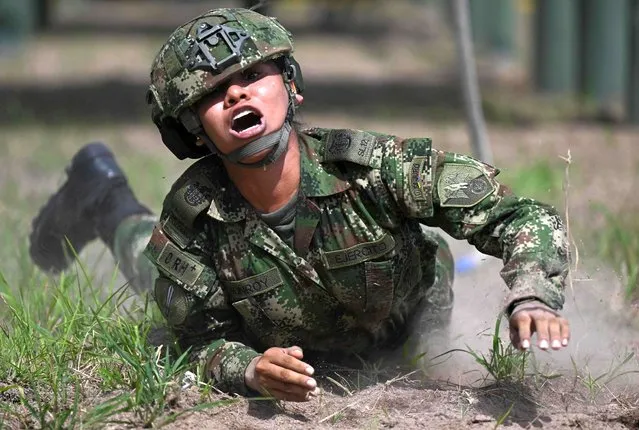
A female soldier takes part in a training for women at the Tolemaida Military Air Base in Tolemaida, Colombia, on May 16, 2023. The last time the Colombian Army enlisted women in their ranks was in 1993. Now, 30 years on, more than 1,200 women voluntarily joined the military service in the country. (Photo by Raúl Arboleda/AFP Photo)

A female soldier takes part in a training for women at the Tolemaida Military Air Base in Tolemaida, Colombia, on May 16, 2023. The last time the Colombian Army enlisted women in their ranks was in 1993. Now, 30 years on, more than 1,200 women voluntarily joined the military service in the country. (Photo by Raúl Arboleda/AFP Photo)
Details
17 Dec 2023 05:41:00
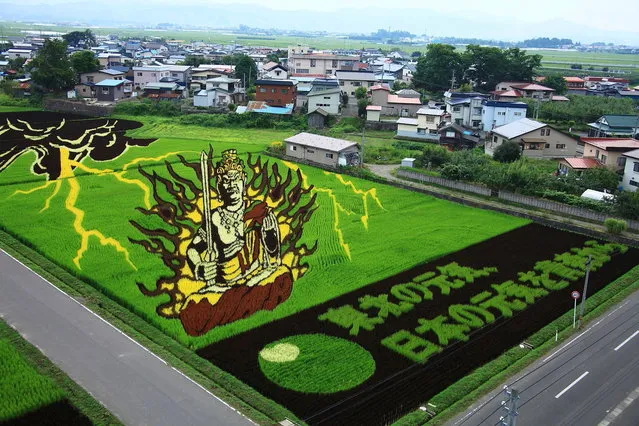
Rice Paddy Art

Tanbo Art is the strategic planting of four varieties of rice which have different colored leaves in order to create a giant image in the rice paddy. This type of aesthetic planting began in the Japanese village of Inakadate in 1993 in order to celebrate the village’s over 2000 year history of rice farming. The practice has spread to other rice cultivating communities in Japan and even other countries such as Thailand and South Korea.
Details
13 May 2014 12:53:00


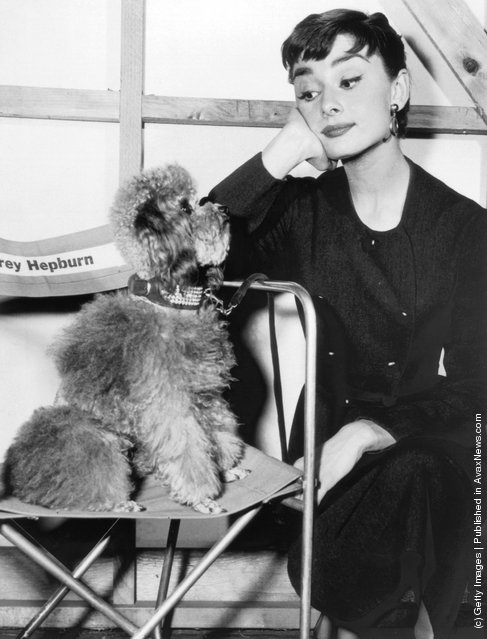
Film actress Audrey Hepburn (1929–1993) on a film set with her pet poodle, circa 1960. (Photo by Hulton Archive/Getty Images)
Details
19 Jul 2011 11:56:00
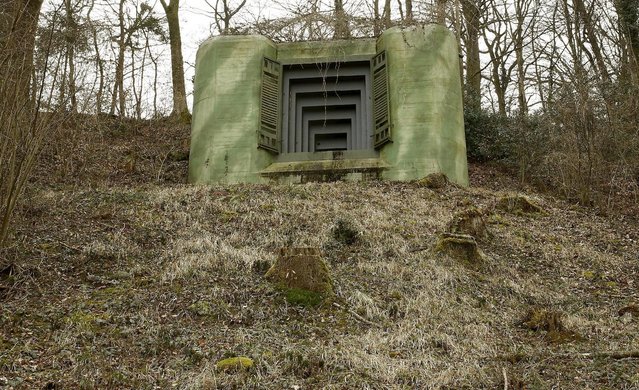
A bunker at aformer Swiss artillery fortress called Heldsberg stands near the town of St. Margareten, Switzerland March 22, 2015. Heldsberg fortress, located on the Swiss-Austrian border near the River Rhine and Lake Constance was built from 1938 to 1940 and remained in military use until 1992. Since 1993 it is open to the public as Fortress Museum Heldsberg. (Photo by Arnd Wiegmann/Reuters)

A bunker at aformer Swiss artillery fortress called Heldsberg stands near the town of St. Margareten, Switzerland March 22, 2015. Heldsberg fortress, located on the Swiss-Austrian border near the River Rhine and Lake Constance was built from 1938 to 1940 and remained in military use until 1992. Since 1993 it is open to the public as Fortress Museum Heldsberg. (Photo by Arnd Wiegmann/Reuters)
Details
09 Jan 2016 08:03:00