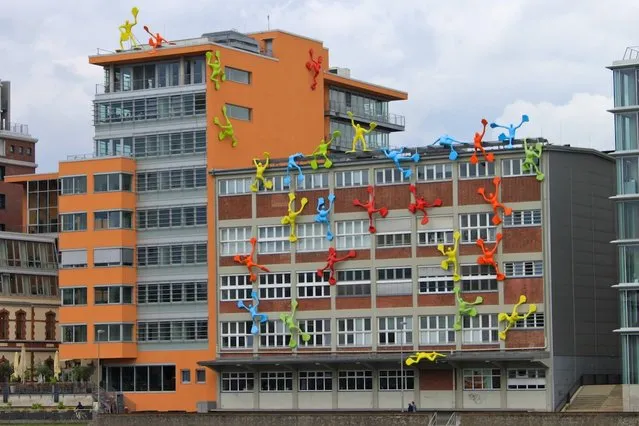
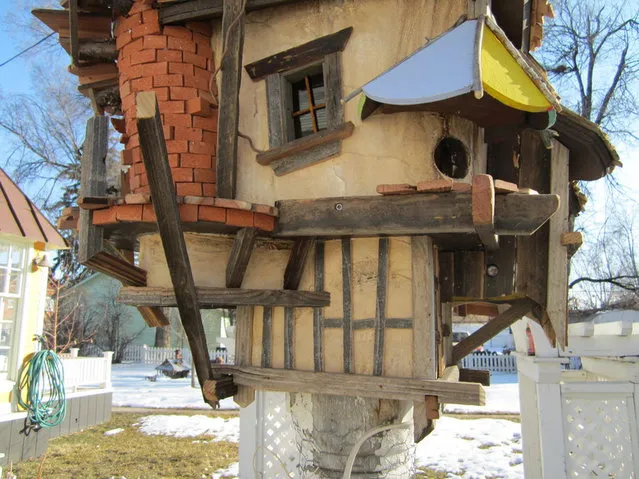
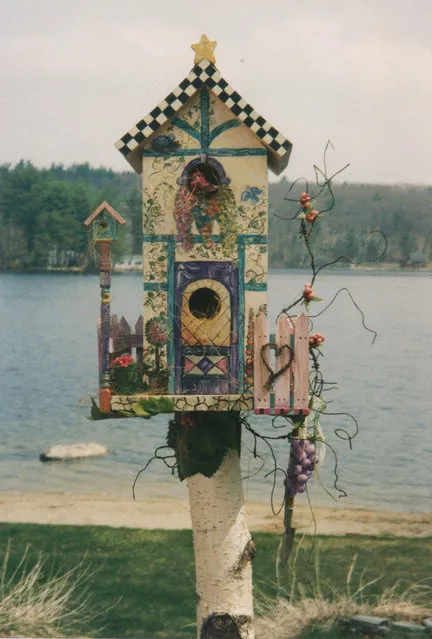
Flossis by the artist Rosalie are known far beyond the boundaries of Dьsseldorf, Germany. In this city on the Rhine, the Flossis became famous. Many buildings’ outer walls are decorated with these figures. Flossis by Rosalie come in different variants of small to large and they are popular among young and old. Flossis are made of resin and resist temperatures under -15 degrees. Below that, they should be brought to the warm inside of the building. The currently most sold Flossi, is the “type I” in red, like shown in the following illustration.
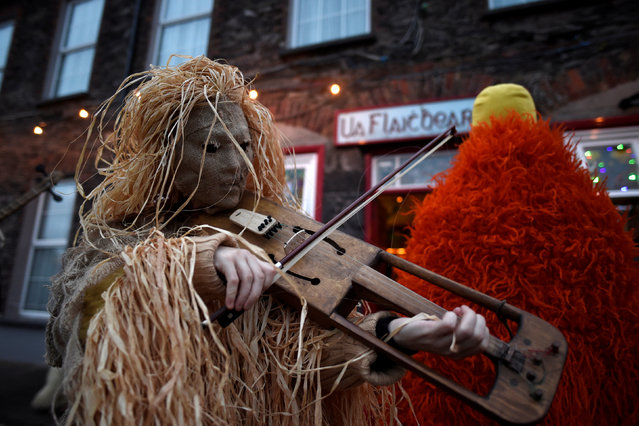
Costumed participants are seen during an Irish tradition of Hunting of the Wren festival held every St. Stephen's Day in Dingle, Ireland, December 26, 2016. Wren Day, also known as Wren's Day, Day of the Wren, or Hunt the Wren Day is celebrated on 26 December, St. Stephen's Day. The tradition consists of “hunting” a fake wren and putting it on top a decorated pole. (Photo by Clodagh Kilcoyne/Reuters)
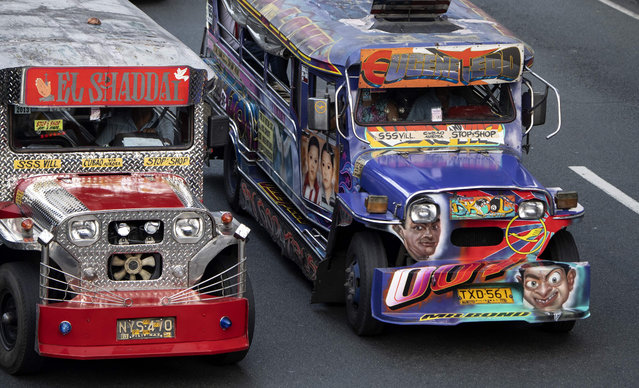
This picture taken on January 17, 2019 shows jeepneys during rush hour in Manila, Philippines. Hand-painting custom decor on jeepneys adorned with images of everything from Batman to babies, as well as disco lights and chrome wheels, have for decades provided cheap transport for millions. But pollution and safety concerns have led to a modernisation programme, with jeepneys 15 years or older to be taken off the streets by 2020. (Photo by Noel Celis/AFP Photo)
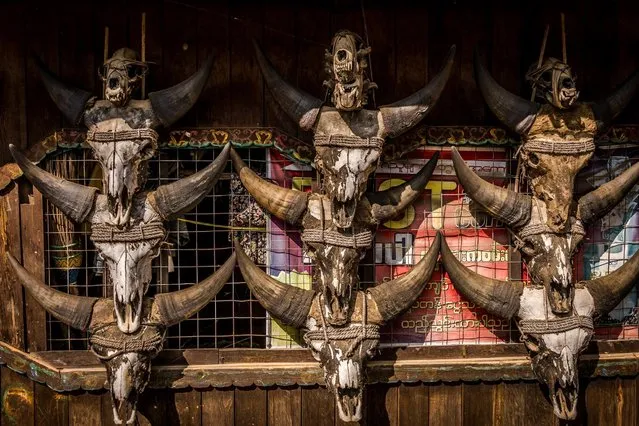
Traditional sculptures by Chin tribe in, Mindat, Myanmar, November 2016. In the mountains of Myanmar lives a tribe where the women have taken a unique approach to their beauty regime by decorating their faces with tattoos. The Chin people in the remote mountain town of Mindat, have been marking women in the area with intricate face tattoos for centuries. (Photo by Teh Han Lin/Barcroft Images)
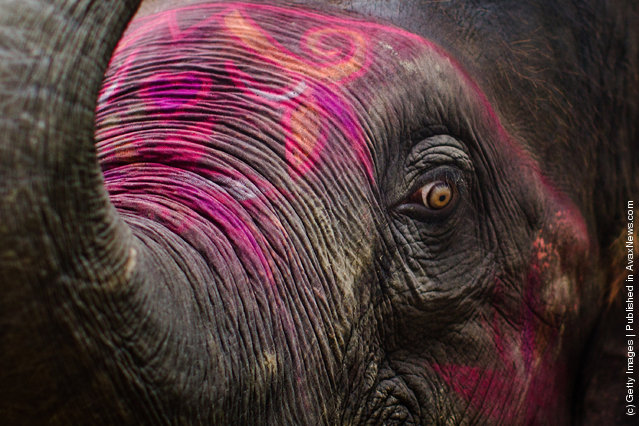
SONEPUR, INDIA - NOVEMBER 15: An elephant is painted in decorative colours during the Sonepur Mela on November 15, 2011 in Sonepur near Patna, India. The cattle fair, held in the Indian state of Bihar, has its origins during ancient times, when people traded elephants and horses across the auspicious river Ganges. The mela used to attract traders from places as distant as Central Asia. It is one of Asia's largest cattle fairs and lasts for a fortnight. (Photo by Daniel Berehulak/Getty Images)