Loading...
Done
A picture made available on 13 May 2016 shows A Tiwa girl performing her traditional dance as they celebrated the Wanchuwa festival in Karbi Anglong District of Assam state, India, 11 May 2016. Wanchuwa is one of the most important festivals of the Tiwa tribal community living in the hills as it is related with agriculture which is the mainstay of their economy. Tiwas pray for a bountiful harvest during this festival and to protect their crops from pest and other natural calamities. (Photo by EPA/Stringer)

A picture made available on 13 May 2016 shows A Tiwa girl performing her traditional dance as they celebrated the Wanchuwa festival in Karbi Anglong District of Assam state, India, 11 May 2016. Wanchuwa is one of the most important festivals of the Tiwa tribal community living in the hills as it is related with agriculture which is the mainstay of their economy. Tiwas pray for a bountiful harvest during this festival and to protect their crops from pest and other natural calamities. Tiwa is a major tribe of Assam state who practice Jhum or shifting cultivation for their living in the hills. (Photo by EPA/Stringer)
Details
14 May 2016 11:45:00
A woman mourns the loss of her husband, next to a placard which reads “I'm a pusher”, who was shot dead by an unidentified gunman in Manila on July 23, 2016. Philippine President Rodrigo Duterte swept to power in May on a promise to clampdown on drugs, and police have since confirmed killing nearly 200 people in a two-month crime blitz. There has also been a surge in killings by anti-drug vigilantes who leave victims' corpses on city streets wrapped in packaging tape with signs accusing them of being drug dealers. (Photo by Noel Celis/AFP Photo)

A woman mourns the loss of her husband, next to a placard which reads “I'm a pusher”, who was shot dead by an unidentified gunman in Manila on July 23, 2016. Philippine President Rodrigo Duterte swept to power in May on a promise to clampdown on drugs, and police have since confirmed killing nearly 200 people in a two-month crime blitz. There has also been a surge in killings by anti-drug vigilantes who leave victims' corpses on city streets wrapped in packaging tape with signs accusing them of being drug dealers. (Photo by Noel Celis/AFP Photo)
Details
24 Jul 2016 11:12:00
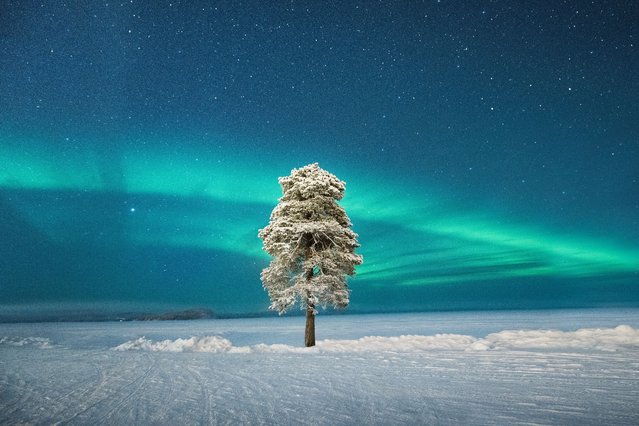
Aurorae category runner-up: Lone Tree under a Scandinavian Aurora by Tom Archer (UK). The photographer decided to explore the area around the hotel on a very crisp -35C evening in Finnish Lapland. When he found this tree, he decided to wait for the misty conditions to change and could not believe his luck when the sky cleared and the aurora came out in the perfect spot. Archer spent about an hour photographing it before his camera started to lock up because of the harsh conditions, but by then he was happy to call it a night. (Photo by Tom Archer/2020 Astronomy Photographer of the Year)

Aurorae category runner-up: Lone Tree under a Scandinavian Aurora by Tom Archer (UK). The photographer decided to explore the area around the hotel on a very crisp -35C evening in Finnish Lapland. When he found this tree, he decided to wait for the misty conditions to change and could not believe his luck when the sky cleared and the aurora came out in the perfect spot. Archer spent about an hour photographing it before his camera started to lock up because of the harsh conditions, but by then he was happy to call it a night. (Photo by Tom Archer/2020 Astronomy Photographer of the Year)
Details
17 Sep 2020 00:03:00
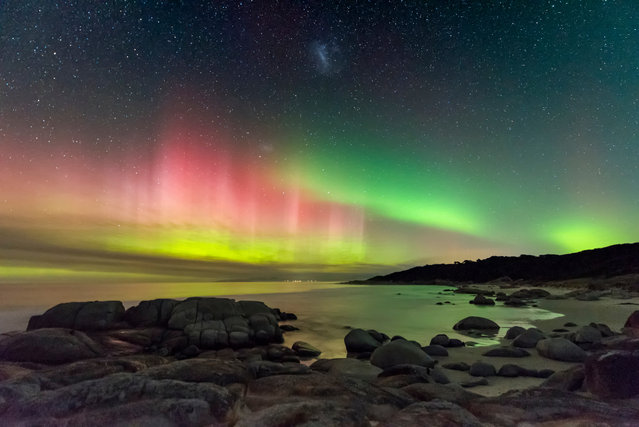
Aurora Australis from Beerbarrel Beach, by James Stone. Runner Up: Aurorae. (Photo by James Stone/Astronomy Photographer of the Year)

Aurora Australis from Beerbarrel Beach, by James Stone. Runner Up: Aurorae. (Photo by James Stone/Astronomy Photographer of the Year)
Details
14 Sep 2019 00:05:00
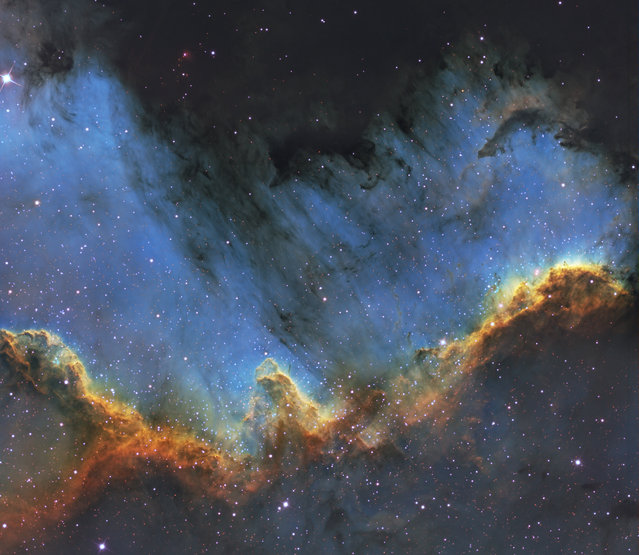
The Cygnus Wall is in the southern  area of NGC7000 also known as the North America Nebula. It is approximately 1800 light years from Earth, and is in the constellation Cygnus. The Wall is an energized shock front and contains the most concentrated star formations in the nebula. The size of the North America Nebula is about 4 full moons. (Bill Snyder)

Amateur astronomer Bill Snyder has been involved with astrophotography since 2007. Photo: The Cygnus Wall is in the southern area of NGC7000 also known as the North America Nebula. It is approximately 1800 light years from Earth, and is in the constellation Cygnus. The Wall is an energized shock front and contains the most concentrated star formations in the nebula. The size of the North America Nebula is about 4 full moons. (Photo and caption by Bill Snyder)
Details
30 Oct 2013 09:15:00
Snowy owlets (Bubo scandiacus), Arctic National Wildlife Refuge, Alaska, USA. “A pair of gray-feathered snowy owlets hunker down in the abundant flowers that flourish in the dropping-enriched soil of their nest mound”. (Photo by Art Wolfe/Art Wolfe Stock)

The photography of Art Wolfe covers the globe, capturing landscapes, wildlife, and cultures from every continent; here he talks through a selection of his favourite images. Art Wolfe is an American photographer and conservationist. His photographs have been noted by environmental advocacy groups for their “stunning” visual impact. Here: Snowy owlets (Bubo scandiacus), Arctic National Wildlife Refuge, Alaska, USA. (Photo by Art Wolfe/Art Wolfe Stock)
Details
19 Mar 2018 00:05:00
Actress Jennifer Aniston is seen filming on location for “The Morning Show” in the Flatiron District on July 28, 2024 in New York City. (Photo by James Devaney/GC Images)

Actress Jennifer Aniston is seen filming on location for “The Morning Show” in the Flatiron District on July 28, 2024 in New York City. (Photo by James Devaney/GC Images)
Details
05 Aug 2024 04:26:00
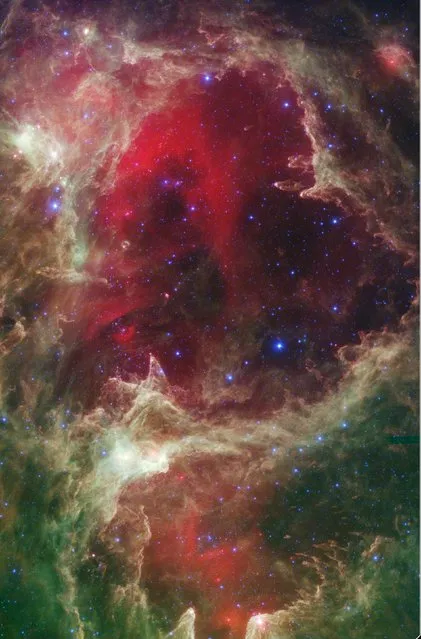
An infrared portrait from NASA's Spitzer Space Telescope which shows generations of stars is seen in this undated NASA handout image released February 14, 2013. In this wispy star-forming region, called W5, the oldest stars can be seen as blue dots in the centers of the two hollow cavities (other blue dots are background and foreground stars not associated with the region). Red shows heated dust that pervades the region's cavities, while green highlights dense clouds. (Photo by NASA/Reuters/JPL-Caltech/Harvard-Smithsonian/Handout)

An infrared portrait from NASA's Spitzer Space Telescope which shows generations of stars is seen in this undated NASA handout image released February 14, 2013. In this wispy star-forming region, called W5, the oldest stars can be seen as blue dots in the centers of the two hollow cavities (other blue dots are background and foreground stars not associated with the region). Red shows heated dust that pervades the region's cavities, while green highlights dense clouds. (Photo by NASA/Reuters/JPL-Caltech/Harvard-Smithsonian/Handout)
Details
03 Mar 2013 08:44:00