Loading...
Done
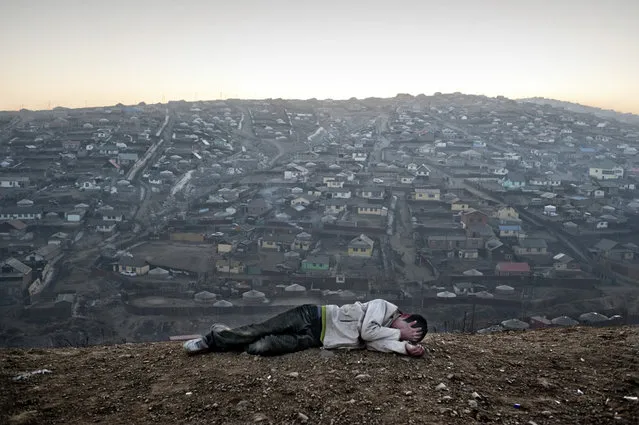
Asia, Mongolia, March 27, 2011. A view of Ulaan Baator over the shoulder of a slumbering drunk. Alcoholism is a huge problem in the city, home to almost half of Mongolia's people. The capital's population has doubled in the past two years, expanding outward in a haphazard sprawl, and many inhabitants live in slums known as the “Gher District”. (Photo by Alessandro Grassani)

“Environmental Migrants: The Last Illusion” by photographer Alessandro Grassani, documents the life of people in Kenya, Mongolia and Bangladesh who migrate to escape environmental stresses to the city of their own countries in hopes for a better life. Here: Asia, Mongolia, March 27, 2011. A view of Ulaan Baator over the shoulder of a slumbering drunk. Alcoholism is a huge problem in the city, home to almost half of Mongolia's people. The capital's population has doubled in the past two years. High levels of unemployment and poverty await herders who abandon rural areas and arrive in the city, illiterate and untrained in any skills necessary for urban jobs. (Photo by Alessandro Grassani)
Details
21 Jul 2015 10:10:00
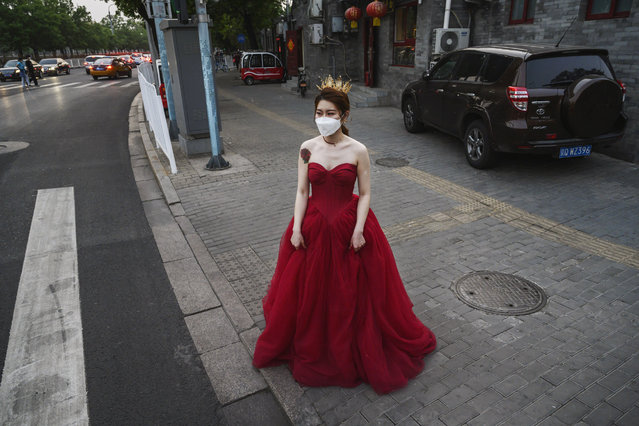
A Chinese woman wears her dress and a protective mask as she waits to change after taking pictures in advance of her wedding near the Forbidden City, on April 30, 2020 in Beijing, China. Beijing lowered its risk level after more than three months Thursday in advance of the May holiday, allowing most domestic travellers arriving in the city to do so without having to do 14 days of quarantine. The Forbidden City will open to a limited number of visitors as of Thursday morning. After decades of growth, officials said China's economy had shrunk in the latest quarter due to the impact of the coronavirus epidemic. The slump in the world's second largest economy is regarded as a sign of difficult times ahead for the global economy. While industrial sectors in China are showing signs of reviving production, a majority of private companies are operating at only 50% capacity, according to analysts. With the pandemic hitting hard across the world, officially the number of coronavirus cases in China is dwindling, ever since the government imposed sweeping measures to keep the disease from spreading. Officials believe the worst appears to be over in China, though there are concerns of another wave of infections as the government attempts to reboot the world's second largest economy. Since January, China has recorded more than 81,000 cases of COVID-19 and at least 3,200 deaths, mostly in and around the city of Wuhan, in central Hubei province, where the outbreak first started. (Photo by Kevin Frayer/Getty Images)

A Chinese woman wears her dress and a protective mask as she waits to change after taking pictures in advance of her wedding near the Forbidden City, on April 30, 2020 in Beijing, China. Beijing lowered its risk level after more than three months Thursday in advance of the May holiday, allowing most domestic travellers arriving in the city to do so without having to do 14 days of quarantine. (Photo by Kevin Frayer/Getty Images)
Details
03 May 2020 00:07:00
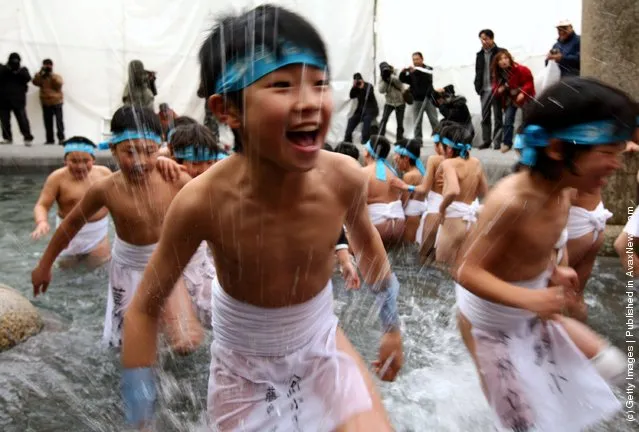
Japanese children wear loincloths as they splash about in freezing cold water during Saidaiji Naked Festival, at Saidaiji Temple

“A Hadaka Matsuri (“Naked Festival”) is a type of Japanese festival, or matsuri, in which participants wear a minimum amount of clothing; usually just a Japanese loincloth (called fundoshi), sometimes with a short happi coat, and rarely completely naked. Whatever the clothing, it is considered to be above vulgar, or everyday, undergarments, and on the level of holy Japanese shrine attire. Naked festivals are held in dozens of places throughout Japan every year, usually in the summer or winter. The most famous festival is held in Okayama, where the festival originated. Every year, over 9,000 men participate in this festival”. – Wikipedia

Photo: Japanese men wear loincloths as they splash about in freezing cold water during Saidaiji Naked Festival, at Saidaiji Temple on February 18, 2012 in Okayama, Japan. (Photo by Buddhika Weerasinghe/Getty Images)
Details
19 Feb 2012 12:18:00
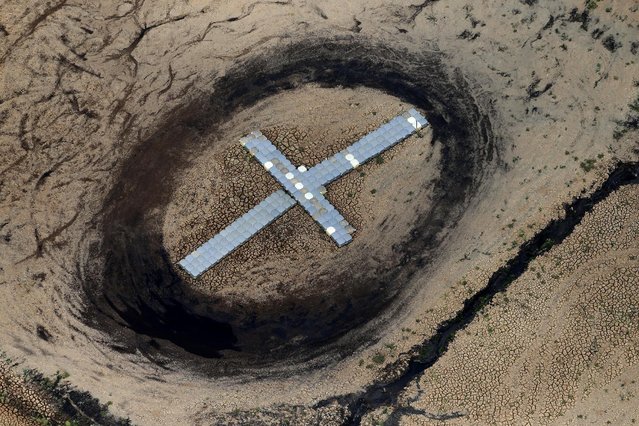
Pontoons, which were previously used as a floating jetty, are seen on the cracked ground of the Atibainha dam, part of the Cantareira reservoir, during a drought in Nazare Paulista, Sao Paulo state February 12, 2015. (Photo by Paulo Whitaker/Reuters)

Pontoons, which were previously used as a floating jetty, are seen on the cracked ground of the Atibainha dam, part of the Cantareira reservoir, during a drought in Nazare Paulista, Sao Paulo state February 12, 2015. Brazil's worst drought in 80 years has left the Cantareira system, that provides greater Sao Paulo with most of its water, with the lowest water level on record. Brazil's economy is already expected to post zero growth this year. Worse yet, since Brazil depends on hydroelectric dams for about three quarters of its electricity, power shortages are also possible due to the drought, federal officials have said. (Photo by Paulo Whitaker/Reuters)
Details
15 Feb 2015 14:19:00
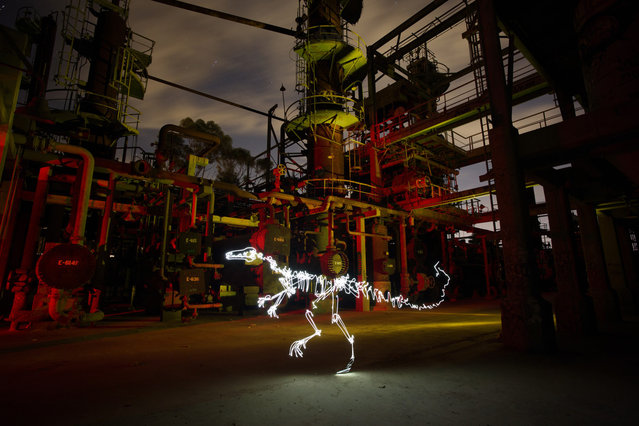
Dinosaur Light Paintings By Darren Pearson

Have you ever tried painting with light? Yes, you’ve heard us right. It is not a figure of speech, and it is actually possible to draw with light if you have a good camera and a tripod. All you have to do is to set your camera on a tripod in a dark place (preferably at night in some park), set exposure time to the max, turn on a single bright light (the screen of your mobile phone will do), and you can start painting. Darren Pearson is a photographer who specializes in making such drawings. The level of intricacy with which he creates his paintings is astounding, considering the fact that making such a drawing is like painting with a blindfold on.

See also: Skateboarding Light Skeletons
Details
26 Feb 2015 05:28:00
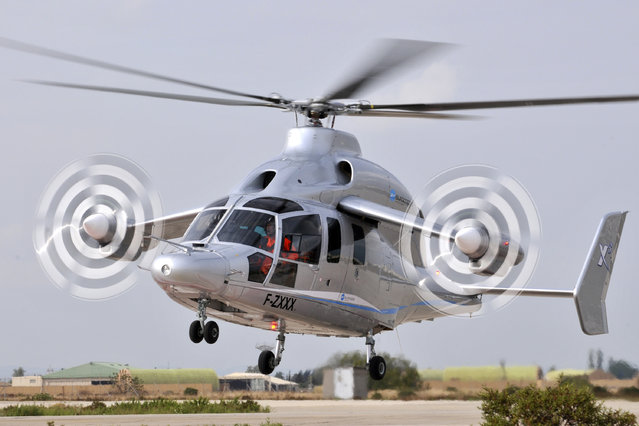
Eurocopter's X³ high-speed hybrid helicopter demonstrator performs, September 6, 2010. The Eurocopter X³ (X-Cubed) is an experimental high-speed compound helicopter developed by Eurocopter (now Airbus Helicopters). (Photo by Reuters/HO/Eurocopter/Penna)

Eurocopter's X³ high-speed hybrid helicopter demonstrator performs, September 6, 2010. The Eurocopter X³ (X-Cubed) is an experimental high-speed compound helicopter developed by Eurocopter (now Airbus Helicopters). A technology demonstration platform for Eurocopter “high-speed, long-range hybrid helicopter” or H³ concept, the X³ achieved 255 knots in level flight on 7 June 2013, setting an unofficial speed record for a helicopter. (Photo by Reuters/HO/Eurocopter/Penna)
Details
21 Sep 2014 11:32:00
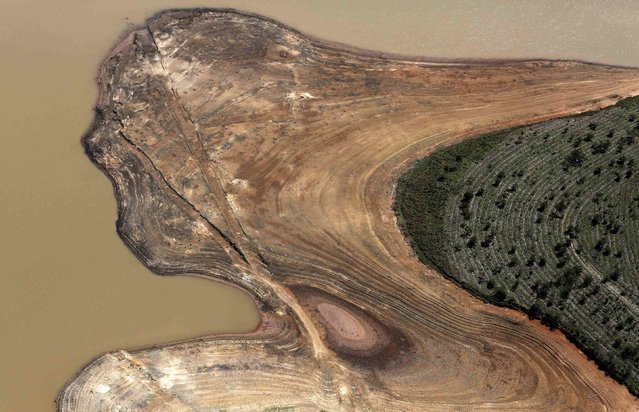
An aerial view of the Atibainha dam, part of the Cantareira reservoir, during a drought in Nazare Paulista, Sao Paulo state November 18, 2014. (Photo by Nacho Doce/Reuters)

An aerial view of the Atibainha dam, part of the Cantareira reservoir, during a drought in Nazare Paulista, Sao Paulo state November 18, 2014. Brazil's worst drought in 80 years has left the Cantareira system, that provides greater Sao Paulo with most of its water, with the lowest water level on record, with daily rationing becoming common in the region's smaller cities, according to the state authorities and the two main reservoirs serving metropolitan Sao Paulo, South America's largest city, could dry out by February if relief does not arrive in the upcoming rainy season. (Photo by Nacho Doce/Reuters)
Details
20 Nov 2014 12:19:00
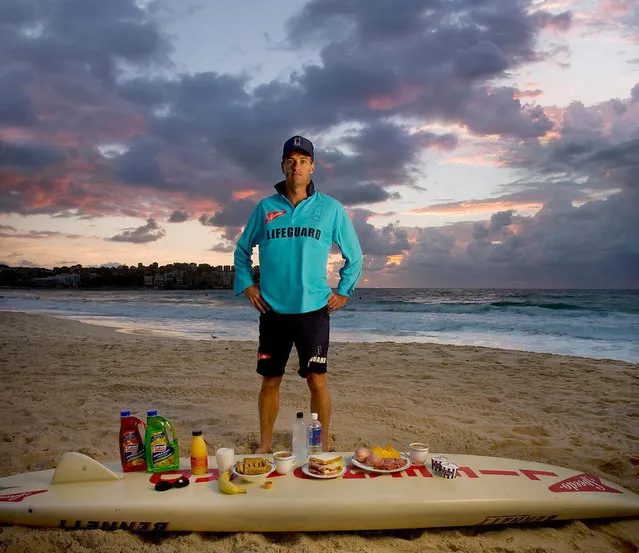
What the World Eats By Peter Menzel And Faith D'Aluisio Part 2

A stunning photographic collection featuring portraits of people from 30 countries and the food they eat in one day. In this fascinating study of people and their diets, 80 profiles are organized by the total number of calories each person puts away in a day. Featuring a Japanese sumo wrestler, a Massai herdswoman, world-renowned Spanish chef Ferran Adria, an American competitive eater, and more, these compulsively readable personal stories also include demographic particulars, including age, activity level, height, and weight. Essays from Harvard primatologist Richard Wrangham, journalist Michael Pollan, and others discuss the implications of our modern diets for our health and for the planet. This compelling blend of photography and investigative reportage expands our understanding of the complex relationships among individuals, culture, and food.
Details
02 May 2014 09:20:00