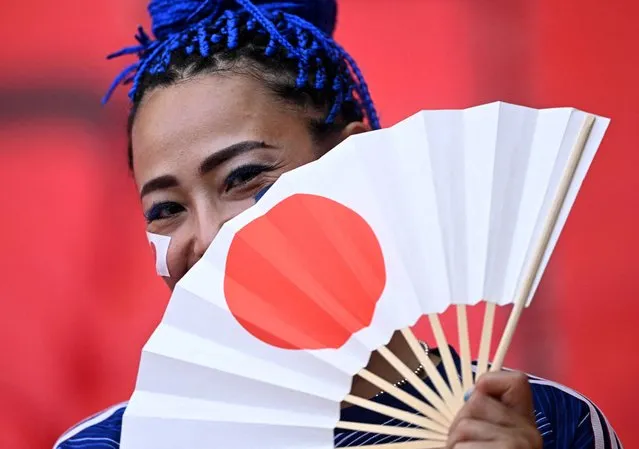
Japanese football fan during the FIFA World Cup Qatar 2022 Group E match between Japan and Costa Rica at Ahmad Bin Ali Stadium on November 27, 2022 in Doha, Qatar. (Photo by Dylan Martinez/Reuters)
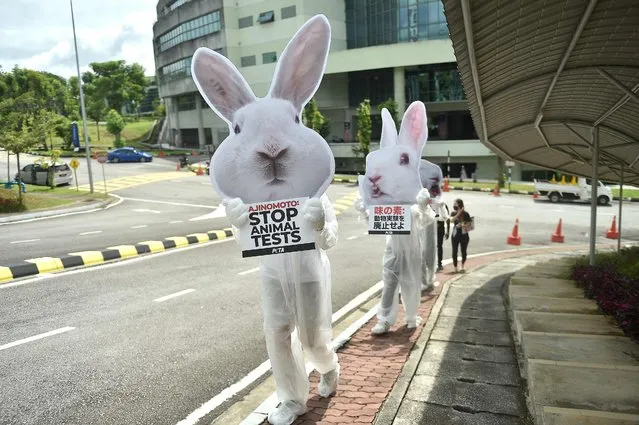
Animal rights activists dressed up as rabbit carry signs that read “Ajinomoto Stop Animal Testing” as they protest outside Ajinomoto headquarters in Kuala Lumpur on January 20, 2023, ahead of Lunar New Year. Activists call for the end of Japanese food company testing on rabbits, dogs, pigs and other animals. (Photo by Arif Kartono/AFP Photo)
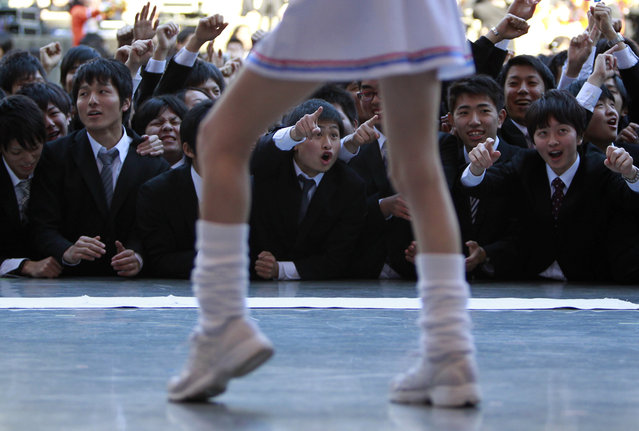
Japanese college students look at cheerleaders during a job-hunting rally in Tokyo January 29, 2014. According to the rally organizers, about 1,500 students from vocational schools attend the rally to boost their morale ahead of their job hunt. (Photo by Yuya Shino/Reuters)
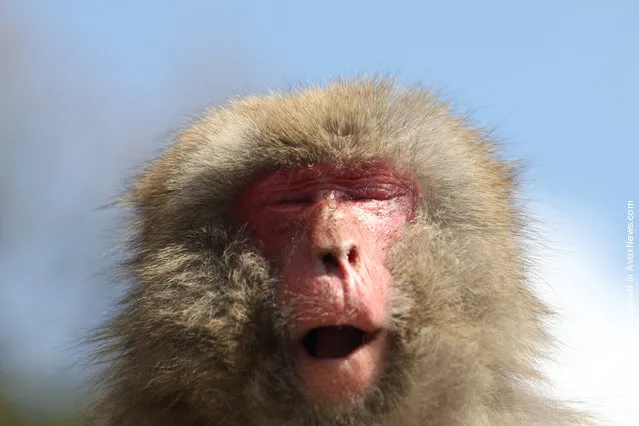
A 19-year-old Japanese macaque monkey named Monday sneezes while suffering an allergy to pollen from the cedar tree, at Awajishima Monkey Center on March 26, 2012 in Sumoto, Hyogo, Japan. Some twenty monkeys are suffering the effects of hay fever at this time of the year, with the typical symptoms being the same as with humans. (Photo by Buddhika Weerasinghe/Getty Images)
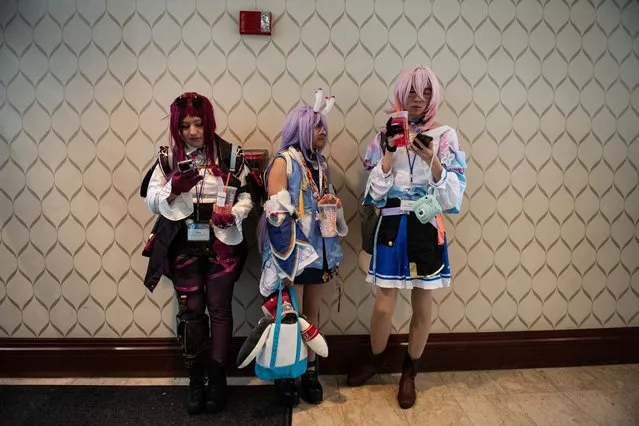
Cosplayers take a break from the convention to check their phones and get coffee during “Anime Boston 2024” at the Hynes Convention Center in Boston, Massachusetts, on March 30, 2024. The convention is organized by the New England Anime Society and celebrates all things Japanese animation, comics and popular culture. (Photo by Joseph Prezioso/AFP Photo)
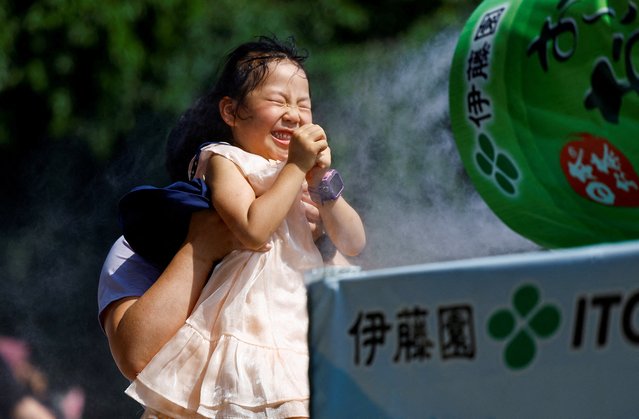
A child reacts as a family takes a break next to a cooling mist at the Sensoji temple as Japanese government issued heat stroke alerts in 39 of the country's 47 prefectures in Tokyo, Japan on July 22, 2024. (Photo by Issei Kato/Reuters)
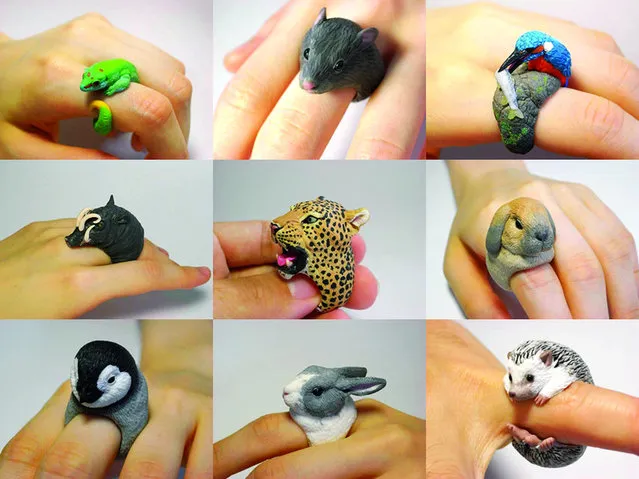
These Animal Cling Rings are by Japanese artist Jiro Miura, working under brand name Count Blue. Miura creates these exquisitely detailed animal rings as well as figurines; his designs have also been used to create mass produced phone plugs and rings. It's a lucky artist who sees his work become so popular.
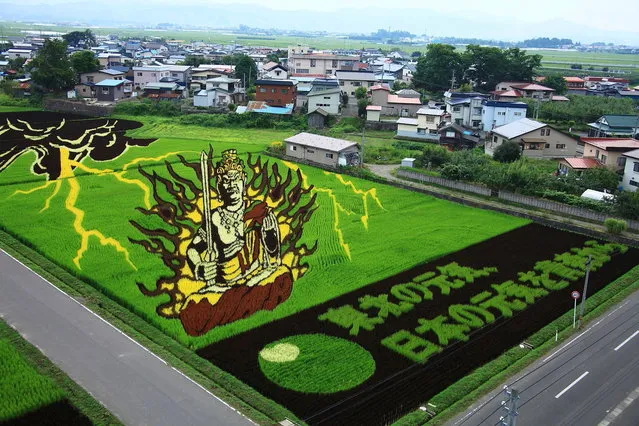
Tanbo Art is the strategic planting of four varieties of rice which have different colored leaves in order to create a giant image in the rice paddy. This type of aesthetic planting began in the Japanese village of Inakadate in 1993 in order to celebrate the village’s over 2000 year history of rice farming. The practice has spread to other rice cultivating communities in Japan and even other countries such as Thailand and South Korea.