Loading...
Done


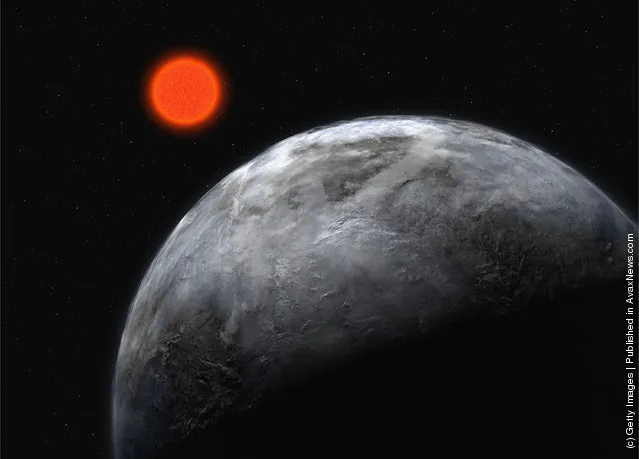
In this artist's impression supplied by the ESO (European Southern Observatory) on April 25, 2007, the planetary system around the red dwarf, Gliese 581, is pictured showing what astronomers believe is the most earth like planet found outside our solar system to date. Using the ESO 3.6-m telescope in Chile, astronomers have uncovered the planet which could have water running on its surface. The planet orbits the faint star Gliese 581, which is 20.5 light-years away in the constellation Libra. (Photo by ESO via Getty Images)
Details
12 Apr 2011 11:00:00
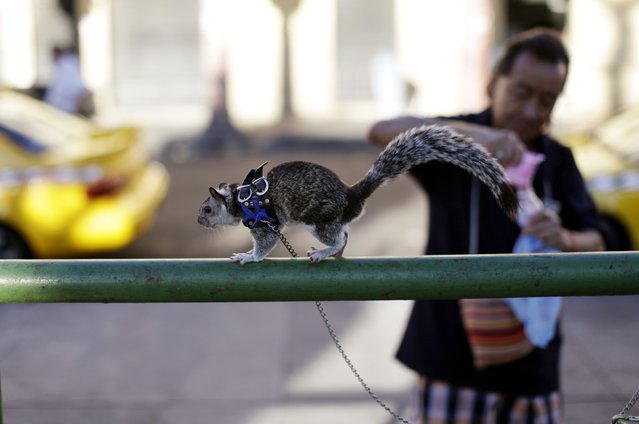
Carlos Melendez prepares to feed his pet squirrel “Colita” in downtown San Salvador January 29, 2015. (Photo by Jose Cabezas/Reuters)

Carlos Melendez prepares to feed his pet squirrel “Colita” in downtown San Salvador January 29, 2015. (Photo by Jose Cabezas/Reuters)
Details
31 Jan 2015 13:35:00


A Chinese vendor wears a rooster hat as he smokes a cigarette at his souvenir stall at a fair at Temple of Earth, on the eve of Chinese New Year February 8, 2005 in Beijing, China. Chinese started February 8, to celebrate the New Year of the Rooster. (Photo by Andrew Wong/Getty Images)
Details
14 May 2011 13:54:00
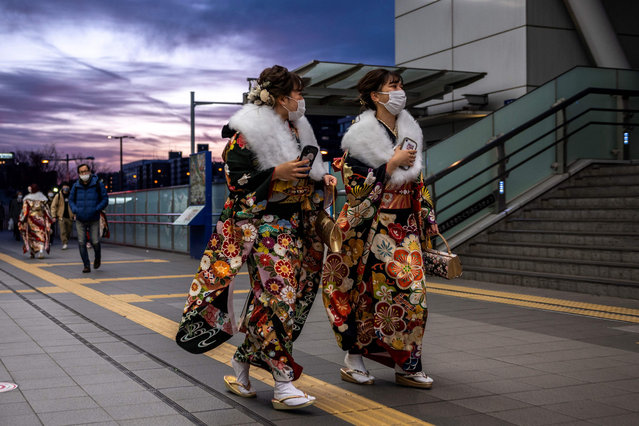
Twenty-year-old women dressed in kimonos walk during sunset after the “Coming-of-Age Day” celebration Yokohama Arena in Yokohama on January 11, 2021 under a state of emergency over the Covid-19 coronavirus pandemic. (Photo by Philip Fong/AFP Photo)

Twenty-year-old women dressed in kimonos walk during sunset after the “Coming-of-Age Day” celebration Yokohama Arena in Yokohama on January 11, 2021 under a state of emergency over the Covid-19 coronavirus pandemic. (Photo by Philip Fong/AFP Photo)
Details
14 Jan 2021 00:07:00
UK Big Brother star Chloe Khan washes her Land Rover wearing a bikini and hot pants  in Borehamwood, England on September 22, 2016. (Photo by Palace Lee)

UK Big Brother star Chloe Khan washes her Land Rover wearing a bikini and hot pants in Borehamwood, England on September 22, 2016. (Photo by Palace Lee)
Details
23 Sep 2016 09:54:00
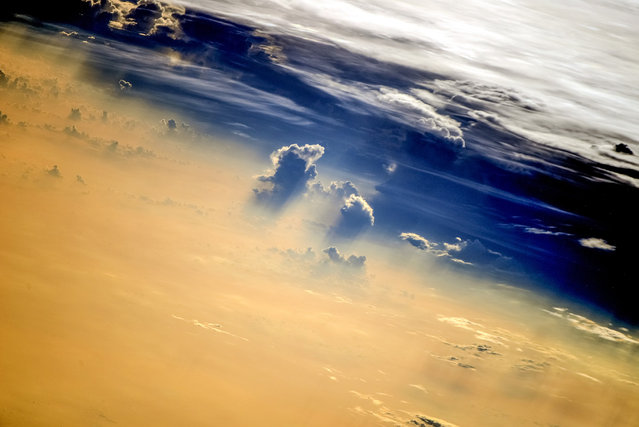
Image of the Clouds taken in August 2014 by astronauts on board the International Space Station (ISS).  A year from space photographs of hurricanes, typhoons and meteorite craters show an astronauts-eye view of our planet from hundreds of miles above the earth. The illuminating images were taken by astronauts onboard the International Space Station (ISS) over the course of 2014. (Photo by NASA/SPL/Barcroft Media)

Image of the Clouds taken in August 2014 by astronauts on board the International Space Station (ISS). A year from space photographs of hurricanes, typhoons and meteorite craters show an astronauts-eye view of our planet from hundreds of miles above the earth. The illuminating images were taken by astronauts onboard the International Space Station (ISS) over the course of 2014. (Photo by NASA/SPL/Barcroft Media)
Details
31 Dec 2014 14:47:00
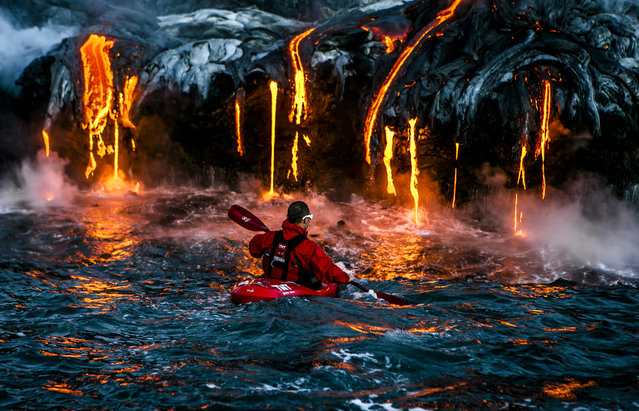
“Kilauea Rules”. The most extreme place we put ours kayakers to paddle till now. Photo location: Big Island, Hawaii. (Photo and caption by Alexandre Socci/National Geographic Photo Contest)

“Kilauea Rules”. The most extreme place we put ours kayakers to paddle till now. Photo location: Big Island, Hawaii. (Photo and caption by Alexandre Socci/National Geographic Photo Contest)
Details
20 Jun 2014 10:47:00
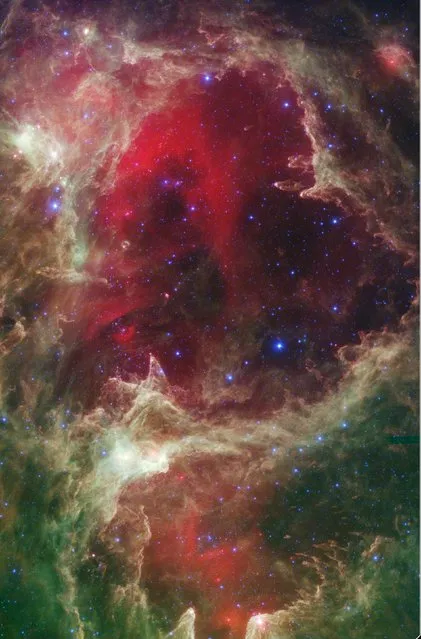
An infrared portrait from NASA's Spitzer Space Telescope which shows generations of stars is seen in this undated NASA handout image released February 14, 2013. In this wispy star-forming region, called W5, the oldest stars can be seen as blue dots in the centers of the two hollow cavities (other blue dots are background and foreground stars not associated with the region). Red shows heated dust that pervades the region's cavities, while green highlights dense clouds. (Photo by NASA/Reuters/JPL-Caltech/Harvard-Smithsonian/Handout)

An infrared portrait from NASA's Spitzer Space Telescope which shows generations of stars is seen in this undated NASA handout image released February 14, 2013. In this wispy star-forming region, called W5, the oldest stars can be seen as blue dots in the centers of the two hollow cavities (other blue dots are background and foreground stars not associated with the region). Red shows heated dust that pervades the region's cavities, while green highlights dense clouds. (Photo by NASA/Reuters/JPL-Caltech/Harvard-Smithsonian/Handout)
Details
03 Mar 2013 08:44:00