Loading...
Done
Chris Hondros Retrospective Part1

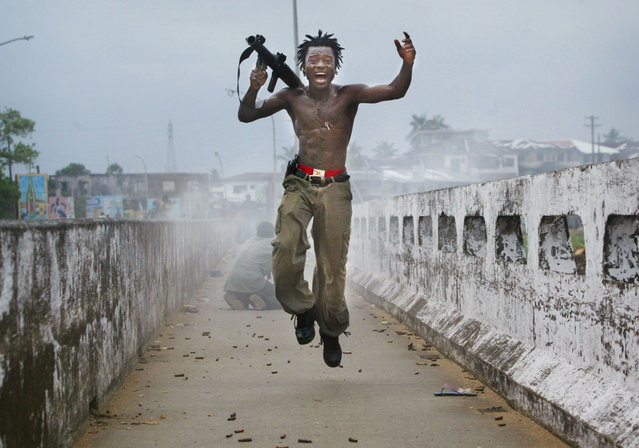
Chris Hondros, a Getty Images photographer, was fatally wounded on April 20, 2011, in a mortar attack by government forces while covering the civil war in Libya. Hondros' work is woven in our history as he covered everything from politics to marathons. A new film will focus on his life as told through his images. Here's a look at some of his finest and final work. Some of these images are graphic in nature
Details
23 Aug 2013 12:18:00
Viewing The Earth From Space

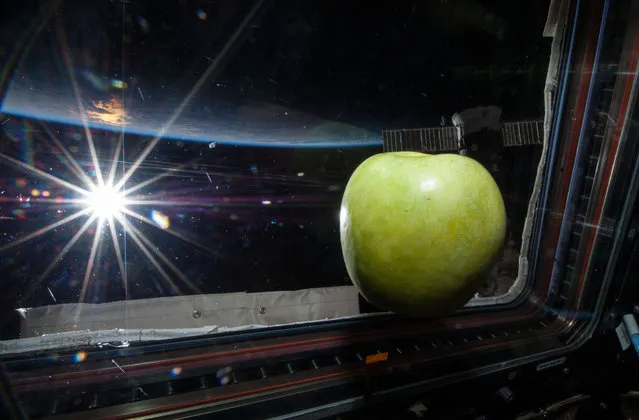
Despite any political differences between the United States and Russia, the space agencies of the two countries continue their cooperative work in Earth's orbit, aboard the International Space Station. Apart from the research being done in microgravity, ISS crew members continue to send back amazing images of our home world, photographed from low Earth orbit. Gathered here are recent images of Earth from aboard the ISS, and from a handful of other NASA satellites.
Details
01 Jun 2014 12:36:00
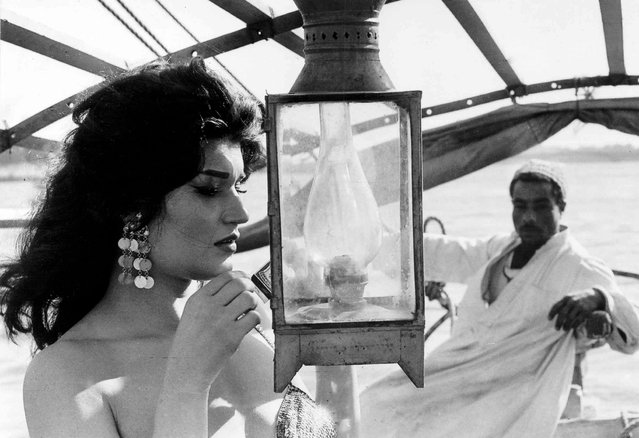
Belly dancer Nagwa Fouad sailing on the river Nile, 1972. Farouk Ibrahim was a society photographer, capturing Egyptian’s political and cultural elite, including presidents Nasser, Sadat and Mubarak. (Photo by Farouk Ibrahim)

Belly dancer Nagwa Fouad sailing on the river Nile, 1972. Egypt is one of 23 countries represented at the Dubai Photo Exhibition, showing off photography that dates to the 1920s. Dubai Photo Exhibition is in various venues of Dubai’s design district from 16-19 March. (Photo by Farouk Ibrahim)
Details
17 Mar 2016 15:09:00
A woman fancy dressed as Catrina takes part in the “Catrinas Parade” along Reforma Avenue, in Mexico City on October 26, 2019. (Photo by Claudio Cruz/AFP Photo)

A woman fancy dressed as Catrina takes part in the “Catrinas Parade” along Reforma Avenue, in Mexico City on October 26, 2019. Mexicans get ready to celebrate the Day of the Dead highlighting the character of La Catrina which was created by cartoonist Jose Guadalupe Posada, famous for his drawings of typical local, folkloric scenes, socio-political criticism and for his illustrations of “skeletons” or skulls, including La Catrina. (Photo by Claudio Cruz/AFP Photo)
Details
29 Oct 2019 00:03:00
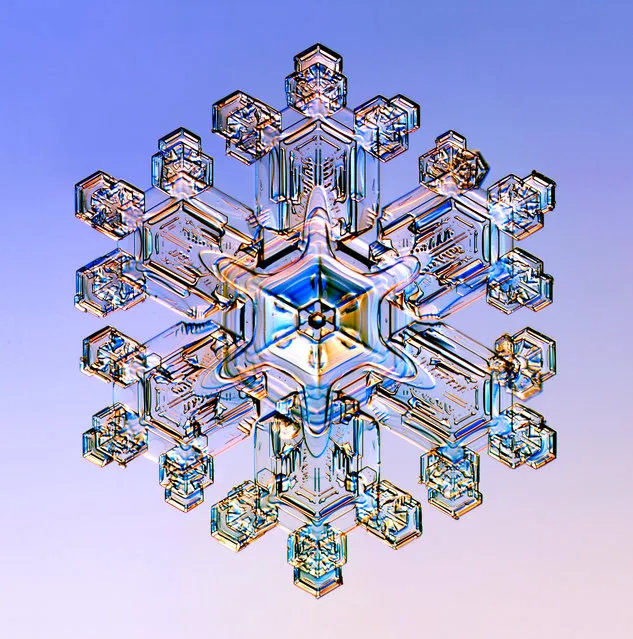
Nikon Small World Photomicrography Competition 2012. Honorable Mention. “Snow crystal, illuminated with colored lights (5x)”. (Photo by Dr. Kenneth Libbrecht, California Institute of Technology (Caltech), Department of Physics, Pasadena, California, USA)

Most people know Nikon as a purveyor of pro and consumer-grade digital cameras. But the company's expertise with optics bleeds over into related markets – it's one of the science community's major suppliers of microscopes. And each year the company asks the community to send it some of their favorite images of tiny objects. A panel of scientists and journalists have chosen the best of this past year's submissions, which Nikon has placed on its Small World site.

Photo: Honorable Mention. “Snow crystal, illuminated with colored lights (5x)”. (Photo by Dr. Kenneth Libbrecht, California Institute of Technology (Caltech), Department of Physics, Pasadena, California, USA)
Details
25 Oct 2012 13:49:00


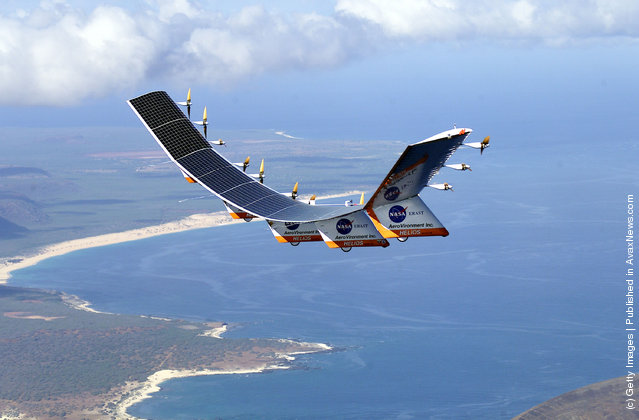
“NASA's Pathfinder, Pathfinder Plus, Centurion and Helios Prototype were an evolutionary series of solar- and fuel-cell-system-powered unmanned aerial vehicles. AeroVironment, Inc. developed the vehicles under NASA's Environmental Research Aircraft and Sensor Technology (ERAST) program. They were built to develop the technologies that would allow long-term, high-altitude aircraft to serve as “atmospheric satellites”, to perform atmospheric research tasks as well as serve as communications platforms”. – Wikipedia

Photo: The solar-electric Helios Prototype flying wing is flies over the Hawaiian islands of Niihau and Lehua during the first solar-powered test flight July 14, 2001 from the U.S. Navy's Pacific Missile Range Facility on Kauai, HI. The 18-hour flight was a functional checkout of the aircraft's systems and performance in preparation for an attempt to reach sustained flight at 100,000 feet altitude later in the summer. (Photo Courtesy of NASA/Getty Images)
Details
14 Jul 2011 09:24:00
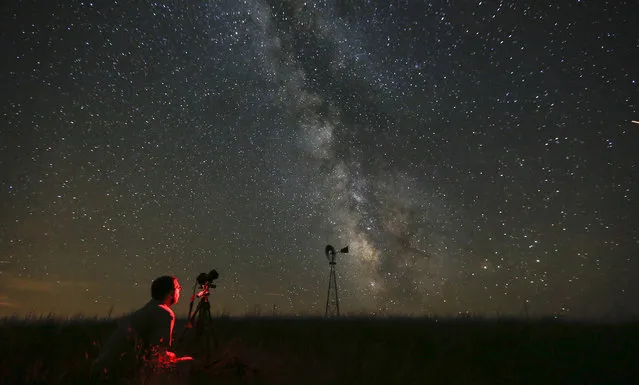
In this Wednesday, July 23, 2014 file photo, Omaha photographer Lane Hickenbottom photographs the night sky in a pasture near Callaway, Neb. With no moon in the sky, the Milky Way was visible to the naked eye. More than one-third of the world’s population can no longer see the Milky Way because of man-made lights, according to a scientific paper by Light Pollution Science and Technology Institute's Fabio Falchi and his team members, published on Friday, June 10, 2016. (Photo by Travis Heying/The Wichita Eagle via AP Photo)

In this Wednesday, July 23, 2014 file photo, Omaha photographer Lane Hickenbottom photographs the night sky in a pasture near Callaway, Neb. With no moon in the sky, the Milky Way was visible to the naked eye. More than one-third of the world’s population can no longer see the Milky Way because of man-made lights, according to a scientific paper by Light Pollution Science and Technology Institute's Fabio Falchi and his team members, published on Friday, June 10, 2016. (Photo by Travis Heying/The Wichita Eagle via AP Photo)
Details
11 Jun 2016 12:37:00
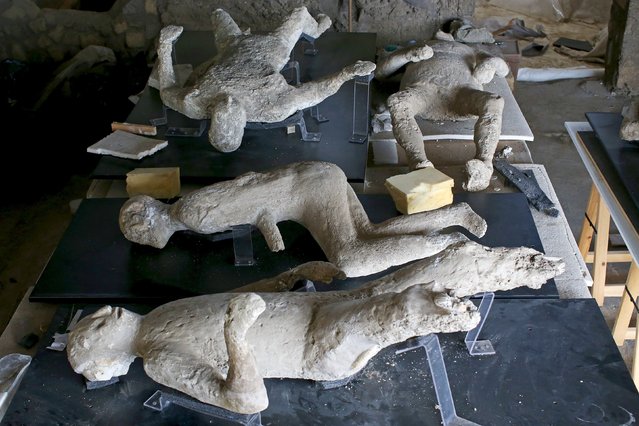
Plaster cast moulds of victims of the Mount Vesuvius eruption lie on a display table in a laboratory at Pompeii October 13, 2015. An expert team made up of archaeologists, radiologists, orthodontists and anthropologists began on September 2015 to use CAT scan technology (computerised axial tomography) to peer inside the plaster cast moulds of Pompeii's victims, in a study that has added more detail to previous findings. (Photo by Alessandro Bianchi/Reuters)

Plaster cast moulds of victims of the Mount Vesuvius eruption lie on a display table in a laboratory at Pompeii October 13, 2015. An expert team made up of archaeologists, radiologists, orthodontists and anthropologists began on September 2015 to use CAT scan technology (computerised axial tomography) to peer inside the plaster cast moulds of Pompeii's victims, in a study that has added more detail to previous findings. A 16-layer scan had to be used in order to penetrate the hardened plaster but the results showed up impressive skeletal remains and near perfect teeth. (Photo by Alessandro Bianchi/Reuters)
Details
22 Oct 2015 08:02:00