Loading...
Done
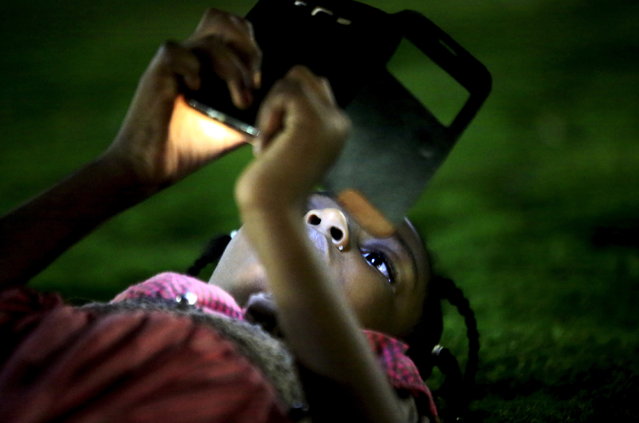
A girl uses her mobile phone during the evening at the National Park in Khartoum, Sudan, April 24, 2015. (Photo by Mohamed Nureldin Abdallah/Reuters)

A girl uses her mobile phone during the evening at the National Park in Khartoum, Sudan, April 24, 2015. (Photo by Mohamed Nureldin Abdallah/Reuters)
Details
14 Jul 2015 13:23:00
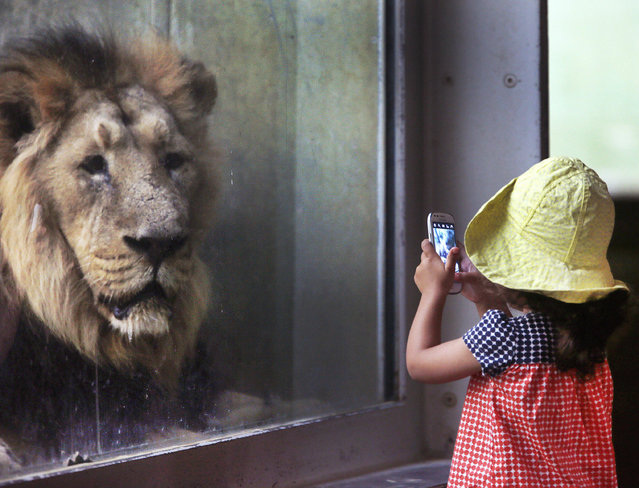
A little girl takes a picture of a lion in the zoo in Frankfurt, Germany, Tuesday, September 13, 2016. (Photo by Michael Probst/AP Photo)

A little girl takes a picture of a lion in the zoo in Frankfurt, Germany, Tuesday, September 13, 2016. (Photo by Michael Probst/AP Photo)
Details
14 Sep 2016 11:01:00
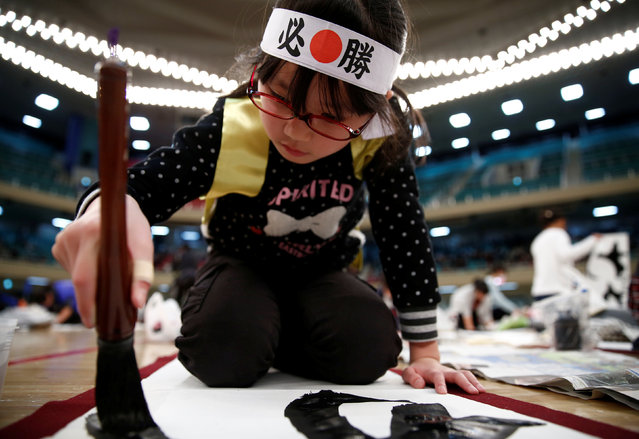
A girl participates in a New Year calligraphy contest in Tokyo, Japan, January 5, 2017. (Photo by Kim Kyung-Hoon/Reuters)

A girl participates in a New Year calligraphy contest in Tokyo, Japan, January 5, 2017. (Photo by Kim Kyung-Hoon/Reuters)
Details
06 Jan 2017 13:29:00
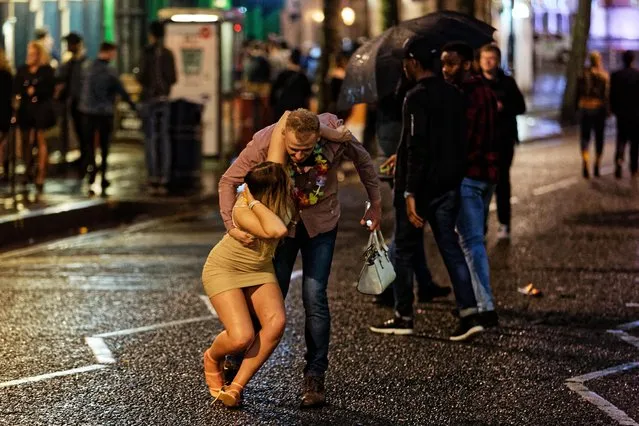
A girl gets a helping hand across the road in Swansea, Wales, England on January 1, 2018. (Photo by Athena Picture Agency)

A girl gets a helping hand across the road in Swansea, Wales, England on December 31, 2017. (Photo by Athena Picture Agency)
Details
01 Jan 2018 10:22:00
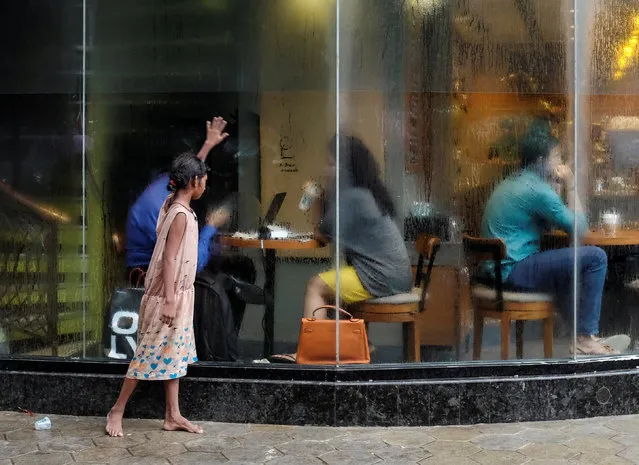
A homeless girl asks for alms outside a coffee shop in Mumbai, India, June 24, 2016. (Photo by Danish Siddiqui/Reuters)

A homeless girl asks for alms outside a coffee shop in Mumbai, India, June 24, 2016. (Photo by Danish Siddiqui/Reuters)
Details
30 Jun 2016 11:46:00
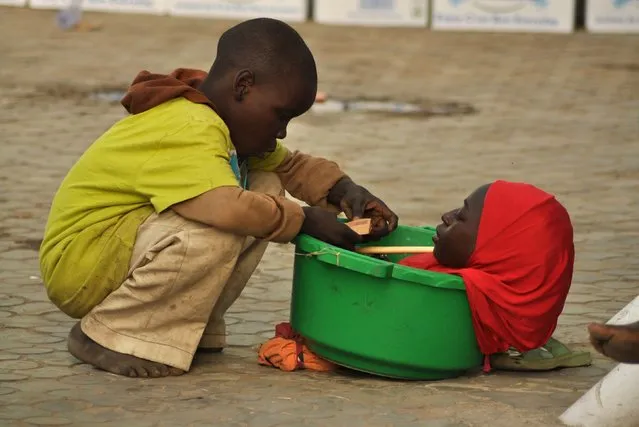
A physically challenged girl looks at her brother as she is kept in a basin to seek alms from people on the street in Kano, Nigeria December 30, 2015. (Photo by Reuters/Stringer)

A physically challenged girl looks at her brother as she is kept in a basin to seek alms from people on the street in Kano, Nigeria December 30, 2015. The girl has suffered from her condition since birth. (Photo by Reuters/Stringer)
Details
02 Jan 2016 11:18:00
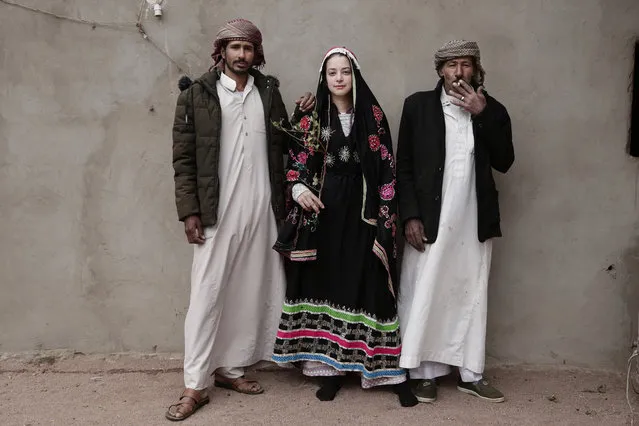
In this March 31, 2019 photo, an Egyptian student borrows a Bedouin wedding dress to pose for a photograph with Bedouin men from the Hamada tribe, in Wadi Sahw, Abu Zenima, in South Sinai, Egypt. Four Bedouin women are for the first time leading tours in Egypt’s Sinai Peninsula, breaking new ground in their deeply conservative community, where women almost never work outside the home or interact with outsiders.  The tourists can only be women, and the tours can’t go overnight. Each day before the sun sets, the group returns to the Hamada’s home village in Wadi Sahu, a narrow desert valley. (Photo by Nariman El-Mofty/AP Photo)

In this March 31, 2019 photo, an Egyptian student borrows a Bedouin wedding dress to pose for a photograph with Bedouin men from the Hamada tribe, in Wadi Sahw, Abu Zenima, in South Sinai, Egypt. Four Bedouin women are for the first time leading tours in Egypt’s Sinai Peninsula, breaking new ground in their deeply conservative community, where women almost never work outside the home or interact with outsiders. The tourists can only be women, and the tours can’t go overnight. Each day before the sun sets, the group returns to the Hamada’s home village in Wadi Sahu, a narrow desert valley. (Photo by Nariman El-Mofty/AP Photo)
Details
11 Apr 2019 00:01:00
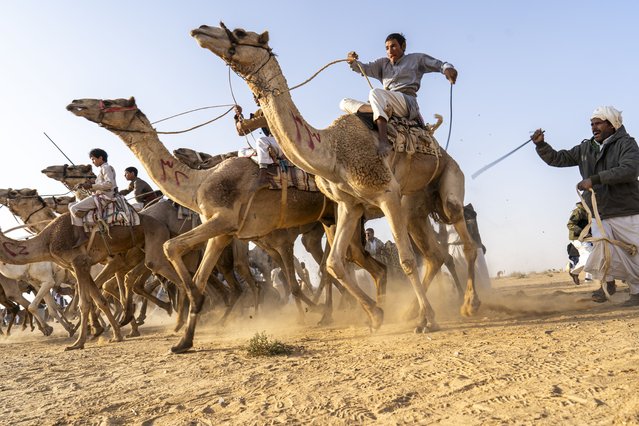
The start of the Al-Sirr camel race on November 19, 2025 in El Hassana, Egypt. The Al-Sirr camel race is one of the most culturally significant and widely celebrated sporting events among the Bedouin communities of Sinai. Every year, Bedouin tribes gather here to hold this traditional race, an event that preserves its authentic heritage. Unlike modern camel races elsewhere, the Bedouin here do not use robotic jockeys or advanced racing technologies. Instead, the camels are ridden by young boys aged approximately 5 to 16, maintaining a long-standing cultural practice. (Photo by Ali Moustafa/Getty Images)

The start of the Al-Sirr camel race on November 19, 2025 in El Hassana, Egypt. The Al-Sirr camel race is one of the most culturally significant and widely celebrated sporting events among the Bedouin communities of Sinai. Every year, Bedouin tribes gather here to hold this traditional race, an event that preserves its authentic heritage. Unlike modern camel races elsewhere, the Bedouin here do not use robotic jockeys or advanced racing technologies. Instead, the camels are ridden by young boys aged approximately 5 to 16, maintaining a long-standing cultural practice. (Photo by Ali Moustafa/Getty Images)
Details
03 Jan 2026 12:49:00