Loading...
Done
Afghanistan: Dogs of War Part 2

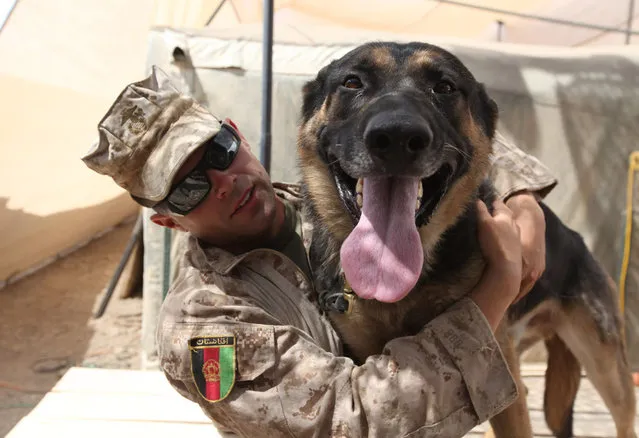
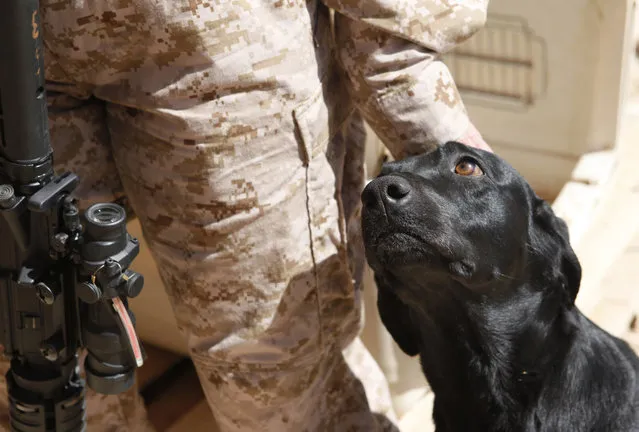
Throughout the course of the long war in Afghanistan, Coalition troops have relied on thousands of military working dogs to help keep them safe, and make their jobs easier. The dogs are trained to detect explosives, to find illegal drugs, to search for missing comrades, or target enemy combatants. Not only are they active on the front lines, but behind the lines they serve as therapy dogs, service dogs, and loyal companions. They also share the same risks as the ground troops, suffering injuries and sometimes death on the battlefields. Gathered here are images of these dogs and their handlers in Afghanistan and back home, from over the past several years, part of the ongoing series here on Afghanistan.
Details
05 Jun 2014 21:10:00
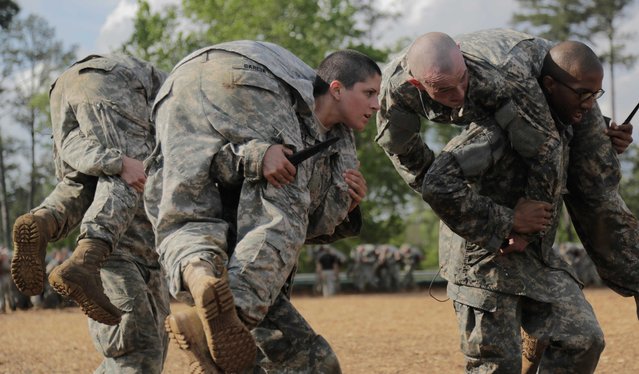
Then U.S. Army First Lieutenant Kirsten Griest (C) and fellow soldiers participate in combatives training during the Ranger Course on Fort Benning, Georgia, in this handout photograph taken on April 20, 2015 and obtained on August 20, 2015. When Griest and another woman completed the daunting U.S. Army Ranger school this week they helped end questions about whether women can serve as combat leaders, as the Pentagon is poised to open new roles, including elite Navy SEALs, to women in coming months. (Photo by Spc. Nikayla Shodeen/Reuters/U.S. Army)

Then U.S. Army First Lieutenant Kirsten Griest (C) and fellow soldiers participate in combatives training during the Ranger Course on Fort Benning, Georgia, in this handout photograph taken on April 20, 2015 and obtained on August 20, 2015. When Griest and another woman completed the daunting U.S. Army Ranger school this week they helped end questions about whether women can serve as combat leaders, as the Pentagon is poised to open new roles, including elite Navy SEALs, to women in coming months. The feat by Griest and First Lieutenant Shaye Haver followed a re-evaluation of the role of women after their frontline involvement in Iraq and Afghanistan and the end of a rule barring them from combat roles in 2013. (Photo by Spc. Nikayla Shodeen/Reuters/U.S. Army)
Details
21 Aug 2015 13:03:00


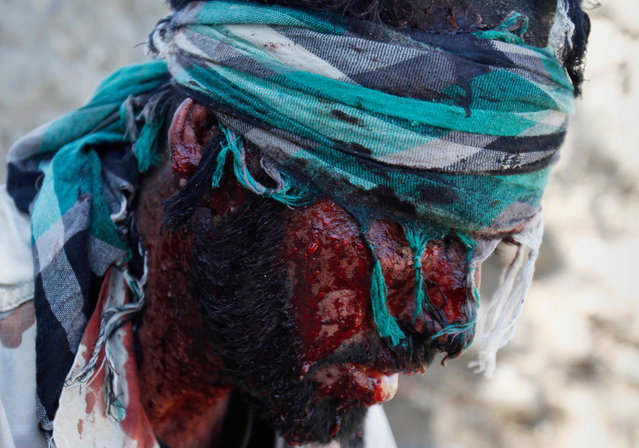
A wounded member of the Afghan police reaction force waits for treatment in Alingar, Laghman province, on April 30, 2012. A bomb exploded next to opium poppy fields during a poppy eradication campaign in, wounding two Afghan policemen, police officials said. (AP Photo/Rahmat Gul)
Details
06 May 2012 12:10:00


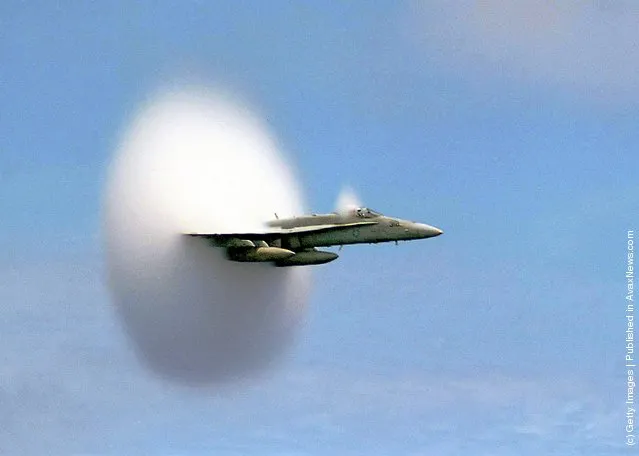
An F/A-18 Hornet assigned to Strike Fighter Squadron One Five One (VFA-151) emerges from a cloud created when it broke the sound barrier in the skies over the Pacific Ocean, July 7, 1999. (Photo by John Gay/US Navy)
Details
25 May 2011 10:33:00
Afghanistan: Dogs of War Part 1

Throughout the course of the long war in Afghanistan, Coalition troops have relied on thousands of military working dogs to help keep them safe, and make their jobs easier. The dogs are trained to detect explosives, to find illegal drugs, to search for missing comrades, or target enemy combatants. Not only are they active on the front lines, but behind the lines they serve as therapy dogs, service dogs, and loyal companions. They also share the same risks as the ground troops, suffering injuries and sometimes death on the battlefields. Gathered here are images of these dogs and their handlers in Afghanistan and back home, from over the past several years, part of the ongoing series here on Afghanistan.
Details
03 Jun 2014 21:02:00
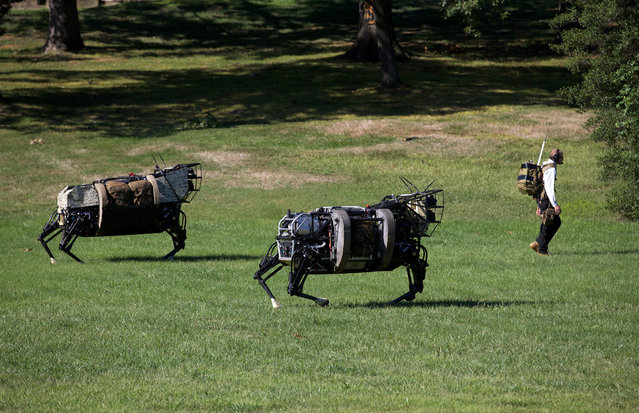
Two robotic legged squad support system (LS3) machines by the Defense Advanced Research Project Agency follow a technician during a demonstration at Joint Base Myer-Henderson Hall, Virginia, on September 10, 2012. (U.S. Marine Corps photo by Sgt. Mallory S. VanderSchans)

Two robotic legged squad support system (LS3) machines by the Defense Advanced Research Project Agency follow a technician during a demonstration at Joint Base Myer-Henderson Hall, Virginia, on September 10, 2012. (U.S. Marine Corps photo by Sgt. Mallory S. VanderSchans via The Atlantic)
Details
20 Oct 2012 10:30:00
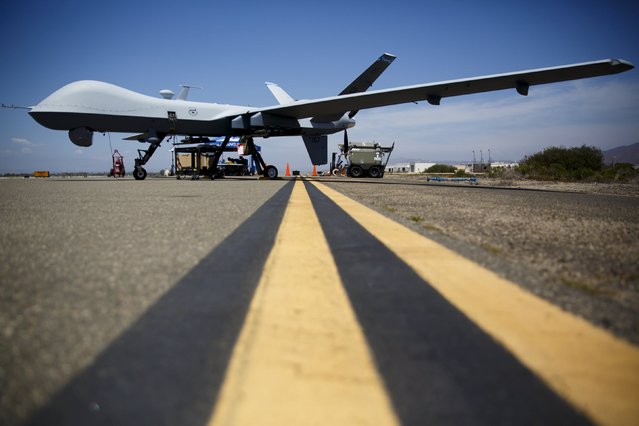
A General Atomics MQ-9 Reaper stands on the runway during “Black Dart”, a live-fly, live fire demonstration of 55 unmanned aerial vehicles, or drones, at Naval Base Ventura County Sea Range, Point Mugu, near Oxnard, California July 31, 2015. (Photo by Patrick T. Fallon/Reuters)

A General Atomics MQ-9 Reaper stands on the runway during “Black Dart”, a live-fly, live fire demonstration of 55 unmanned aerial vehicles, or drones, at Naval Base Ventura County Sea Range, Point Mugu, near Oxnard, California July 31, 2015. (Photo by Patrick T. Fallon/Reuters)
Details
02 Aug 2015 13:02:00
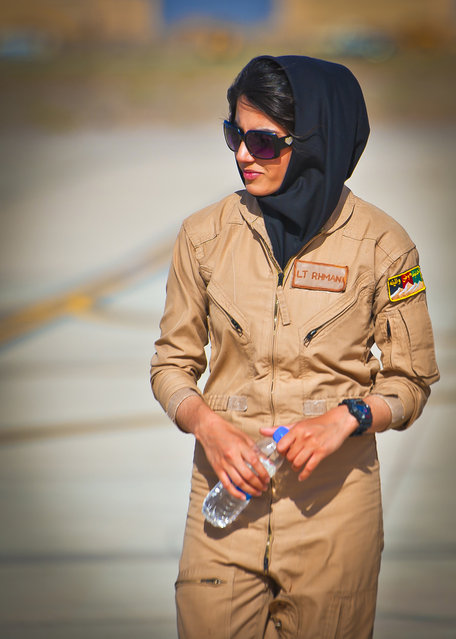
Afghan air force 2nd Lt. Niloofar Rhmani walks the flight line at Shindand Air Base, Afghanistan, prior to her graduation from undergraduate pilot training, on May 13, 2013. Rhmani made history on May 14, when she became the first female to successfully complete undergraduate pilot training and earn the status of pilot in more than 30 years. She will continue her service as she joins the Kabul Air Wing as a Cessna 208 pilot. (Photo by Senior Airman Scott Saldukas/USAF)

Afghan air force 2nd Lt. Niloofar Rhmani walks the flight line at Shindand Air Base, Afghanistan, prior to her graduation from undergraduate pilot training, on May 13, 2013. Rhmani made history on May 14, when she became the first female to successfully complete undergraduate pilot training and earn the status of pilot in more than 30 years. She will continue her service as she joins the Kabul Air Wing as a Cessna 208 pilot. (Photo by Senior Airman Scott Saldukas/USAF)
Details
04 Jun 2013 08:33:00