A man washes his horse as a woman bathes her son at concrete water pens under a flyover in a slum area in Kolkata, India October 21, 2016. (Photo by Rupak De Chowdhuri/Reuters)
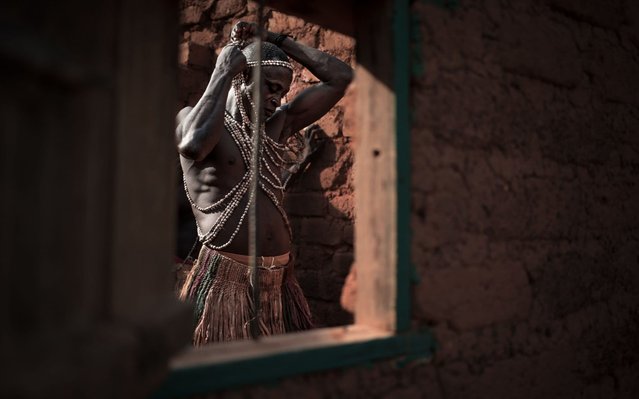
A Broto dancer prepares himself in a disused house of Bambari, in the centre of Central African Republic, before performing on March 14, 2019. The Broto, belonging to the Banda ethnic group, are known for their traditional dances accompanied by heavy horns made of tree roots. Today this tradition falls into disuse and its history is now forgotten by the new generations. (Photo by Florent Vergnes/AFP Photo)
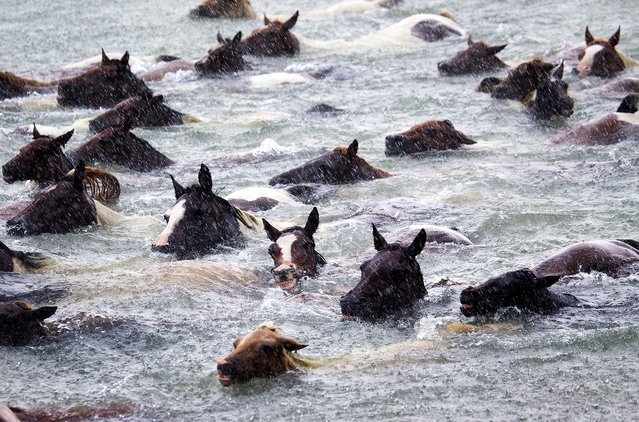
Chincoteague Ponies swim across Assateague Channel in a heavy downpour on Wednesday, July 24, 2013 during the 88th Annual Chincoteague Pony Swim. A portion of the herd will be auctioned on Thursday. (Photo by Jay Diem/Eastern Shore News)
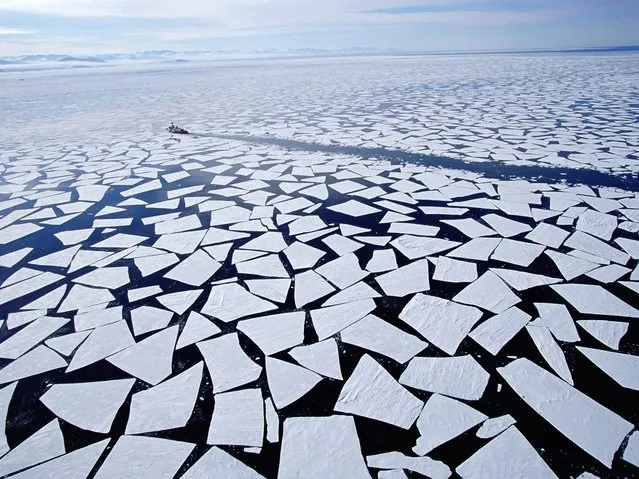
McMurdo Station is a U.S. Antarctic research centre located on the southern tip of Ross Island, which is in the New Zealand-claimed Ross Dependency on the shore of McMurdo Sound in Antarctica. It is operated by the United States through the United States Antarctic Program, a branch of the National Science Foundation. The station is the largest community in Antarctica, capable of supporting up to 1,258 residents, and serves as the United States Antarctic science facility. All personnel and cargo going to or coming from Amundsen–Scott South Pole Station first pass through McMurdo.
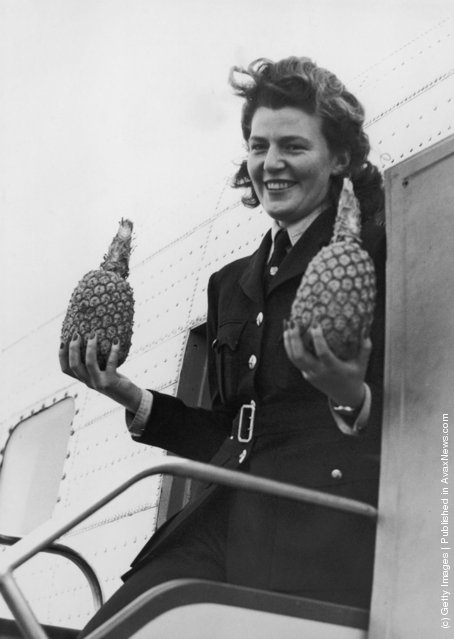
British South American Airways hostess Mary Guthrie with a pair of pineapples, on the return of the Lancastrian airliner 'Star Dust' to Heathrow Airport after a test-flight to Buenos Aires, 15th January 1946