Loading...
Done
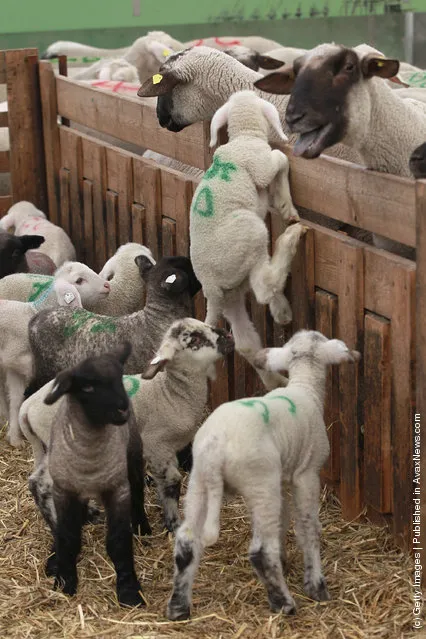
Easter Lamb

A merino lamb attempts to jump out of its enclosure to find its mother shortly before feeding time at the Educational and Reserach Station for Animal Breeding (Lehr- und Versuchsanstalt fuer Tierzucht und Tierhaltung, or LVAT) in Brandenburg state on January 27, 2012 in Gross Kreutz, Germany. Hundreds of lambs have been born at the LVAT in recent weeks in the midst of the station's lambing season. Many of the lambs will be sold just before Easter, when they will have grown to a weight of over 40kg, as lamb is the traditional German Easter meal. (Photo by Sean Gallup/Getty Images)
Details
29 Jan 2012 12:12:00
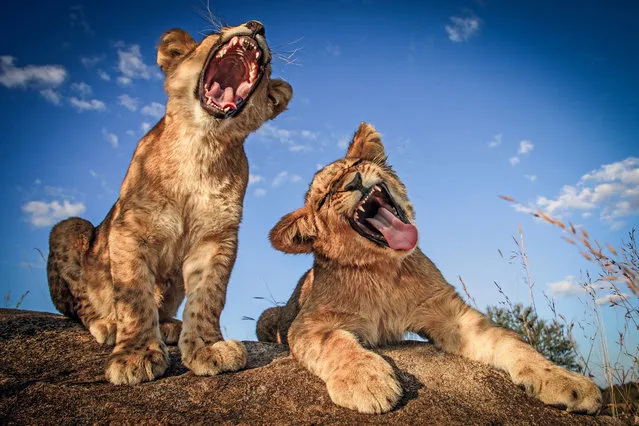
The two lion cubs singing their hearts out  at Antelope park in Zimbabwe. (Photo by David Jenkins/Caters News Agency)

They say a picture is worth a thousand words, and these striking images of 2017 are no exception. The photo highlights include incredible snapshots of the natural world as well as some awesome animal and human encounters. The vibrant gallery also shows thrill-seekers pushing themselves to the limit with breathtaking stunts captured in perfect clarity. The pictures have been taken by a host of photographers from around the world. Here: The two lion cubs singing their hearts out at Antelope park in Zimbabwe. (Photo by David Jenkins/Caters News Agency)
Details
03 Jan 2018 07:27:00
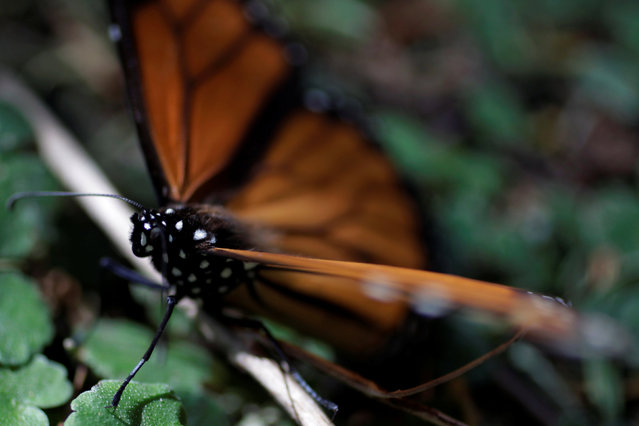
A monarch butterfly rests on the ground at the Sierra Chincua butterfly sanctuary on a mountain in Angangeo, Michoacan November 24, 2016. Angangueo is a town and municipality located in far eastern Michoacán state in central Mexico noted for its history of mining and its location in the Monarch Butterfly Biosphere Reserve. The Monarch Butterfly Biosphere Reserve is a World Heritage Site containing most of the over-wintering sites of the eastern population of the monarch butterfly. The reserve is located in the Trans-Mexican Volcanic Belt pine-oak forests ecoregion on the border of Michoacán and State of Mexico, 100 km (62 miles), northwest of Mexico City. Millions of butterflies arrive in the reserve annually. Butterflies only inhabit a fraction of the 56,000 hectares of the reserve from October–March. (Photo by Carlos Jasso/Reuters)

A monarch butterfly rests on the ground at the Sierra Chincua butterfly sanctuary on a mountain in Angangeo, Michoacan November 24, 2016. Angangueo is a town and municipality located in far eastern Michoacán state in central Mexico noted for its history of mining and its location in the Monarch Butterfly Biosphere Reserve. The Monarch Butterfly Biosphere Reserve is a World Heritage Site containing most of the over-wintering sites of the eastern population of the monarch butterfly. (Photo by Carlos Jasso/Reuters)
Details
26 Nov 2016 10:20:00
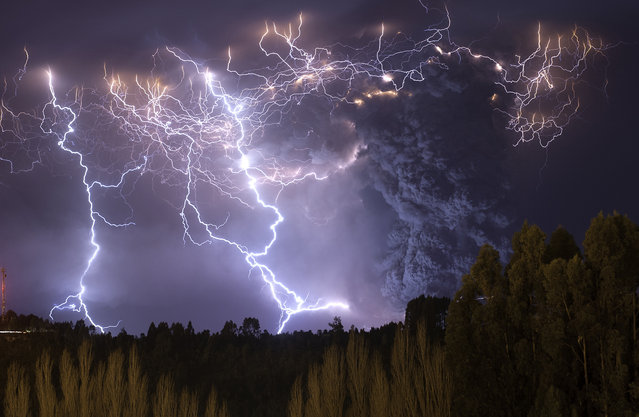
The eruption of Cordon Caulle began on June 4, 2011, located in the Region of Los Rios in Chile. For about 12 months, people and animals became accustomed to living with the daily fall of ash, which also caused problems in the air traffic in South America. The explosions and lightning during first days of the eruption could be seen from hundreds of miles around. This photograph was taken on the second night of eruption from the town of Lago Ranco. (Photo and caption by Francisco Negroni/National Geographic Traveler Photo Contest)

The eruption of Cordon Caulle began on June 4, 2011, located in the Region of Los Rios in Chile. For about 12 months, people and animals became accustomed to living with the daily fall of ash, which also caused problems in the air traffic in South America. The explosions and lightning during first days of the eruption could be seen from hundreds of miles around. This photograph was taken on the second night of eruption from the town of Lago Ranco. (Photo and caption by Francisco Negroni/National Geographic Traveler Photo Contest)

ATTENTION! All pictures are presented in high resolution. To see Hi-Res images – just TWICE click on any picture. In other words, click small picture – opens the BIG picture. Click BIG picture – opens VERY BIG picture.
Details
23 Jun 2013 11:24:00
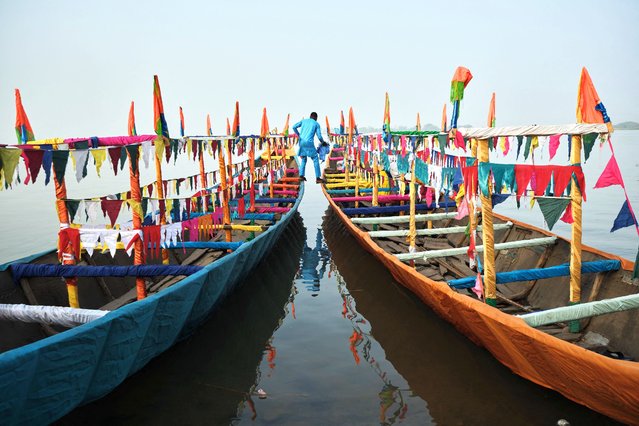
A man crosses from a pirogue to another pirogue during the annual boat regatta in Yauri, Kebbi State, on February 15, 2025. The regatta festival started about 200 years ago as a display of naval strength of the Gungu people, where the Gungu warriors annually attacked dangerous hippopotamus that were destroying farmlands. Warriors would board various sizes of canoes with different types of weapons to attack the animal on the River Niger. This required expertise in canoe paddling and naval warfare. It also served as training exercise for upcoming Gungu warriors. (Photo by Toyin Adedokun/AFP Photo)

A man crosses from a pirogue to another pirogue during the annual boat regatta in Yauri, Kebbi State, on February 15, 2025. The regatta festival started about 200 years ago as a display of naval strength of the Gungu people, where the Gungu warriors annually attacked dangerous hippopotamus that were destroying farmlands. Warriors would board various sizes of canoes with different types of weapons to attack the animal on the River Niger. This required expertise in canoe paddling and naval warfare. It also served as training exercise for upcoming Gungu warriors. (Photo by Toyin Adedokun/AFP Photo)
Details
25 Feb 2025 01:59:00
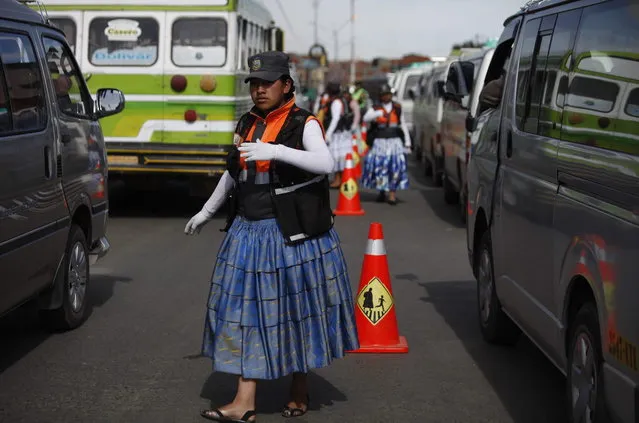
In this December 3, 2013 photo, an Aymara woman cops directs traffic on the streets of El Alto, Bolivia. The women wear the bright petticoats and shawls of indigenous women in the Andes, called cholitas in Bolivian slang, the main difference being that instead of bowler hats they wear khaki green police-style caps. Some don fluorescent traffic vests. (Photo by Juan Karita/AP Photo)

“This city in Bolivia's highlands has hired Aymara women dressed in traditional multilayered Andean skirts and brightly embroidered vests to work as traffic cops and bring order to its road chaos. About 20 of the “traffic cholitas” have been trained to direct cars and buses in El Alto, a teeming, impoverished sister city of La Paz in Bolivia's Andes mountains”. – El Alto via Associated Press. Photo: In this December 3, 2013 photo, an Aymara woman cops directs traffic on the streets of El Alto, Bolivia. The women wear the bright petticoats and shawls of indigenous women in the Andes, called cholitas in Bolivian slang, the main difference being that instead of bowler hats they wear khaki green police-style caps. Some don fluorescent traffic vests. (Photo by Juan Karita/AP Photo)
Details
25 Dec 2013 10:48:00
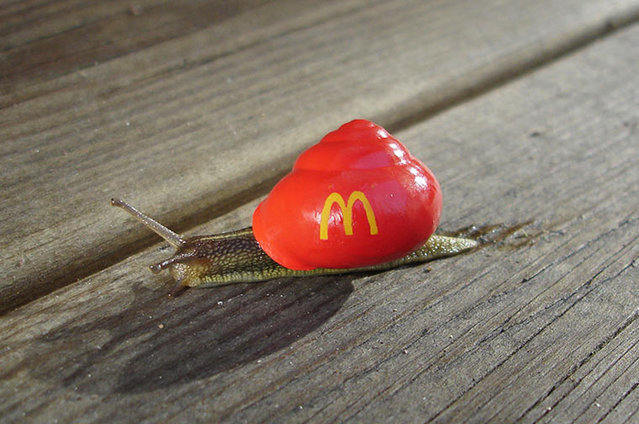
Snailpimp By Stefan Siverud

“Snailpimp” is a project by artist Stefan Siverud, who is having fun decorating living snails with the most varied designs, from the McDonald’s logo to the miniature lighthouse through Pac-Man, Ikea and Adidas. A funny and interesting project, achieved with non-toxic paints, which of course raises the question of the impact on these living animals. If some people ironize that these highly visible snails are less likely to be inadvertently stepped on by people, others point out that they are more easily spotted by predators… A project in line with the Inner City Snail artist Slinkachu.
Details
09 Jun 2015 12:18:00
A photograph of a dog taken from underneath on December 2016 in VA, Canada. (Photo by The Underdogs Project/Barcroft Images)

A photograph of a dog taken from underneath on December 2016 in VA, Canada. Forget the cats, itÌs just raining dogs! A creative duo have come up with an innovative way to raise money for animal welfare; photographing dogs as youÌve never seen them before. Professional photographer Jason Kenzie and designer Tania Ryan have created a unique set of images from the underside of dogs, named The Underdogs Project. The project will be featured as a 2017 calendar, with each month belonging to a quirky canine. (Photo by The Underdogs Project/Barcroft Images)
Details
20 Dec 2016 12:32:00