Loading...
Done
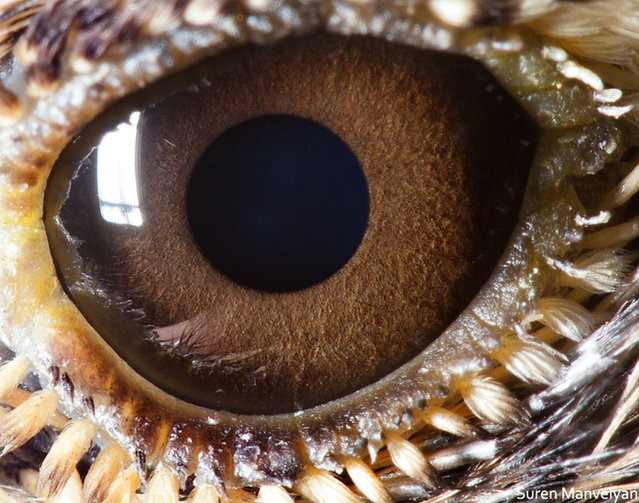
Animal Eyes by Suren Manvelyan

Born in 1976, Suren started to photograph when he was sixteen and became a professional photographer in 2006. His photographic interests span from Macro to Portraits, Creative photo projects, Landscape, and much more.
Details
14 Sep 2012 12:22:00
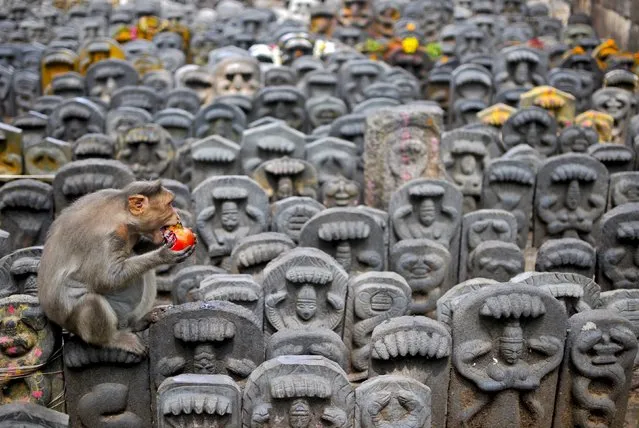
A bonnet macaque sits on consecrated idols of snakes during the Nag Panchami festival inside a temple on the outskirts of Bengaluru, India, August 19, 2015. (Photo by Abhishek N. Chinnappa/Reuters)

A bonnet macaque sits on consecrated idols of snakes during the Nag Panchami festival inside a temple on the outskirts of Bengaluru, India, August 19, 2015. (Photo by Abhishek N. Chinnappa/Reuters)
Details
09 Dec 2015 08:06:00
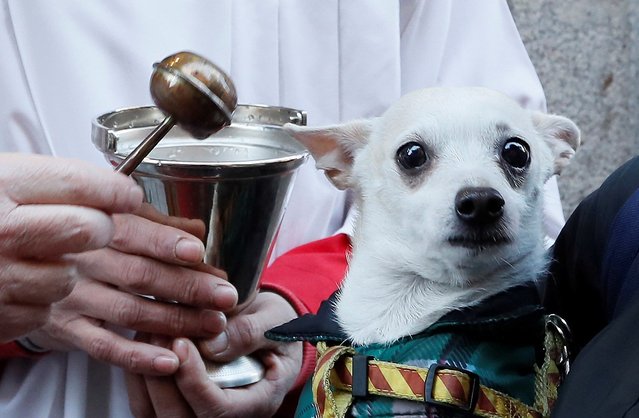
Father Angel (L), parish priest of San Anton Church blesses a dog during the celebrations of San Anton in Madrid, Spain on January 17, 2018. (Photo by Fernando Alvarado/EFE via ZUMA Press)

Father Angel (L), parish priest of San Anton Church blesses a dog during the celebrations of San Anton in Madrid, Spain on January 17, 2018. (Photo by Fernando Alvarado/EFE via ZUMA Press)
Details
19 Jan 2018 07:29:00
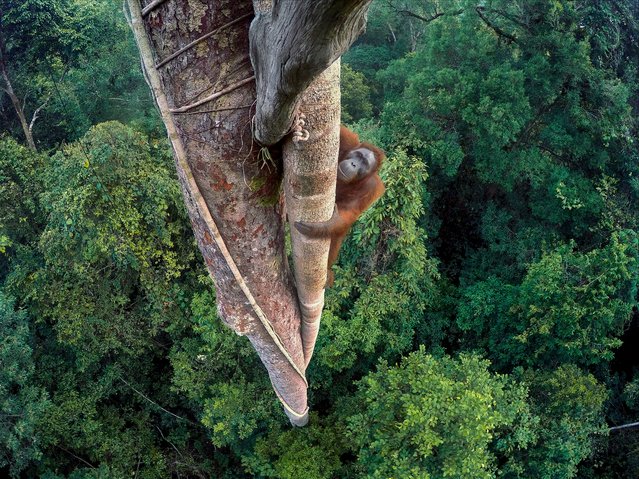
“Entwined Lives”. Tim Laman, US Winner, Wildlife photographer of the year. A young male orangutan makes the 30-metre climb up the thickest root of the strangler fig high above the canopy in Gunung Palung national park, one of the few protected orangutan strongholds in Indonesian Borneo. Laman had to do three days of climbing to position several GoPro cameras that he could trigger remotely. This shot was the one he had long visualised, looking down on the orangutan within its forest home. (Photo by Tim Laman/2016 Wildlife Photographer of the Year)

“Entwined Lives”. Tim Laman, US Winner, Wildlife photographer of the year. A young male orangutan makes the 30-metre climb up the thickest root of the strangler fig high above the canopy in Gunung Palung national park, one of the few protected orangutan strongholds in Indonesian Borneo. Laman had to do three days of climbing to position several GoPro cameras that he could trigger remotely. This shot was the one he had long visualised, looking down on the orangutan within its forest home. (Photo by Tim Laman/2016 Wildlife Photographer of the Year)
Details
19 Oct 2016 12:08:00
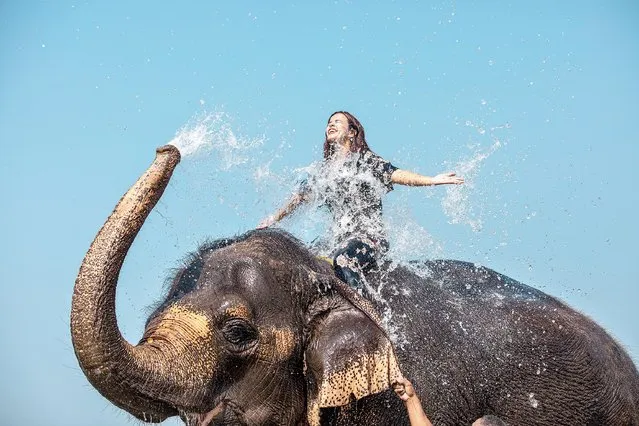
A young girl is splashed as she takes an elephant bath at Rapti river in Chitwan, Nepal, 30 October 2021. Chitwan is one of the major tourist destinations in Nepal and popular zone for wild life sightseeing in Chitwan National Park. (Photo by Narendra Shrestha/EPA/EFE)

A young girl is splashed as she takes an elephant bath at Rapti river in Chitwan, Nepal, 30 October 2021. Chitwan is one of the major tourist destinations in Nepal and popular zone for wild life sightseeing in Chitwan National Park. (Photo by Narendra Shrestha/EPA/EFE)
Details
14 Nov 2021 06:09:00
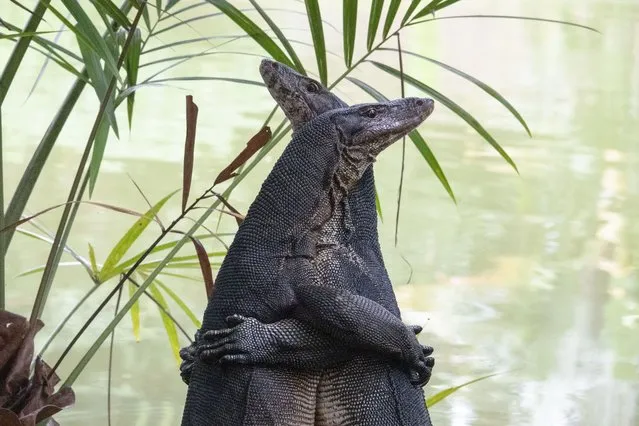
Two monitor lizards wrestle at Singapore Botanic Gardens on February 7, 2022. (Photo by Xinhua News Agency/Rex Features/Shutterstock)

Two monitor lizards wrestle at Singapore Botanic Gardens on February 7, 2022. (Photo by Xinhua News Agency/Rex Features/Shutterstock)
Details
20 Feb 2022 22:02:00
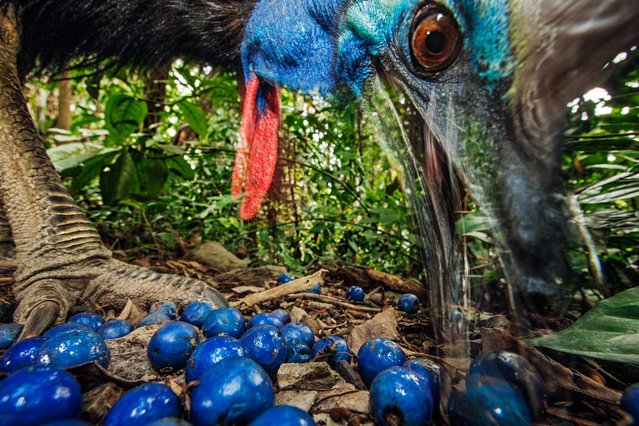
“Cassowaries are large, flightless birds related to emus and (more distantly) to ostriches, rheas, and kiwis”, writes Olivia Judson in the September issue of National Geographic magazine. (Photo by Christian Ziegler/National Geographic)

“Cassowaries are large, flightless birds related to emus and (more distantly) to ostriches, rheas, and kiwis”, writes Olivia Judson in the September issue of National Geographic magazine. How large? People-size: Adult males stand well over five foot five and top 110 pounds. Females are even taller, and can weigh more than 160 pounds. Dangerous when roused, they’re shy and peaceable when left alone. But even birds this big and tough are prey to habitat loss. The dense New Guinea and Australia rain forests where they live have dwindled. Today cassowaries might number 1,500 to 2,000. And because they help shape those same forests – by moving seeds from one place to another – “if they vanish”, Judson writes, “the structure of the forest would gradually change” too. (Photo by Christian Ziegler/National Geographic)

Details
06 Jan 2014 12:21:00
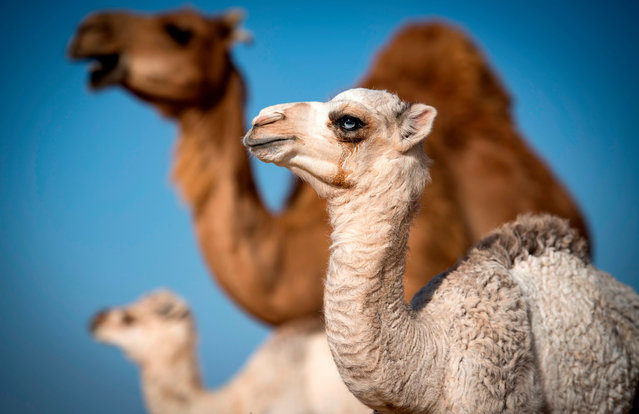
A camel calf is seen among a herd in the desert near Dakhla in Morocco-administered Western Sahara, on October 13, 2019. In the Oued Eddahab desert in Western Sahara, Habiboullah Dlimi raises dairy and racing camels just like his ancestors used to, but with a little help from modern technology. While his animals roam free and are milked traditionally, by hand, at dawn and dusk, they are watched over by hired herders and Dlimi follows GPS coordinates across the desert in a 4X4 vehicle to reach them. (Photo by Fadel Senna/AFP Photo)

A camel calf is seen among a herd in the desert near Dakhla in Morocco-administered Western Sahara, on October 13, 2019. In the Oued Eddahab desert in Western Sahara, Habiboullah Dlimi raises dairy and racing camels just like his ancestors used to, but with a little help from modern technology. While his animals roam free and are milked traditionally, by hand, at dawn and dusk, they are watched over by hired herders and Dlimi follows GPS coordinates across the desert in a 4X4 vehicle to reach them. (Photo by Fadel Senna/AFP Photo)
Details
24 Nov 2019 00:03:00