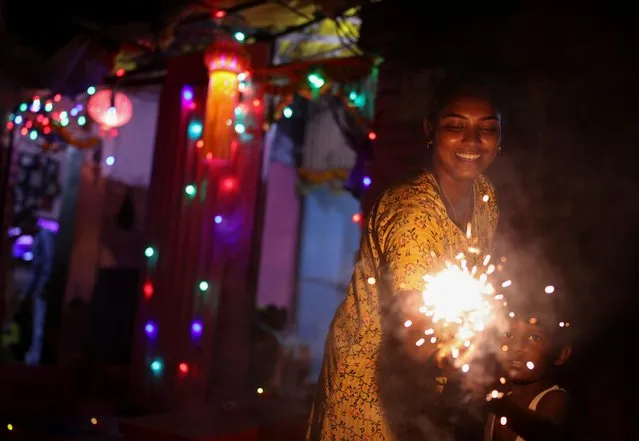
A woman and her son hold firecrackers during Diwali, the Hindu festival of lights, in Mumbai, India, November 4, 2021. (Photo by Francis Mascarenhas/Reuters)
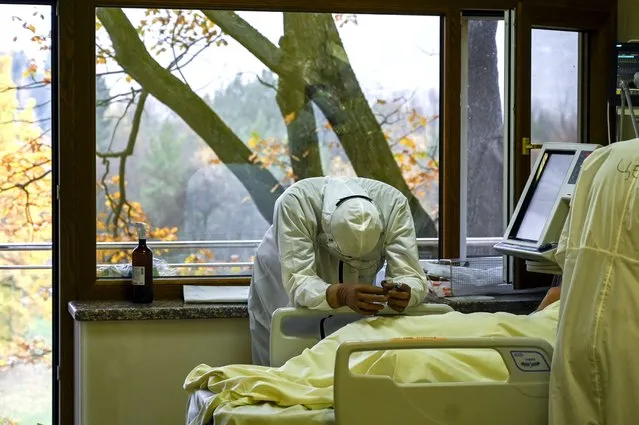
A medical staff member rests next to a patient infected with Covid-19 in the intensive care unit of Lozenets Hospitalin Sofia on November 9, 2021. Bulgaria is among the countries with the highest number of deaths compared to its population. (Photo by Nikolay Doychinov/AFP Photo)
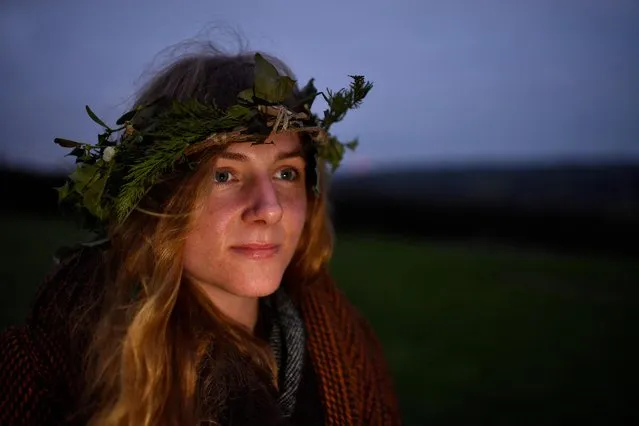
Aoife Ni Heochaidh enjoys the sunrise as she welcomes winter solstice at the 5000-year-old stone age passage tomb of Newgrange in the Boyne Valley, as entry inside the chamber is closed for the second year due to coronavirus disease (COVID-19) pandemic, in Newgrange, Ireland, December 21, 2021. (Photo by Clodagh Kilcoyne/Reuters)
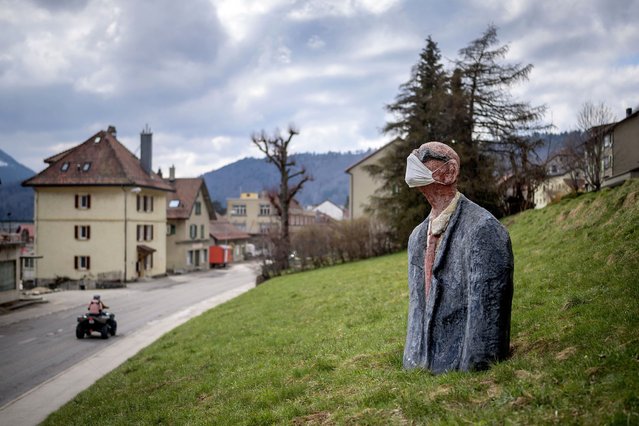
A picture taken on April 18, 2020 in Sainte-Croix shows a scultpure representing a man wearing a facemask as a preventive measure against the Covid-19 coronavirus in a field. (Photo by Fabrice Coffrini/AFP Photo)
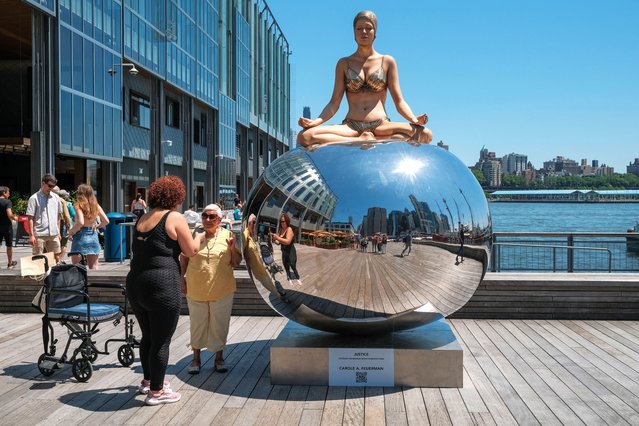
People visit an installation by the American sculptor, Carole Feuerman, during the exhibition of her hyperrealistic sculptures at Pier 17 in the trendy neighbourhood of Seaport in New York City on June 1, 2024. (Photo by Milo Hess/ZUMA Press Wire/Rex Features/Shutterstock)
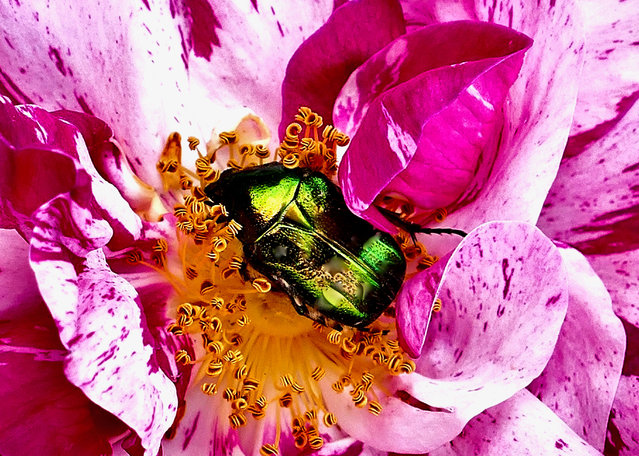
A rose chafer in Oxfordshire, UK on July 8, 2024. The beetles are often seen on flowers in the garden and are sometimes maligned for munching their way through these plants. However, they are an important detritivore as they feed on dead and decaying matter and recycle its nutrients, which makes a helpful addition to any compost. (Photo by Geoffrey Swaine/Rex Features/Shutterstock)