Loading...
Done
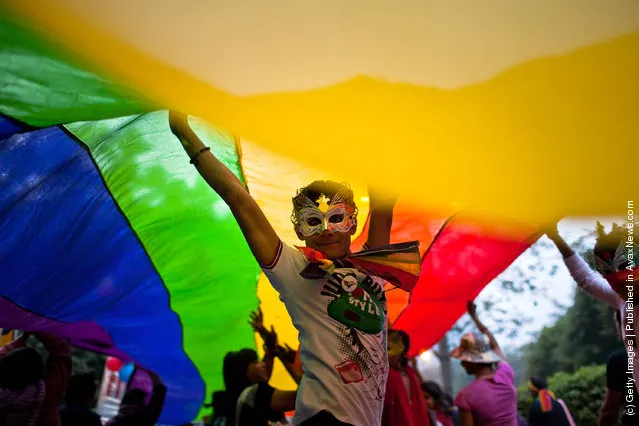
Indias LGBT Community Celebrates 4th Queer Pride March

A boy dances as he and others participate during the 4th Delhi Queer Pride 2011 March on November 27, 2011 in New Delhi, India. India's Lesbian, Gay, Bisexual and Transgender (LGBT) community celebrated the 4th Delhi Queer Pride March with a parade through the streets of Delhi. People gathered to protest violence, harassment and discrimination faced by the LGBT community in India. (Photo by Daniel Berehulak/Getty Images)
Details
28 Nov 2011 12:23:00
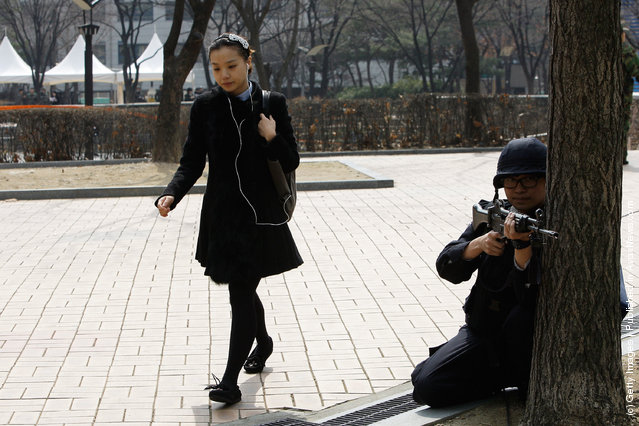
A woman walk by South Korean police during a anti-terror exercise

A woman walk by South Korean police during a anti-terror exercise on March 9, 2012 in Seoul, South Korea. The drill is part of South Korea's preparation for the upcoming 2012 Seoul Nuclear Security Summit, scheduled for March 26 and 27. Some 50 world leaders, including U.S. President Barack Obama, are expected to attend the summit to discuss how to make the world safe without nuclear weapons. (Photo by Chung Sung-Jun/Getty Images)
Details
09 Mar 2012 11:47:00
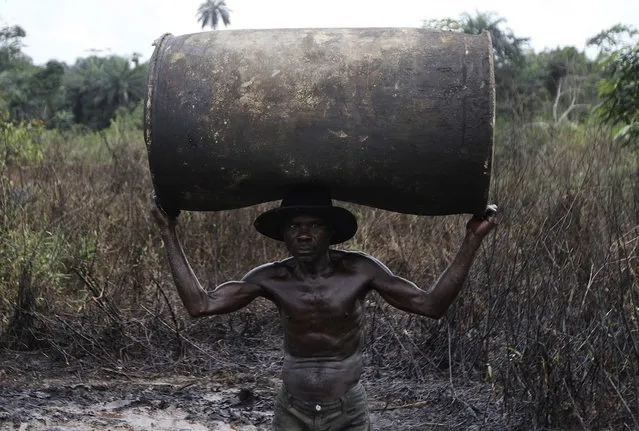
Ebiowei, 48, carries an empty oil container on his head to a place where it would be filled with refined fuel at an illegal refinery site near river Nun in Nigeria's oil state of Bayelsa November 27, 2012. (Photo by Akintunde Akinleye/Reuters)

Ebiowei, 48, carries an empty oil container on his head to a place where it would be filled with refined fuel at an illegal refinery site near river Nun in Nigeria's oil state of Bayelsa November 27, 2012. Locals in the industry say workers can earn $50 to $60 a day. Thousands of people in Nigeria engage in a practice known locally as “oil bunkering” – hacking into pipelines to steal crude then refining it or selling it abroad. The practice, which leaves oil spewing from pipelines for miles around, managed to lift around a fifth of Nigeria's two million barrel a day production last year according to the finance ministry. (Photo by Akintunde Akinleye/Reuters)
Details
18 Jan 2013 14:29:00
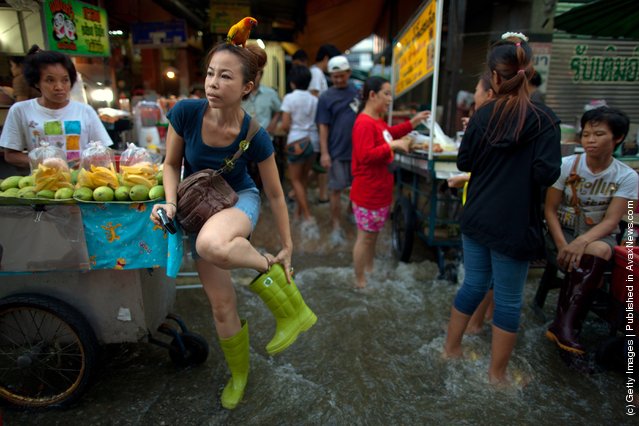
Patarawan fixes her boots as her parrot, Sim sits on her head as she goes shopping for dinner at a busy flooded market near the Chao Phraya river

Patarawan fixes her boots as her parrot, Sim sits on her head as she goes shopping for dinner at a busy flooded market near the Chao Phraya river October 27, 2011 in Bangkok, Thailand. Hundreds of factories closed in the central Thai province of Ayutthaya and Nonthaburi as the flood waters began to reach Bangkok. Around 350 people have died in flood-related incidents since late July according to the Department of Disaster Prevention and Mitigation, with Thailand experiencing the worst flooding in 50 years. (Photo by Paula Bronstein/Getty Images)
Details
28 Oct 2011 13:14:00
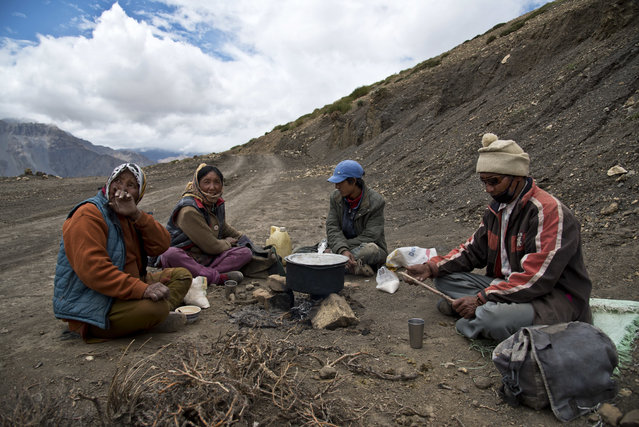
In this August 17, 2016, photo, from left to right, Chhering Chodom, 60, Tashi Yangzom, 50, Lobsang Chhering, 27, and Dorje Tandup, 58, drink milk tea on the side of the road. For centuries, the sleepy valley nestled in the Indian Himalayas remained a hidden Buddhist enclave forbidden to outsiders. Enduring the harsh year-round conditions of the high mountain desert, the people of Spiti Valley lived by a simple communal code – share the Earth's bounty, be hospitable to neighbors, and eschew greed and temptation at all turns. That's all starting to change, for better or worse. Since India began allowing its own citizens as well as outsiders to visit the valley in the early 1990s, tourism and trade have boomed. And the marks of modernization, such as solar panels, asphalt roads and concrete buildings, have begun to appear around some of the villages that dot the remote landscape at altitudes above 4,000 meters (13,000 feet). (Photo by Thomas Cytrynowicz/AP Photo)

In this August 17, 2016, photo, from left to right, Chhering Chodom, 60, Tashi Yangzom, 50, Lobsang Chhering, 27, and Dorje Tandup, 58, drink milk tea on the side of the road. For centuries, the sleepy valley nestled in the Indian Himalayas remained a hidden Buddhist enclave forbidden to outsiders. Enduring the harsh year-round conditions of the high mountain desert, the people of Spiti Valley lived by a simple communal code – share the Earth's bounty, be hospitable to neighbors, and eschew greed and temptation at all turns. That's all starting to change, for better or worse. (Photo by Thomas Cytrynowicz/AP Photo)
Details
15 Sep 2016 09:22:00


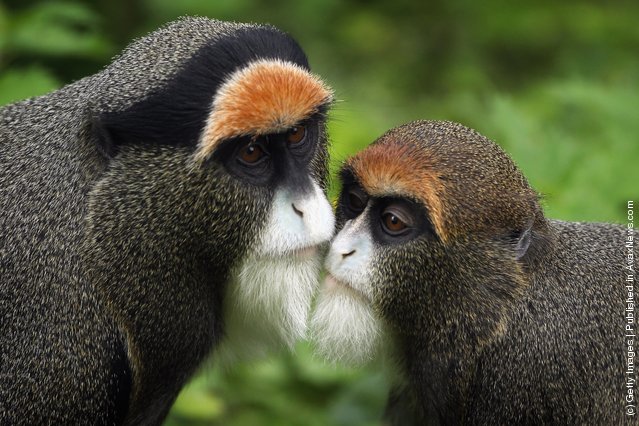
Two De Brazza's monkeys stand together at Port Lympne Wild Animal Park on June 21, 2011 in Hythe, England. Port Lympne has welcomed a host of new arrivals this year with wildebeest, colobus monkeys, gorillas and rhinos all adding to the current stock. Port Lympne and Howletts Wild Animal parks were set up by the late John Aspinall to protect and breed rare and endangered species and, where possible, return them to safe areas in the wild. The Aspinall Foundation which runs the parks also manages two gorilla rescue and rehabilitation projects in the central African countries of Gabon and Congo where they have successfully reintroduced over 50 gorillas to the wild. (Photo by Dan Kitwood/Getty Images)
Details
24 Jun 2011 10:12:00
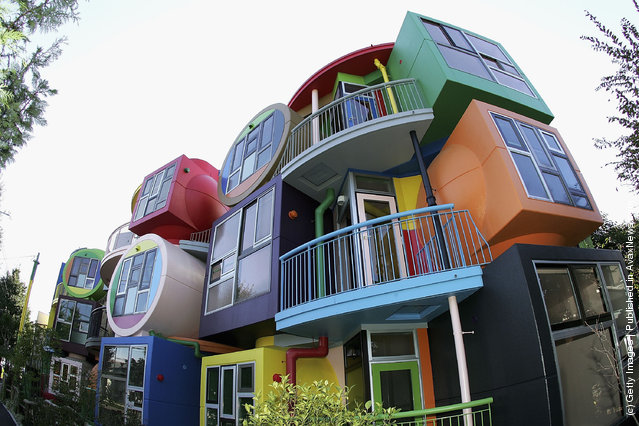
Concept Design Home Reversible Destiny Lofts MITAKA: In Memory Of Helen Keller By Reversible Destiny Foundation and Shusaku Arakawa

“The Reversible Destiny Lofts – Mitaka (In Memory of Helen Keller) is a nine-unit multiple dwelling. It was first completed example of procedural architecture put to residential use. These lofts reflexively articulate the residents’ operative tendencies and coordinating skills essential to and determinative of human thought and behavior; which means to say, the lofts manage, by virtue of how they are constructed, to reveal to their residents the ins and outs of what makes a person, in this case the resident. This is the same set of tendencies and skills to which Arakawa and Madeline Gins gave diagrammatic form in their decades-long research project The Mechanism of Meaning”. – Wikipedia

Photo: The exterior of the concept design home “Reversible Destiny Lofts MITAKA: In Memory of Helen Keller” is seen on October 27, 2005 in Tokyo, Japan. (Photo by Koichi Kamoshida/Getty Images)
Details
30 Nov 2011 11:58:00
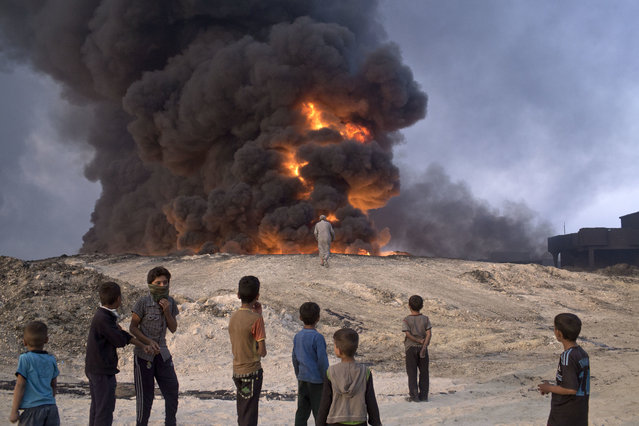
in Qayyarah, about 31 miles (50 km) south of Mosul, Iraq, Sunday, October 23, 2016.in Qayyarah, some 50 kilometers south of Mosul, Iraq, Sunday, Oct. 23, 2016. Islamic State fighters torched a sulfur plant south of Mosul, sending a cloud of toxic fumes into the air that mingled with oil wells the militants had lit on fire to create a smoke screen. (Photo by Marko Drobnjakovic/AP Photo)

in Qayyarah, about 31 miles (50 km) south of Mosul, Iraq, Sunday, October 23, 2016.in Qayyarah, some 50 kilometers south of Mosul, Iraq, Sunday, Oct. 23, 2016. Islamic State fighters torched a sulfur plant south of Mosul, sending a cloud of toxic fumes into the air that mingled with oil wells the militants had lit on fire to create a smoke screen. (Photo by Marko Drobnjakovic/AP Photo)
Details
24 Oct 2016 12:56:00