Loading...
Done
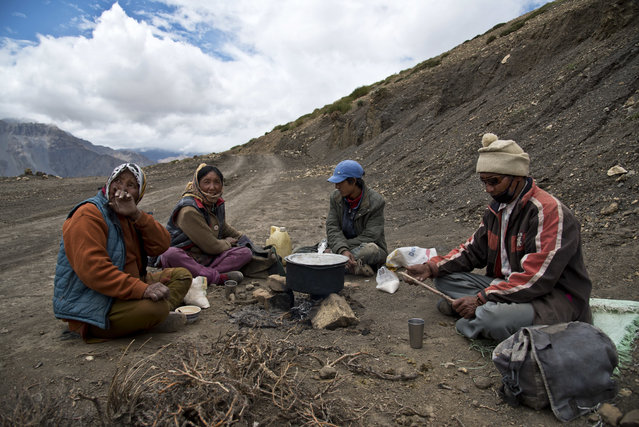
In this August 17, 2016, photo, from left to right, Chhering Chodom, 60, Tashi Yangzom, 50, Lobsang Chhering, 27, and Dorje Tandup, 58, drink milk tea on the side of the road. For centuries, the sleepy valley nestled in the Indian Himalayas remained a hidden Buddhist enclave forbidden to outsiders. Enduring the harsh year-round conditions of the high mountain desert, the people of Spiti Valley lived by a simple communal code – share the Earth's bounty, be hospitable to neighbors, and eschew greed and temptation at all turns. That's all starting to change, for better or worse. Since India began allowing its own citizens as well as outsiders to visit the valley in the early 1990s, tourism and trade have boomed. And the marks of modernization, such as solar panels, asphalt roads and concrete buildings, have begun to appear around some of the villages that dot the remote landscape at altitudes above 4,000 meters (13,000 feet). (Photo by Thomas Cytrynowicz/AP Photo)

In this August 17, 2016, photo, from left to right, Chhering Chodom, 60, Tashi Yangzom, 50, Lobsang Chhering, 27, and Dorje Tandup, 58, drink milk tea on the side of the road. For centuries, the sleepy valley nestled in the Indian Himalayas remained a hidden Buddhist enclave forbidden to outsiders. Enduring the harsh year-round conditions of the high mountain desert, the people of Spiti Valley lived by a simple communal code – share the Earth's bounty, be hospitable to neighbors, and eschew greed and temptation at all turns. That's all starting to change, for better or worse. (Photo by Thomas Cytrynowicz/AP Photo)
Details
15 Sep 2016 09:22:00
Photography By Agustin Rafael Reyes

Amazing photographs by Agustin Rafael Reyes, software engineer and talented photographer from Manila, Philippines who currently based in Yokohama, Japan.
Details
27 May 2013 11:26:00
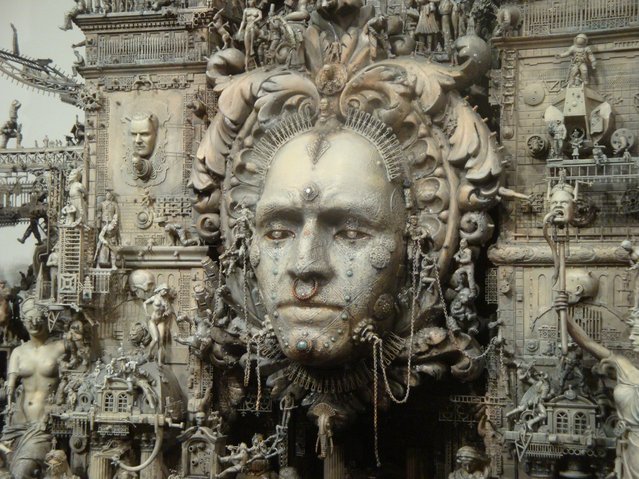
Art by Kris Kuksi

A post-industrial Rococo master, Kris Kuksi obsessively arranges characters and architecture in asymmetric compositions with an exquisite sense of drama. Instead of stones and shells he uses screaming plastic soldiers, miniature engine blocks, towering spires and assorted debris to form his landscapes.
Details
06 Sep 2012 11:32:00
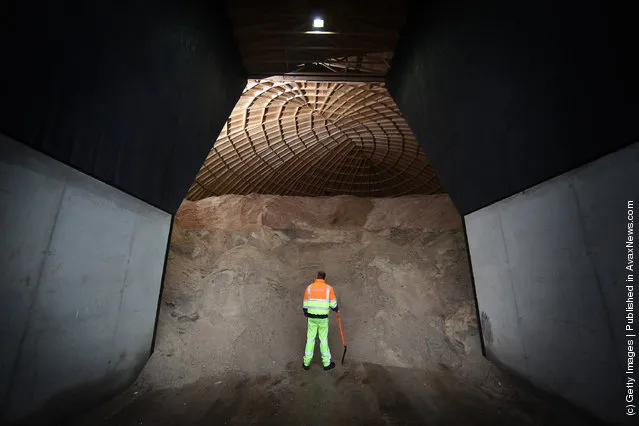
A pile of road salt

Route engineer Richard Winter stands in front of a pile of road salt at the Birchanger Depot on November 8, 2011 near Bishop's Stortford, England. (Photo by Peter Macdiarmid/Getty Images)
Details
10 Nov 2011 09:52:00


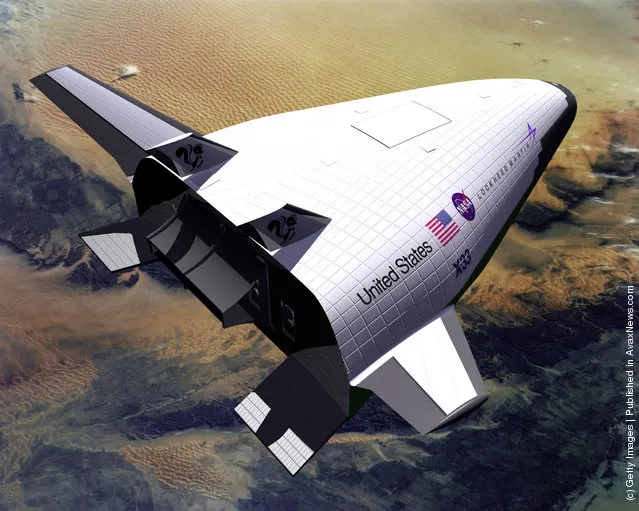
“The Lockheed Martin X-33 is an unmanned, sub-scale technology demonstrator suborbital spaceplane developed in the 1990s under the U.S. government-funded Space Launch Initiative program”. – Wikipedia

Photo: An Artist's Rendering Shows How Nasa's X-33 Technology Demonstrator, A Cost-Cutting Fully Reusable Single-Stage-To-Orbit Space Vehicle, Will Look Upon Completion. The 67 Foot-Long, 278,600 Pound, Twin Engine Space Vehicle, Capable Of Reaching Speeds In Excess Of Mach 15, Will Lead To The Construction Of A 127 Foot-Long, 2,186,000 Pound Version With Seven Engines And A 50,000 Pound Payload Capacity Called The “Venturestar”. (Photo By Nasa/Getty Images)
Details
22 Mar 2011 12:05:00
241543903 Heads In Freezer Part 2

241543903 (a.k.a “Heads in Freezers”) is a numerical keyword associated with a photo meme that involves people taking pictures with their heads in the freezer & sharing them online. By tagging a series of image files with a cryptic number, a high level of search engine optimization can be easily achieved. As a result, typing “241543903” into image search engines like Google Images successfully yields pages after pages of pictures showing people’s heads in freezers.
In 2009, David Horvitz started the “Heads in Freezers” meme. Participants took photos of their heads in freezers, tagged them with “241543903” and uploaded them to social media sites like Tumblr.
Details
12 Mar 2014 10:32:00
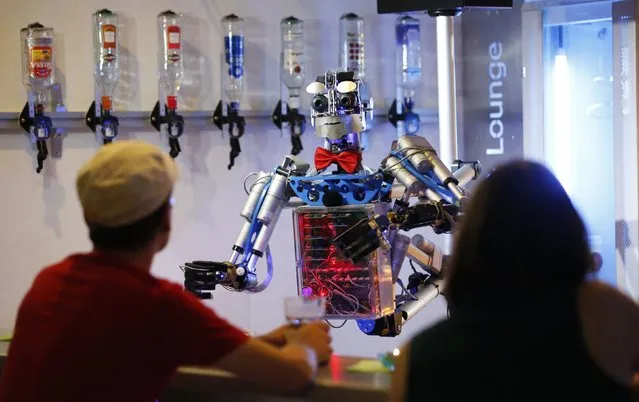
Humanoid robot bartender “Carl” interacts with guests at the Robots Bar and Lounge in the eastern German town of Ilmenau, July 26, 2013. “Carl”, developed and built by mechatronics engineer Ben Schaefer who runs a company for humanoid robots, prepares spirits for the mixing of cocktails and is able to interact with customers in small conversations. (Photo by Fabrizio Bensch/Reuters)

Humanoid robot bartender “Carl” interacts with guests at the Robots Bar and Lounge in the eastern German town of Ilmenau, July 26, 2013. “Carl”, developed and built by mechatronics engineer Ben Schaefer who runs a company for humanoid robots, prepares spirits for the mixing of cocktails and is able to interact with customers in small conversations. (Photo by Fabrizio Bensch/Reuters)
Details
22 Oct 2013 09:04:00
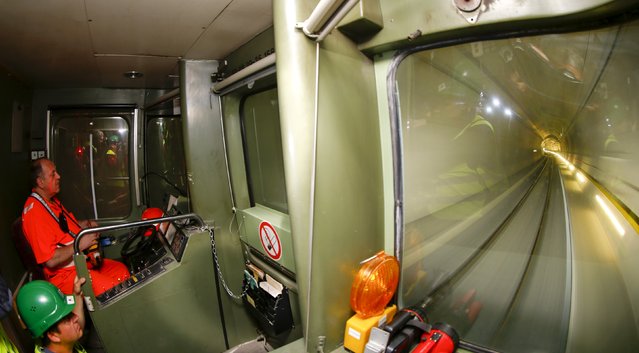
Engine driver Josef Kowatsch (top L) steers a train through the NEAT Gotthard Base Tunnel during a media visit near the town of Erstfeld August 24, 2015. (Photo by Arnd Wiegmann/Reuters)

Engine driver Josef Kowatsch (top L) steers a train through the NEAT Gotthard Base Tunnel during a media visit near the town of Erstfeld August 24, 2015. Crossing the Alps, the world's longest train tunnel should become operational at the end of 2016, consisting of two parallel single track tunnels, each of a length of 57 km (35 miles). (Photo by Arnd Wiegmann/Reuters)
Details
25 Aug 2015 10:42:00