Loading...
Done
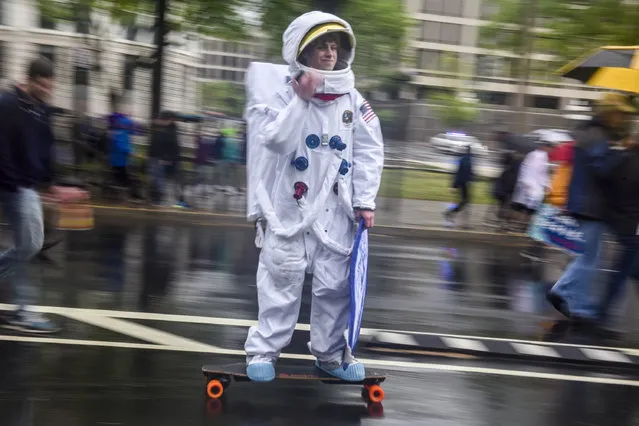
Max Gold, 20, of NYC, cruises on his skateboard as thousands gather on the National Mall for the March for Science on Saturday, April 22, 2017, in Washington, DC.  Activists and scientists descend on the nation's capital to rally for environmental causes and government policies rooted in scientific research as part of the Earth Day and March for Science rallies. (Photo by Jahi Chikwendiu/The Washington Post)

Max Gold, 20, of NYC, cruises on his skateboard as thousands gather on the National Mall for the March for Science on Saturday, April 22, 2017, in Washington, DC. Activists and scientists descend on the nation's capital to rally for environmental causes and government policies rooted in scientific research as part of the Earth Day and March for Science rallies. (Photo by Jahi Chikwendiu/The Washington Post)
Details
22 May 2017 07:38:00
A child explores the ancestry in the stars exhibit that forms part of YOU:MATTER, after the cutting-edge experience opened at the National Science and Media Museum in Bradford, UK on Friday, April 11, 2025. (Photo by Danny Lawson/PA Images via Getty Images)

A child explores the ancestry in the stars exhibit that forms part of YOU:MATTER, after the cutting-edge experience opened at the National Science and Media Museum in Bradford, UK on Friday, April 11, 2025. (Photo by Danny Lawson/PA Images via Getty Images)
Details
22 May 2025 02:31:00
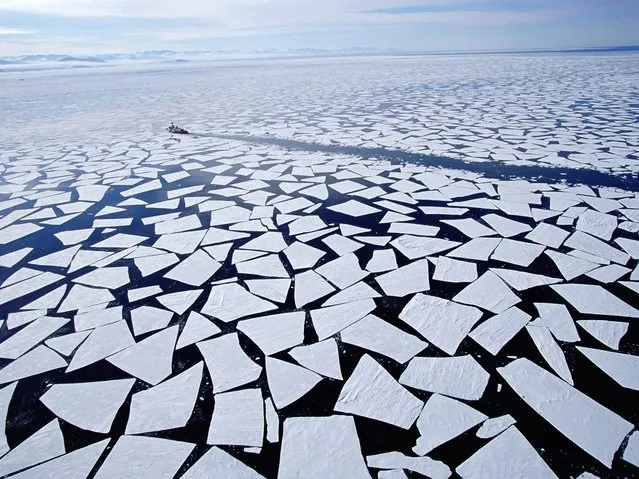
McMurdo Station Antarctic

McMurdo Station is a U.S. Antarctic research centre located on the southern tip of Ross Island, which is in the New Zealand-claimed Ross Dependency on the shore of McMurdo Sound in Antarctica. It is operated by the United States through the United States Antarctic Program, a branch of the National Science Foundation. The station is the largest community in Antarctica, capable of supporting up to 1,258 residents, and serves as the United States Antarctic science facility. All personnel and cargo going to or coming from Amundsen–Scott South Pole Station first pass through McMurdo.
Details
05 Sep 2013 10:18:00
HRP-4C, a five-foot humanoid robot developed at Japan's National Institute of Advanced Industrial Science and Technology, sings and dances with performers at the Digital Contents Expo in Tokyo on October 17, 2010. The robot runs entertainment software called Choreonoid, a name formed from the words “choreograph” and “humanoid”

HRP-4C, a five-foot humanoid robot developed at Japan's National Institute of Advanced Industrial Science and Technology, sings and dances with performers at the Digital Contents Expo in Tokyo on October 17, 2010. The robot runs entertainment software called Choreonoid, a name formed from the words “choreograph” and “humanoid”. (Yoshikazu Tsuno/AFP)
Details
15 Apr 2012 11:44:00
A girl dances in front of the digital art installation “Light in Dark” created by teamLab, a collaborative of Japanese digital artists, during a special exhibition of “Shake! Art Exhibition! and Learn and Play! teamLab Future Park” at National Museum of Emerging Science and Innovation (or Miraikan) in Tokyo, Japan, 19 January 2015. The exhibition is held through 01 March 2015. (Photo by Kimimasa Mayama/EPA)

A girl dances in front of the digital art installation “Light in Dark” created by teamLab, a collaborative of Japanese digital artists, during a special exhibition of “Shake! Art Exhibition! and Learn and Play! teamLab Future Park” at National Museum of Emerging Science and Innovation (or Miraikan) in Tokyo, Japan, 19 January 2015. The exhibition is held through 01 March 2015. (Photo by Kimimasa Mayama/EPA)
Details
06 Feb 2015 12:51:00
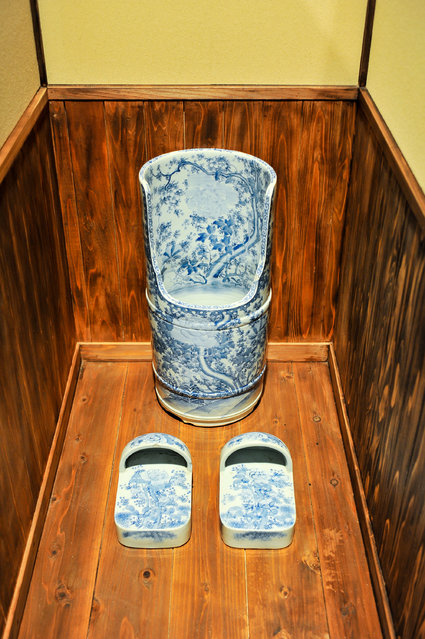
An old toilet is displayed during the “Toilet!? Human Waste and Earth's Future” exhibition at The National Museum of Emerging Science and Innovation – Miraikan on July 1, 2014 in Tokyo, Japan. The exhibition focuses on how the toilet has changed our daily lives and discovers what the most environment-friendly and ideal toilet is. (Photo by Keith Tsuji/Getty Images)

An old toilet is displayed during the “Toilet!? Human Waste and Earth's Future” exhibition at The National Museum of Emerging Science and Innovation – Miraikan on July 1, 2014 in Tokyo, Japan. The exhibition focuses on how the toilet has changed our daily lives and discovers what the most environment-friendly and ideal toilet is. (Photo by Keith Tsuji/Getty Images)
Details
03 Jul 2014 11:34:00
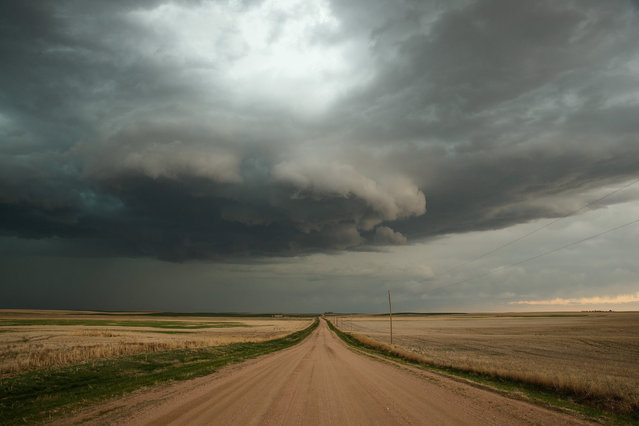
A supercell thunderstorm develops, May 8, 2017 in Elbert County outside of Limon, Colorado. With funding from the National Science Foundation and other government grants, scientists and meteorologists from the Center for Severe Weather Research try to get close to supercell storms and tornadoes trying to better understand tornado structure and strength, how low-level winds affect and damage buildings, and to learn more about tornado formation and prediction. (Photo by Drew Angerer/Getty Images)

A supercell thunderstorm develops, May 8, 2017 in Elbert County outside of Limon, Colorado. With funding from the National Science Foundation and other government grants, scientists and meteorologists from the Center for Severe Weather Research try to get close to supercell storms and tornadoes trying to better understand tornado structure and strength, how low-level winds affect and damage buildings, and to learn more about tornado formation and prediction. (Photo by Drew Angerer/Getty Images)
Details
16 Jun 2017 06:20:00
“Society hurts”. (Photo by Grace Ridge/ESRC)

The Economic and Social Research Council (ESRC) has announced the winners of a UK national photography competition in which we challenged young people aged 14–18 for their unique take on society and the social sciences by asking them to take a picture on the theme of “Where Do I Belong?” – ESRC Press Office. Photo: “Society hurts”. (Photo by Grace Ridge/ESRC)
Details
24 Mar 2014 06:41:00