Loading...
Done
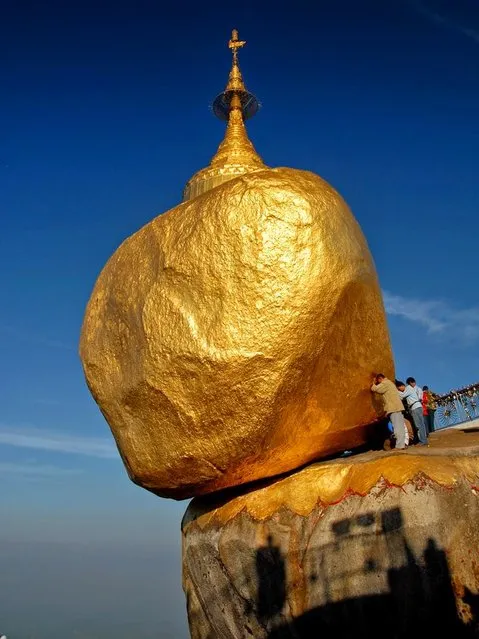
 Kyaiktiyo Pagoda AKA  Golden Rock In Burma

Kyaiktiyo Pagoda, also known as Golden Rock is a well-known Buddhist pilgrimage site in Mon State, Burma. It is a small pagoda (7.3 metres (24 ft)) built on the top of a granite boulder covered with gold leaves pasted on by devotees. According to legend, the Golden Rock itself is precariously perched on a strand of the Buddha's hair. The balancing rock seems to defy gravity, as it perpetually appears to be on the verge of rolling down the hill. The rock and the pagoda are at the top of Mt. Kyaiktiyo. It is the third most important Buddhist pilgrimage site in Burma after the Shwedagon Pagoda and the Mahamuni Pagoda. A glimpse of the "gravity defying" Golden Rock is believed to be enough of an inspiration for any person to turn to Buddhism.
Details
04 Jun 2015 11:42:00
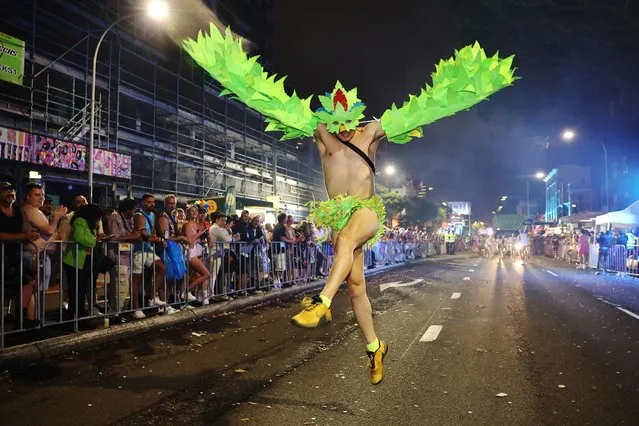
An Emerald City Kickball member makes their way up the parade route on March 02, 2024 in Sydney, Australia. Emerald City Kickball began in 2020 as a project between friends to find a safe and affirming way to create an inclusive community during the COVID-19 pandemic. As a recreational sport that is available to players regardless of skill or experience level, kickball quickly became a vibrant piece of the Sydney LGBT community. Emerald City Kickball has marched in Mardi Gras for four years, receiving nominations or special commendations each year they have marched. The Sydney Gay and Lesbian Mardi Gras parade began in 1978 as a march to commemorate the 1969 Stonewall Riots in New York and has been held every year since to promote awareness of gay, lesbian, bisexual and transgender issues. (Photo by Don Arnold/WireImage)

An Emerald City Kickball member makes their way up the parade route on March 02, 2024 in Sydney, Australia. Emerald City Kickball began in 2020 as a project between friends to find a safe and affirming way to create an inclusive community during the COVID-19 pandemic. As a recreational sport that is available to players regardless of skill or experience level, kickball quickly became a vibrant piece of the Sydney LGBT community. (Photo by Don Arnold/WireImage)
Details
04 Apr 2024 00:47:00
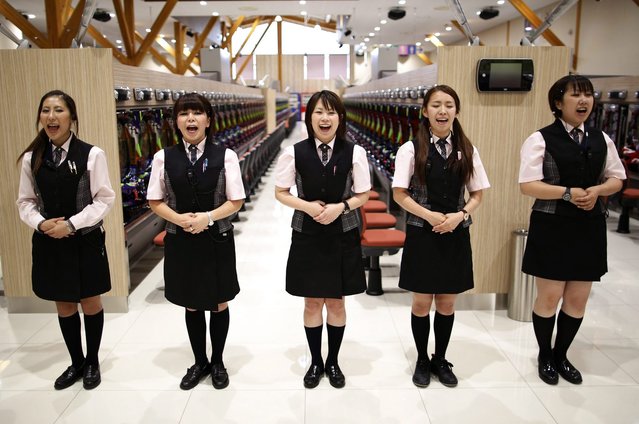
Dynam employees say a greeting message as they receive customer-care training ahead of the grand opening of the company's pachinko parlour in Fukaya, north of Tokyo July 29, 2014. (Photo by Issei Kato/Reuters)

Dynam employees say a greeting message as they receive customer-care training ahead of the grand opening of the company's pachinko parlour in Fukaya, north of Tokyo July 29, 2014. Japan's once-booming pachinko industry, grappling with a greying customer base and the threat of new competition from casinos, is adopting a softer touch and smoke-free zones to lure a new generation of players, particularly women. Pachinko, a modified version of pinball, is a fading national obsession, with about 12,000 parlours nation-wide and one in thirteen people playing the game. But that figure is declining as the population shrinks and younger people prefer games on their mobile phones. (Photo by Issei Kato/Reuters)
Details
25 Aug 2014 10:18:00
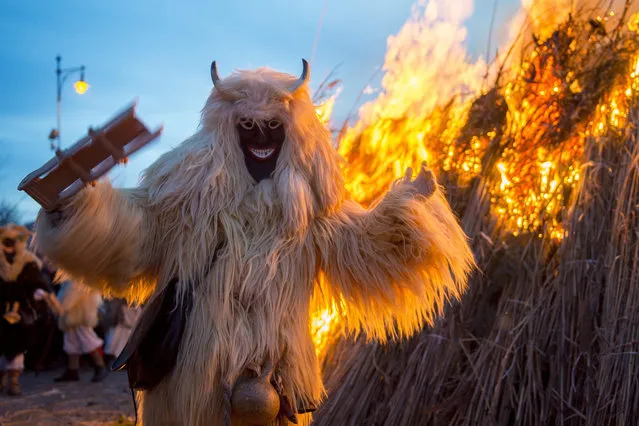
A reveler wearing sheepfur costume is seen in front of a bonfire on which they burn a coffin symbolizing winter during the closing ceremony of the traditional carnival parade in Mohacs, 189 kms south of Budapest, Hungary, 07 February 2016. (Photo by Tamas Soki/EPA)

A reveler wearing sheepfur costume is seen in front of a bonfire on which they burn a coffin symbolizing winter during the closing ceremony of the traditional carnival parade in Mohacs, 189 kms south of Budapest, Hungary, 07 February 2016. The carnival parade of people, the so-called busos, dressed in such costumes and frightening wooden masks, using various noisy wooden rattlers is traditionally held on the seventh weekend before Easter to drive away winter, and is a revival of a legend, which says that ethnic Croats ambushed the Osmanli Turkish troops, who escaped in panic seeing the terrifying figures during the Turkish occupation of Hungary. (Photo by Tamas Soki/EPA)
Details
09 Feb 2016 14:02:00
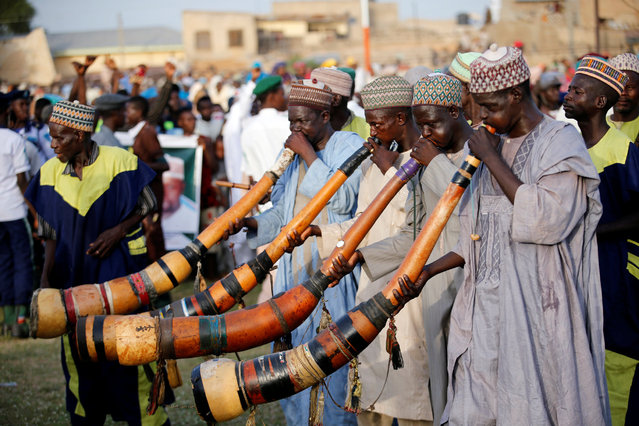
Traditional trumpeters perform during the durbar festival on the second day of Eid-al-Fitr celebrations in Nigeria's northern city of Kano, July 7, 2016. (Photo by Akintunde Akinleye/Reuters)

Traditional trumpeters perform during the durbar festival on the second day of Eid-al-Fitr celebrations in Nigeria's northern city of Kano, July 7, 2016. The Durbar festival begins with prayers, followed by a parade of the Emir and his entourage on horses, accompanied by music players, and ending at the Emir's palace. The Durbar festival had been in hausaland for more than 500 years. It was introduced by sarki muhammadu rumfa of kano in the late 14th century, as a way of demonstrating military power and skills before going to war. The festival is also an opportunity for local leaders to pay homage to emir throughout the jahi cheering. (Photo by Akintunde Akinleye/Reuters)
Details
09 Jul 2016 09:35:00


“The Wii U is an upcoming home video game console by Nintendo, and the direct successor to the Wii. The system is expected to be released in 2012 and was unveiled during Nintendo's press conference at the Electronic Entertainment Expo 2011 on June 7, 2011. The Wii U is the first Nintendo console to produce 1080p high-definition graphics, and features a new controller with an embedded touchscreen. The controller allows a player to continue a gaming session by displaying the game even when the television is off. The system will be fully backwards compatible with Wii, and Wii U games can support compatibility with Wii peripherals, such as the Wii Remote and Wii Balance Board”. – Wikipedia

Photo: The new Nintendo game console Wii U is displayed at the Nintendo booth during the Electronic Entertainment Expo on June 7, 2011 in Los Angeles, California. The Wii U will have HD graphics, a controller with a 6.2 inch touchscreen and be compatible with all other Wii accessories. (Photo by Kevork Djansezian/Getty Images)
Details
09 Jun 2011 10:25:00
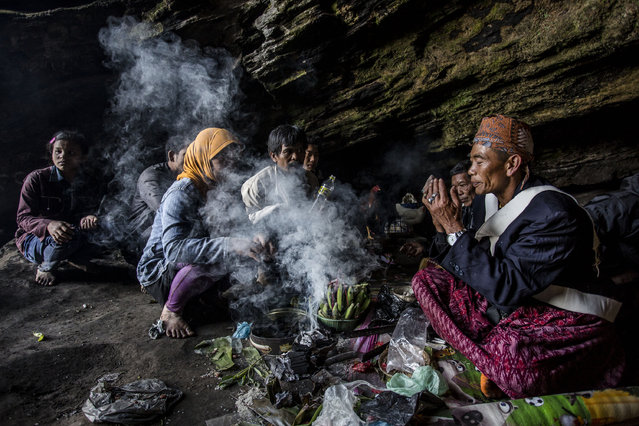
A Tenggerese shaman praying for worshippers at Widodaren cave during the Tenggerese Hindu Yadnya Kasada festival on July 31, 2015 in Probolinggo, East Java, Indonesia. The festival is the main festival of the Tenggerese people and lasts about a month. On the fourteenth day, the Tenggerese make the journey to Mount Bromo to make offerings of rice, fruits, vegetables, flowers and livestock to the mountain gods by throwing them into the volcano's caldera. (Photo by Ulet Ifansasti/Getty Images)

A Tenggerese shaman praying for worshippers at Widodaren cave during the Tenggerese Hindu Yadnya Kasada festival on July 31, 2015 in Probolinggo, East Java, Indonesia. The festival is the main festival of the Tenggerese people and lasts about a month. On the fourteenth day, the Tenggerese make the journey to Mount Bromo to make offerings of rice, fruits, vegetables, flowers and livestock to the mountain gods by throwing them into the volcano's caldera. The origin of the festival lies in the 15th century when a princess named Roro Anteng started the principality of Tengger with her husband Joko Seger, and the childless couple asked the mountain Gods for help in bearing children. The legend says the Gods granted them 24 children but on the provision that the 25th must be tossed into the volcano in sacrifice. The 25th child, Kesuma, was finally sacrificed in this way after initial refusal, and the tradition of throwing sacrifices into the caldera to appease the mountain Gods continues today. (Photo by Ulet Ifansasti/Getty Images)
Details
01 Aug 2015 12:07:00
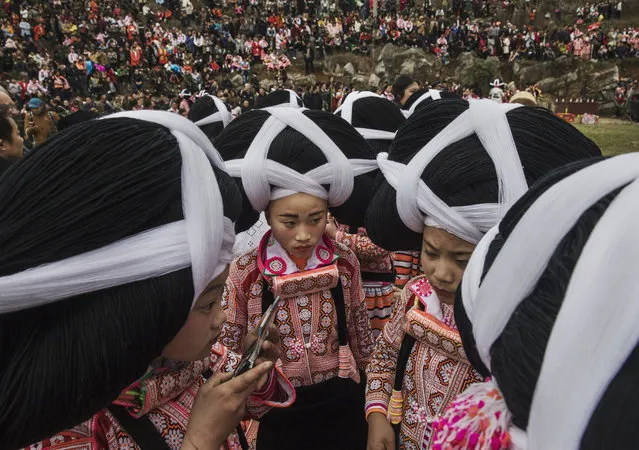
Girls of the Long Horn Miao ethnic minority group wear headdresses as they prepare gather for Tiaohua or Flower Festival as part of the Lunar New Year on February 6, 2017 in Longga village, Guizhou province, southern China. The Long Horn Miao are recognized for their declining practice of wrapping a blend of linen, wool, and the hair of their ancestors around animal horns or a wooden clip to make headdresses. Many young women say they now wear the headdresses only for special occasions and festivals, as the ornaments, which are attached by the horns to their real hair, have proved impractical for modern daily life in a fast changing world. China officially recognizes 56 different ethnic minorities, and statistics show over 7 million Chinese identifying themselves as Miao. But the small Long Horn Miao community counts only around 5000 people living in 12 villages, whose age-old traditions, language, and culture are fading. It is increasingly difficult in a modernizing China, as young people are drawn from remote rural villages to opportunities in bigger cities amongst wide-scale urbanization. Farming and labour remain the mainstays of life for the Long Horn Miao, leaving the area relatively poor in comparison with many parts of China. The government has invested significant amounts into local infrastructure and the tourism industry to try to bolster the local economy. (Photo by Kevin Frayer/Getty Images)

Girls of the Long Horn Miao ethnic minority group wear headdresses as they prepare gather for Tiaohua or Flower Festival as part of the Lunar New Year on February 6, 2017 in Longga village, Guizhou province, southern China. (Photo by Kevin Frayer/Getty Images)
Details
13 Feb 2017 00:01:00