Loading...
Done
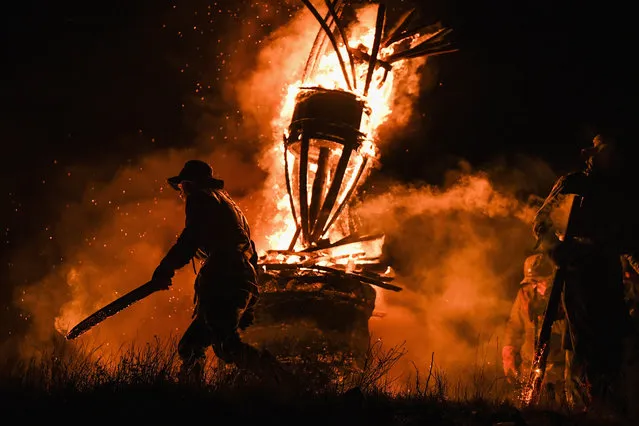
The Clavie, a burning barrel packed with tar soaked sticks fixed on the top of a pole, is surrounded by people at the Doorie Hill on January 11, 2018 in Burghead, Scotland. People welcome in the New Year with the fire ceremony which has ancient roots dating back to the 1750s, when the Julian calendar was reformed in Britain. It is believed to bring good luck for the coming year. (Photo by Jeff J. Mitchell/Getty Images)

The Clavie, a burning barrel packed with tar soaked sticks fixed on the top of a pole, is surrounded by people at the Doorie Hill on January 11, 2018 in Burghead, Scotland. People welcome in the New Year with the fire ceremony which has ancient roots dating back to the 1750s, when the Julian calendar was reformed in Britain. It is believed to bring good luck for the coming year. (Photo by Jeff J. Mitchell/Getty Images)
Details
12 Jan 2018 08:34:00
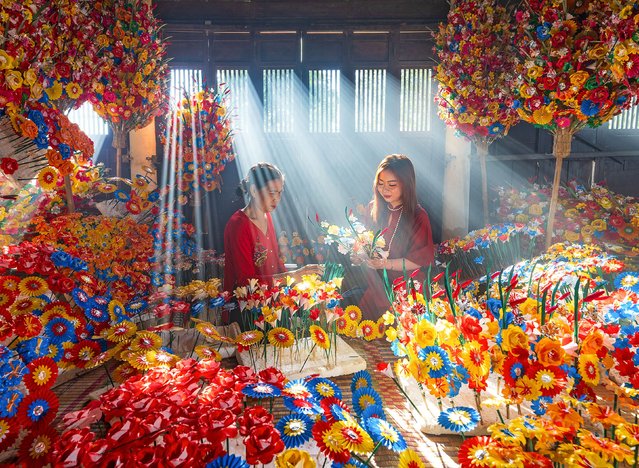
Women work on a colourful display of paper flowers ready to be showcased during the traditional Tet Nguyen Dan festival in Thanh Tien, Vietnam early February 2024. Tet celebrates the arrival of Spring according to the Vietnamese calendar, often celebrated in the early weeks of February, and is this year being held on February 10. (Photo by Nguyen Sanh Quoc Huy/Solent News)

Women work on a colourful display of paper flowers ready to be showcased during the traditional Tet Nguyen Dan festival in Thanh Tien, Vietnam early February 2024. Tet celebrates the arrival of Spring according to the Vietnamese calendar, often celebrated in the early weeks of February, and is this year being held on February 10. (Photo by Nguyen Sanh Quoc Huy/Solent News)
Details
09 Feb 2024 10:51:00


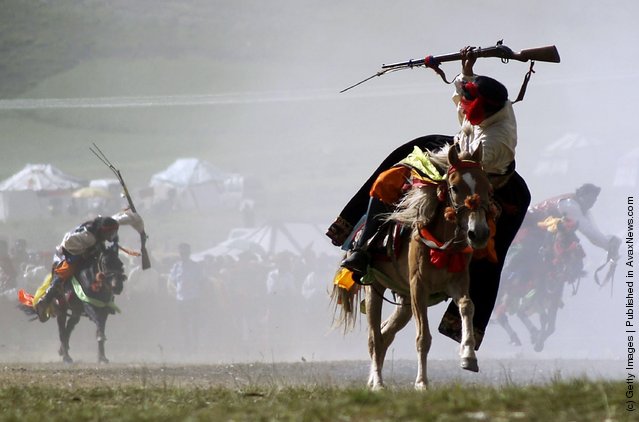
A Tibetan rider fires his weapon as he perfoms his riding skills at the Qinghai Yushu Horse Racing Festival on July 27, 2007 in Yushu County of Yushu Tibetan Autonomous Prefecture, Qinghai Province, northwest China. The Horse Racing Festival of Tibetan nomads in Yushu Prefecture falls in late July and early August on the Tibetan calendar. During the festival, various equestrian skills will be performed along with singing, dancing and costume shows. (Photo by China Photos/Getty Images)
Details
03 Apr 2011 12:33:00


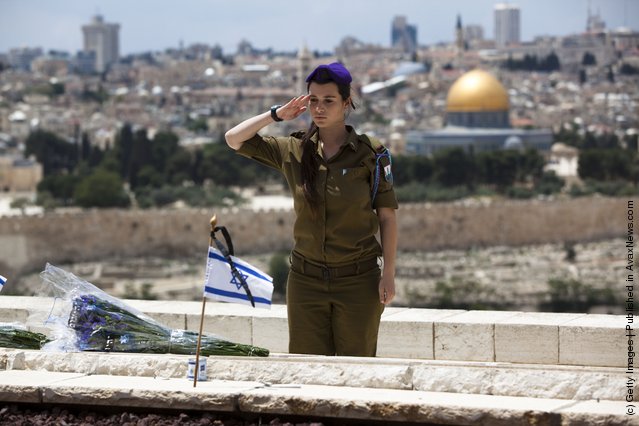
An Israeli soldier salutes as she attends a military cemetery ahead of the start of Remembrance Day at the graves of killed comrades on May 8, 2011 in Jerusalem, Israel. The 64th anniversary of the creation of Israel in 1948 has fallen on the Monday as determined by the Hebrew calendar and is preceded by the annual memorial recognising Israel's fallen soldiers. (Photo by Uriel Sinai/Getty Images)
Details
09 May 2011 11:21:00
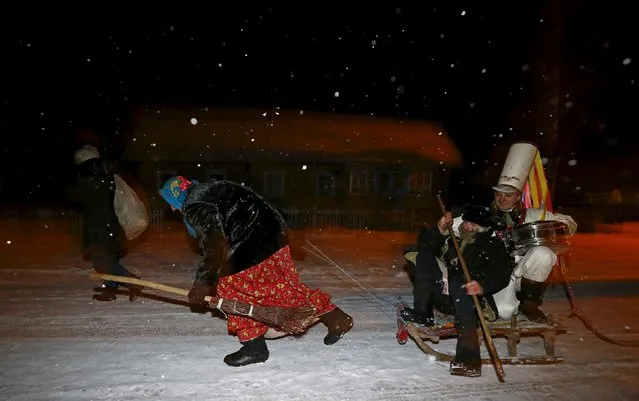
Belarussian villagers perform during a celebration of the "Tsary" rite in the village of Semezhevo, Belarus January 13, 2016. (Photo by Vasily Fedosenko/Reuters)

Belarussian villagers perform during a celebration of the “Tsary” rite in the village of Semezhevo, Belarus January 13, 2016. This unique rite originated from the 18th century, and now takes place only in this village marking the New Year, according to the Julian calendar, on January 13. (Photo by Vasily Fedosenko/Reuters)
Details
15 Jan 2016 08:06:00
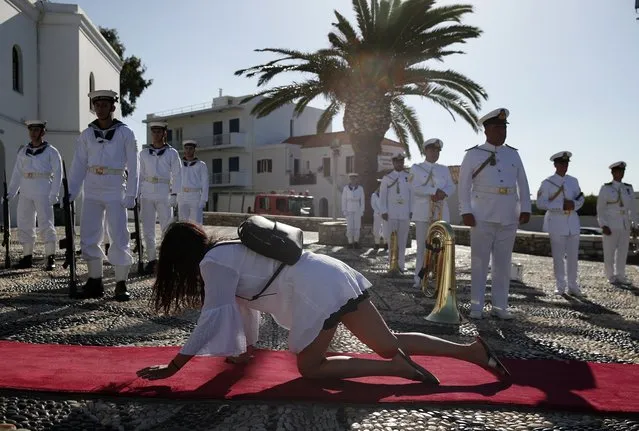
A pilgrim crawls in front of the Navy band outside the Holy Church of Panagia of Tinos, on the Aegean island of Tinos, Greece, on Saturday, August 15, 2020. For nearly 200 years, Greek Orthodox faithful have flocked to Tinos for the August 15 feast day of the Assumption of the Virgin Mary, the most revered religious holiday in the Orthodox calendar after Easter. But this year there was no procession, the ceremony – like so many lives across the globe – upended by the coronavirus pandemic. (Photo by Thanassis Stavrakis/AP Photo)

A pilgrim crawls in front of the Navy band outside the Holy Church of Panagia of Tinos, on the Aegean island of Tinos, Greece, on Saturday, August 15, 2020. For nearly 200 years, Greek Orthodox faithful have flocked to Tinos for the August 15 feast day of the Assumption of the Virgin Mary, the most revered religious holiday in the Orthodox calendar after Easter. But this year there was no procession, the ceremony – like so many lives across the globe – upended by the coronavirus pandemic. (Photo by Thanassis Stavrakis/AP Photo)
Details
17 Aug 2020 00:07:00
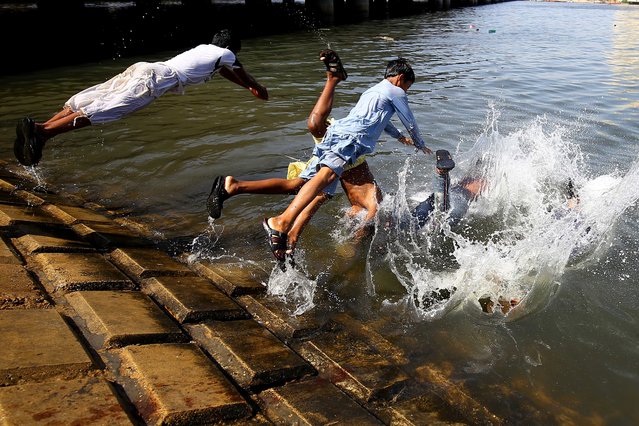
Children play in water to beat the heat during the Muslim holy month of Ramadan amid lockdown of the Sindh province due to the ongoing coronavirus COVID-19 disease pandemic in Karachi, Pakistan, 28 April 2020. Muslims around the world celebrate the holy month of Ramadan, by praying during the night time and abstaining from eating, drinking, and sexual acts during the period between sunrise and sunset. Ramadan is the ninth month in the Islamic calendar and it is believed that the revelation of the first verse in Koran was during its last 10 nights. (Photo by Shahzaib Akber/EPA/EFE)

Children play in water to beat the heat during the Muslim holy month of Ramadan amid lockdown of the Sindh province due to the ongoing coronavirus COVID-19 disease pandemic in Karachi, Pakistan, 28 April 2020. Muslims around the world celebrate the holy month of Ramadan, by praying during the night time and abstaining from eating, drinking, and sexual acts during the period between sunrise and sunset. Ramadan is the ninth month in the Islamic calendar and it is believed that the revelation of the first verse in Koran was during its last 10 nights. (Photo by Shahzaib Akber/EPA/EFE)
Details
20 May 2020 00:05:00
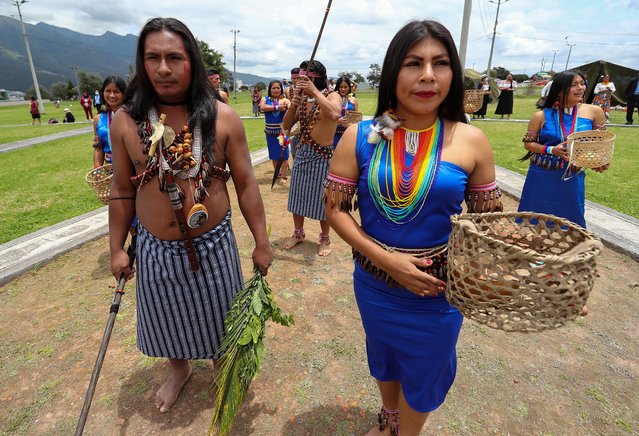
Ecuadorian indigenous people celebrate the festival of the moon or Kulla Raymi, in Quito, Ecuador, 21 September 2021. A circle on the ground made up of fruits and inside the Andean symbol of the chacana, multinational geometric flags and a cross that symbolizes the four cardinal points, were the setting in which the festival of the moon, the Kulla, was commemorated this Tuesday. Raymi, on a hill in Quito. It is one of the four most significant festivities of the Andean agroecological calendar, which commemorates the beginning of life and exalts women as the maximum representation of fertility. (Photo by Jose Jacome/EPA/EFE)

Ecuadorian indigenous people celebrate the festival of the moon or Kulla Raymi, in Quito, Ecuador, 21 September 2021. A circle on the ground made up of fruits and inside the Andean symbol of the chacana, multinational geometric flags and a cross that symbolizes the four cardinal points, were the setting in which the festival of the moon, the Kulla, was commemorated this Tuesday. Raymi, on a hill in Quito. It is one of the four most significant festivities of the Andean agroecological calendar, which commemorates the beginning of life and exalts women as the maximum representation of fertility. (Photo by Jose Jacome/EPA/EFE)
Details
22 Sep 2021 09:01:00