A cow covered with foam scavenges in the waste left on the banks of the polluted Yamuna river in New Delhi on October 10, 2020. (Photo by Sajjad Hussain/AFP Photo)
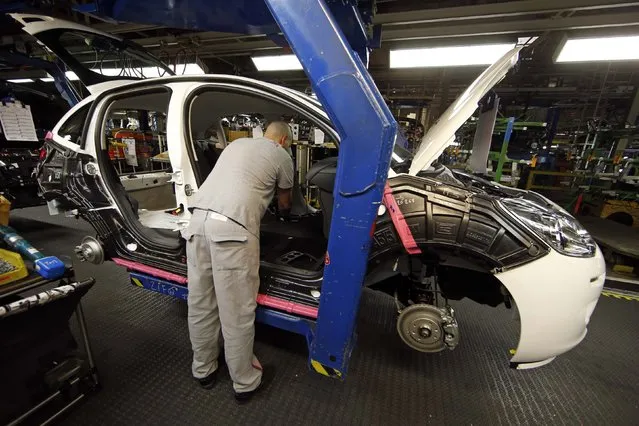
An employee works on the automobile assembly line of a Citroen C3 car at the PSA Peugeot Citroen plant in Poissy, near Paris, France, April 29, 2015. PSA Peugeot Citroen said on Wednesday its revenue rose in the first quarter as the recovering French carmaker's efforts to raise prices helped offset weaker volumes. (Photo by Benoit Tessier/Reuters)
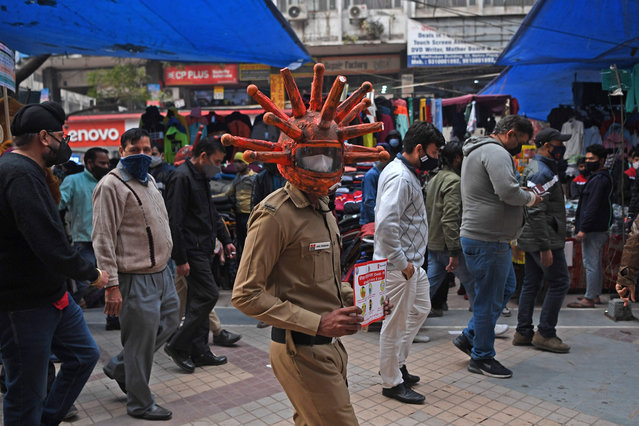
A civil defence volunteer wearing a Covid-19 coronavirus-themed helmet holds a placard as he takes part in an awareness campaign at a market in New Delhi on November 25, 2020. (Photo by Sajjad Hussain/AFP Photo)
A dog wearing face mask is seen on a street as the country is hit by an outbreak of the novel coronavirus, in Shanghai, China on March 2, 2020. (Photo by Aly Song/Reuters)
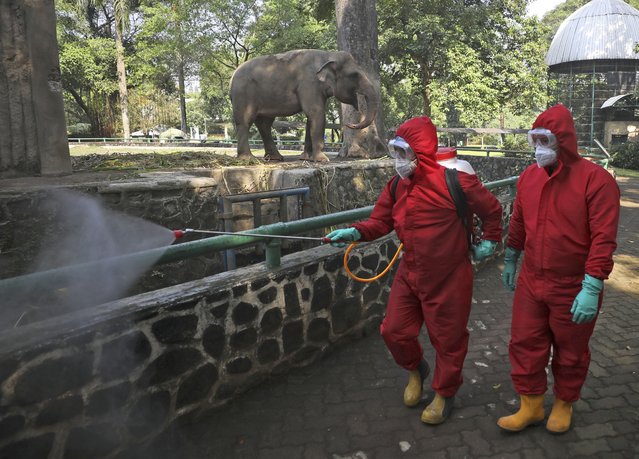
Indonesian firefighters spray disinfectant at the public area near an elephant enclosure at Ragunan Zoo prior to its reopening this weekend after weeks of closure due to the large-scale restrictions imposed to help curb the new coronavirus outbreak, in Jakarta, Indonesia, Wednesday, June 17, 2020. As Indonesia's overall virus caseload continues to rise, the capital city has moved to restore normalcy by lifting some restrictions, saying that the spread of the virus in the city of 11 million has slowed after peaking in mid-April. (Photo by Dita Alangkara/AP Photo)
I know, this answer was a little too short, so let me explain in a little more detail.
Imagine tossing a coin. Normally, any normal coin toss has two possible outcomes - heads or tails - with each one having a 50% chance of happening. Ideally, that is, because factors like the force of your finger tossing the coin, gravity, the wind, the moon phase and a passing TARDIS can all influence the outcome of the toss - but I have deviated from the subject.
A model is reflected in a mirror as she applies make up backstage during Kazakhstan Fashion Week in Almaty, Kazakhstan, April 19, 2016. (Photo by Shamil Zhumatov/Reuters)
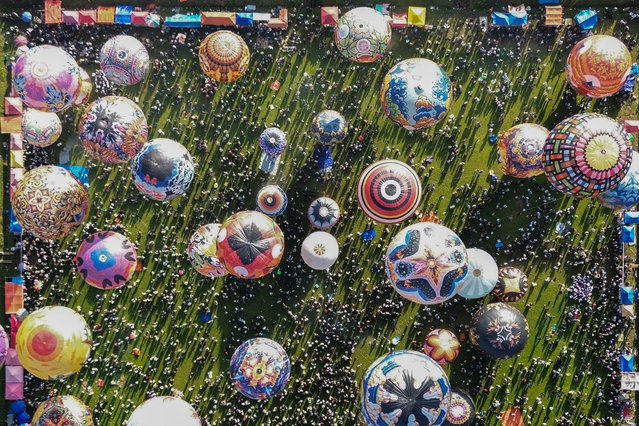
An aerial image shows hot air balloons, mostly made from recycled paper and tied with ropes, floating in the air during the annual hot air balloon festival, held since 1950 to celebrate Eid al-Fitr, the Islamic holiday marking the end of Ramadan, in Wonosobo, Central Java, on April 2, 2025. (Photo by Devi Rahman/AFP Photo)