Loading...
Done
All In By Graham MacIndoe

In order to get a glimpse into the visual culture of drug trade in New York City, a British photographer Graham MacIndoe collected more than one hundred bags, which were used to sell heroin. These bags feature references to various movies, fast-food restaurants, and luxury brands. This could be a way to mark various purities of heroin, or maybe different drug dealers use different markers to distinguish between each other. We can only wonder where Graham has acquired all these heroin bags. Hopefully, he picked them up after their contents were emptied. (Photo by Graham MacIndoe)
Details
01 Dec 2014 14:15:00
Technicians check a CRH high-speed train at Shanghai Hongqiao High-speed train base

Technicians check a CRH high-speed train at Shanghai Hongqiao High-speed train base on December 28, 2011 in Shanghai, China. China's railway stations have started today to sell tickets for the 2012 Spring Festival travel season scheduled to run between January 8th and February 16th, centred around the Chinese New Year which this year falls on January 23rd. (Photo by ChinaFotoPress/Getty Images)
Details
30 Dec 2011 11:40:00
A man walks across a vat of water used to wash the hide. (Photo by Rezza Estily/JG Photo)

Sukaregang in Garut district, West Java, has long been a bustling center for Indonesia's leather trade, with some shops producing and selling various goods – including bags, shoes and jackets – since the 1940s. The industrial area is also a major supplier for high-end brands from across the globe, catering to the fashion, auto and motor-sports industry. Here: a man walks across a vat of water used to wash the hide. (Photo by Rezza Estily/JG Photo)
Details
31 Mar 2015 13:29:00
Francisca Gomez stands at an entrance to her home, a cave where she has been living for the past 50 years, in the mountains on the outskirts of Chusmuy April 21, 2015. (Photo by Jorge Cabrera/Reuters)

Francisca Gomez stands at an entrance to her home, a cave where she has been living for the past 50 years, in the mountains on the outskirts of Chusmuy, Honduras April 21, 2015. The 75-year old widow receives help from neighbors and friends and she makes a little money by selling wood she collects, according to a local newspaper. (Photo by Jorge Cabrera/Reuters)
Details
24 Apr 2015 10:38:00
Artist Steve Casino creates celebrity sculptures from peanut shells in New York City. (Photo by Steve Casino)

US based toy inventor Steve Casino, 48, has spent almost two years turning peanut shells into these tiny figures. He has made almost 100 of the tiny four-inch statuettes to date- including well-known stars like Elton John and Johnny Depp. The intricate designs can often take up to 20 hours to create. Steve has even turned his unusual passion into a business, selling privately commissioned peanut statuettes as gifts and wedding cake toppers. (Photo by Steve Casino)
Details
05 May 2014 09:03:00
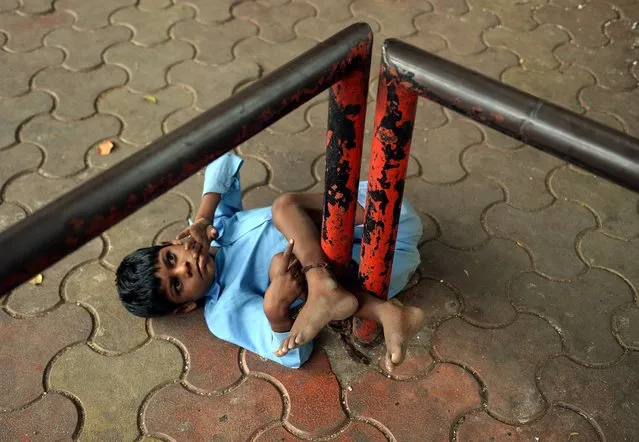
In this photograph taken on May 20, 2014 nine year old Indian boy Lakhan Kale is tied with a cloth rope around his ankle, to a bus-stop pole in Mumbai. (Photo by Punit Paranjpe/AFP Photo)

In this photograph taken on May 20, 2014 nine year old Indian boy Lakhan Kale is tied with a cloth rope around his ankle, to a bus-stop pole in Mumbai. The nine-year-old boy dressed in blue lay listlessly on the pavement in the scorching Mumbai summer afternoon, his ankle tethered with rope to a bus stop, unheeded by pedestrians strolling past. Lakhan Kale cannot hear or speak and suffers from cerebral palsy and epilepsy, so his grandmother and carer tied him up to keep him safe while she went to work, selling toys and flower garlands on the city's roadsides. (Photo by Punit Paranjpe/AFP Photo)
Details
04 Jul 2014 09:54:00
Tin and Naing win live on a small boat which they sail throughout the Delta region in Myanmar. The former gardeners once had a home on land but it was destroyed when a powerful cyclone ravaged the area in 2008. Since then, the couple have not been able to afford to rebuild their home, so they live on the boat from which they sell fish paste to make a living. (Photo by Muse Mohammed/IOM)

The ferocity of crises worldwide is forcing a record number of people to flee their homes, seeking some form of safety within their own country or across international borders. There are 65.3 million displaced people worldwide, including 21.3 million refugees. Most have lost their homes to armed conflict or natural disasters but other factors, such as extreme poverty and climate change, also drive displacement. The International Organisation for Migration commissioned photojournalist Muse Mohammed to document the plight of the displaced. (Photo by Muse Mohammed/IOM)
Details
02 Jan 2017 12:04:00
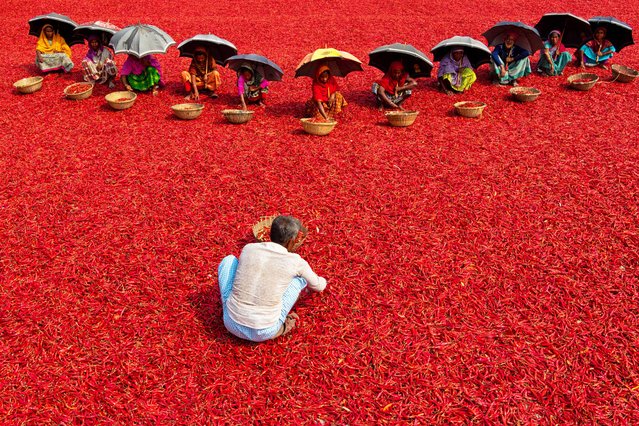
Rows of workers shelter under umbrellas from the scorching heat as they painstakingly sort through a red carpet of millions of chilli peppers in Bogra, Bangladesh on October 3, 2023. They sort the rotten and broken chilli peppers out to separate the poor quality ones which won't sell. In a line, the pickers who are paid less than £3 for a 10-hour shift slowly move forward with their baskets to separate the bad from the good after the chilies have been dried in the sun for a week. The dried & sorted chillies are then packaged and taken to the local market where they are brought mainly by companies to be made into chilli powder. The workers sort them in a warm environment, with temperatures reaching up to 45°C. More than 5,000 people work in almost 100 chilli farms in the Bogra district of Bangladesh to supply local spice companies with chillies for their recipes. Known as “Lal Morich” to the locals, chilli peppers are a major part of Bengali cuisine and are used as part of a combination of spices for various meat dishes, including chicken and beef. (Photo by Joy Saha/Rex Features/Shutterstock)

Rows of workers shelter under umbrellas from the scorching heat as they painstakingly sort through a red carpet of millions of chilli peppers in Bogra, Bangladesh on October 3, 2023. They sort the rotten and broken chilli peppers out to separate the poor quality ones which won't sell. In a line, the pickers who are paid less than £3 for a 10-hour shift slowly move forward with their baskets to separate the bad from the good after the chilies have been dried in the sun for a week. (Photo by Joy Saha/Rex Features/Shutterstock)
Details
21 Oct 2023 04:04:00