Loading...
Done
The Flying Duck Orchid

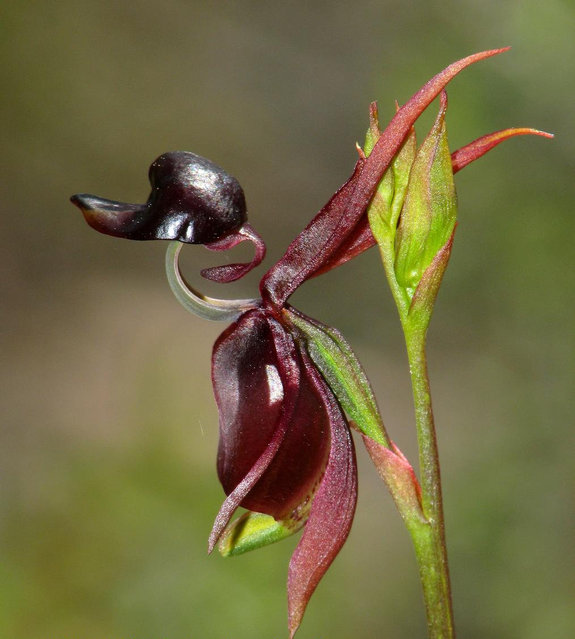
Caleana major, the Flying Duck Orchid is a small orchid found in eastern and southern Australia. This terrestrial plant features a remarkable flower, resembling a duck in flight. The flower is an attractant to insects, such as male sawflies which pollinate the flower in a process known as pseudocopulation. In 1986 this orchid was featured on an Australian postage stamp.


See Also: Monkey Orchid
Details
22 Apr 2013 10:56:00
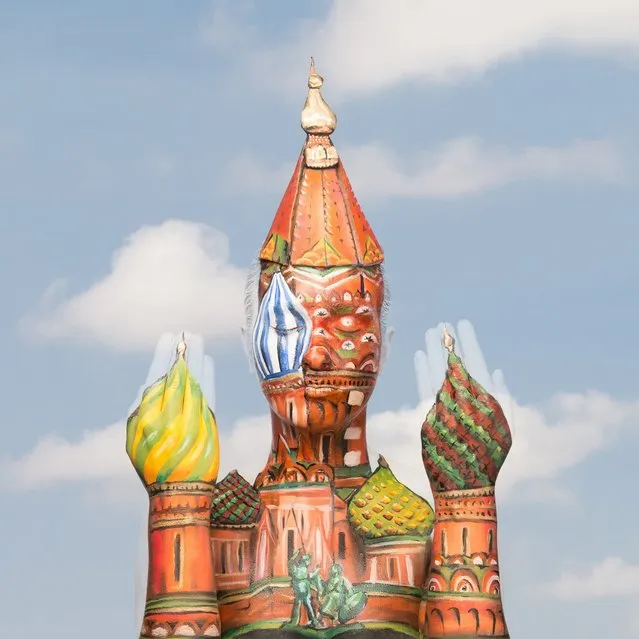
Body Painter By Emma Fay

There is something frightening and at the same time appealing in the living sculptures of 27-year-old British artist Emma Fay. Body art in conjunction with the flexibility of acrobats and fantasy of the artist using water-based paints, a brush and sponge, is transformed into a beautiful work of art. It is not immediately possible to make out the human body in the picture. First you look at the landscape and suddenly begin to distinguish someone’s arm, or neck. Or you look into the eyes of an amazing bull, and it turns out that it is perfectly folded back. Lovely people, temples are and wonderful people-insects are.
Details
10 Jan 2016 08:02:00
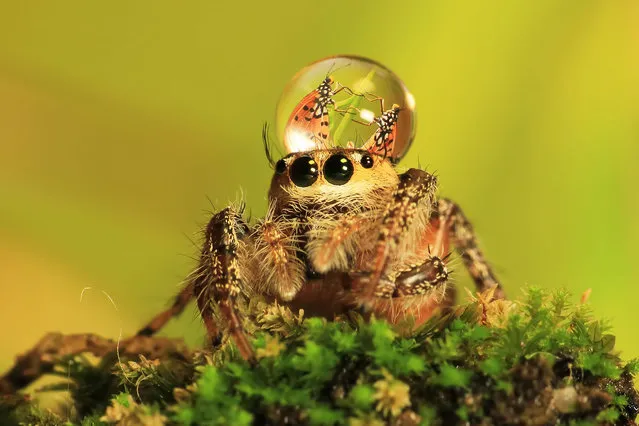
Incredible raindrops on spiders by photographer Uda Dennie

The amazing images, which show the balls of water reflecting an array of colours and even other insects, were snapped by photographer Uda Dennie in his garden. One of the massive droplets even stayed in shape for about a minute before the spider scurried off. Dennie, 33, from Batam Island, Indonesia, said: “I was really surprised to get such amazing pictures – it was really wonderful. I have a real passion for macro photography and after lots of trial and error I'm now able to produce good images – perseverance really paid off”. (Photo by Uda Dennie)
Details
28 Jul 2013 10:01:00
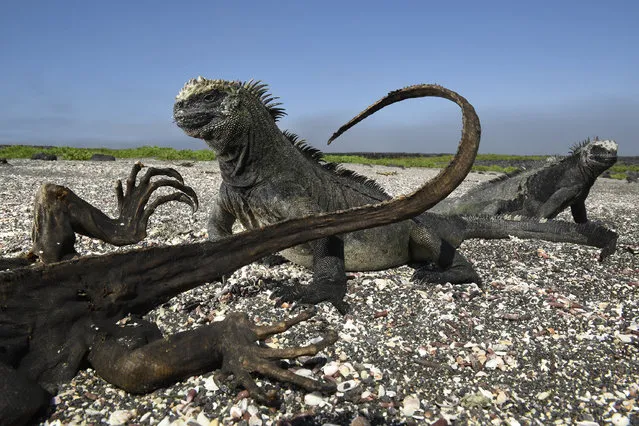
Galapagos – Rocking the Cradle: Four major ocean currents converge along the Galapagos archipelago, creating the conditions for an extraordinary diversity of animal life, April 25, 2016. The islands are home to at least 7,000 flora and fauna species, of which 97 percent of the reptiles, 80 percent of the land birds, 50 percent of the insects and 30 percent of the plants are endemic. The local ecosystem is highly sensitive to the changes in temperature, rainfall and ocean currents that characterize the climatic events known as El Niño and La Niña. These changes cause marked fluctuations in weather and food availability. Many scientists expect the frequency of El Niño and La Niña to increase as a result of climate change, making the Galapagos a possible early-warning location for its effects. (Photo by Thomas P. Peschak for National Geographic/World Press Photo)

Galapagos – Rocking the Cradle: Four major ocean currents converge along the Galapagos archipelago, creating the conditions for an extraordinary diversity of animal life, April 25, 2016. The islands are home to at least 7,000 flora and fauna species, of which 97 percent of the reptiles, 80 percent of the land birds, 50 percent of the insects and 30 percent of the plants are endemic. (Photo by Thomas P. Peschak for National Geographic/World Press Photo)
Details
16 Apr 2018 00:01:00
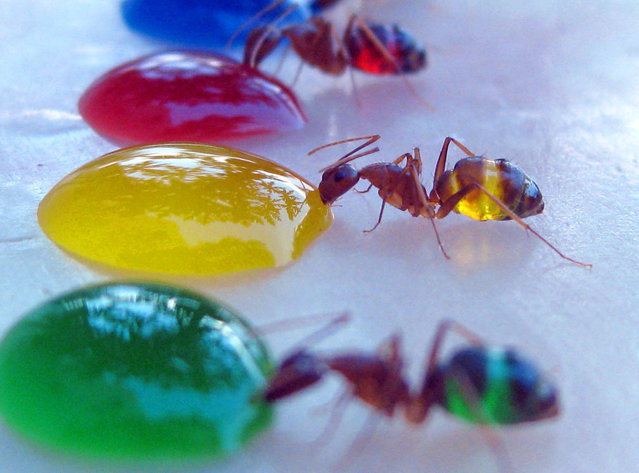
Colored Ants By Mohamed Babu

Scientist Mohamed Babu from Mysore, India captured beautiful photos of these translucent ants eating a specially colored liquid sugar. Some of the ants would even move between the food resulting in new color combinations in their stomachs.
Details
13 Jul 2015 09:28:00
This photo taken on April 25, 2015 shows a pet male monkey named “JK” (R) and his partner “Shaki” (L) eating dinner at a restaurant in Kuala Lumpur. (Photo by Mohd Rasfan/AFP Photo)

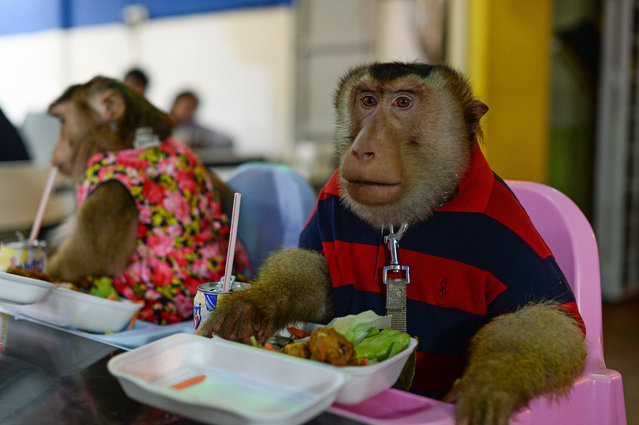
This photo taken on April 25, 2015 shows a pet male monkey named “JK” (R) and his partner “Shaki” (L) eating dinner at a restaurant in Kuala Lumpur. Jamil, a 45-year single Malaysian man, has unusual pets – two macaque monkeys. JK and Shaki, both nine years old, usually ride with Jamil on his motorcycle and they often have dinner together in public restaurants, drawing instant public awe. (Photo by Mohd Rasfan/AFP Photo)
Details
30 Apr 2015 11:40:00
A participant in costume eats a sandwich after a Halloween parade in Kawasaki, south of Tokyo, October 26, 2014. More than 100,000 spectators turned up to watch the parade, where 2,500 participants dressed up in costumes, according to the organiser. (Photo by Yuya Shino/Reuters)

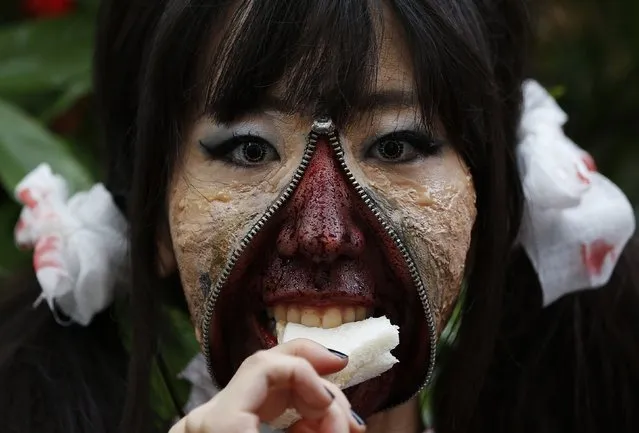
A participant in costume eats a sandwich after a Halloween parade in Kawasaki, south of Tokyo, October 26, 2014. More than 100,000 spectators turned up to watch the parade, where 2,500 participants dressed up in costumes, according to the organiser. (Photo by Yuya Shino/Reuters)
Details
26 Oct 2014 12:29:00
“Don't Leave Any Food On Your Plate”. The giraffes at Nairobi's Giraffe Manor are totally at home with humans. They will eat out of your hand, or even off your plate. Photo location: Giraffe Manor, Nairobi, Kenya. (Photo and caption by Gavin Werbeloff/National Geographic Photo Contest)

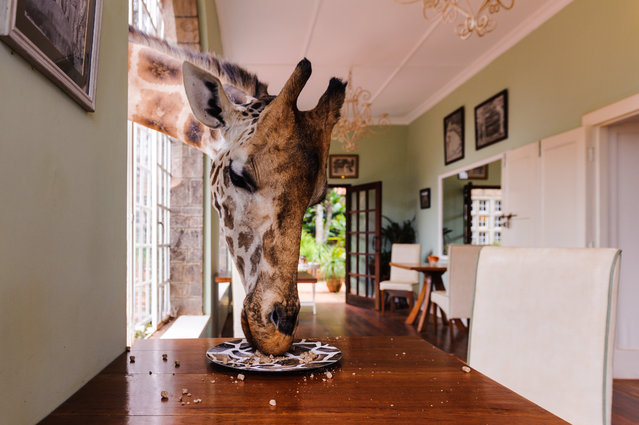
“Don't Leave Any Food On Your Plate”. The giraffes at Nairobi's Giraffe Manor are totally at home with humans. They will eat out of your hand, or even off your plate. Photo location: Giraffe Manor, Nairobi, Kenya. (Photo and caption by Gavin Werbeloff/National Geographic Photo Contest)
Details
20 Jun 2014 10:23:00