Loading...
Done
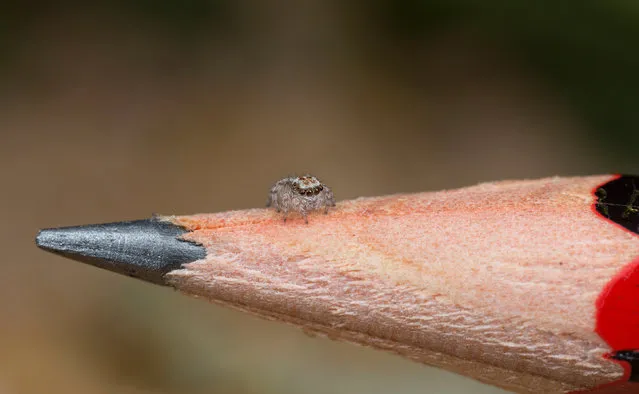
A juvenile specimen of the recently-discovered Australian Peacock spider, Maratus Albus, sits on the nib of a pencil in this undated picture taken in Western Australia's Nuytsland Nature Reserve. (Photo by Jurgen Otto/Reuters)

A juvenile specimen of the recently-discovered Australian Peacock spider, Maratus Albus, sits on the nib of a pencil in this undated picture taken in Western Australia's Nuytsland Nature Reserve. (Photo by Jurgen Otto/Reuters)
Details
09 Jun 2016 09:14:00
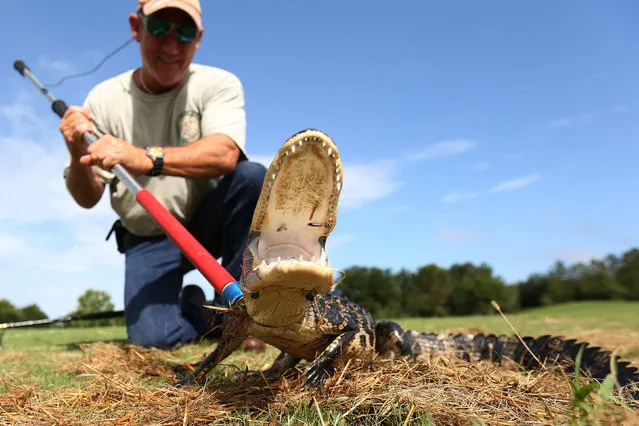
Alligator trapper Mark Whitmire prepares an alligator he caught in a lagoon on a golf course to relocate it to a more natural environment in Orlando, Florida, U.S., June 19, 2016. (Photo by Carlo Allegri/Reuters)

Alligator trapper Mark Whitmire prepares an alligator he caught in a lagoon on a golf course to relocate it to a more natural environment in Orlando, Florida, U.S., June 19, 2016. (Photo by Carlo Allegri/Reuters)
Details
24 Jun 2016 13:55:00
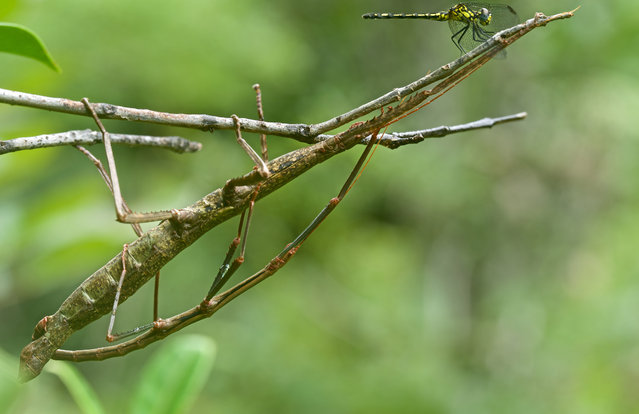
Stick insects. (Photo by Paul Bertner/Caters News)

These tiny insects are so well camouflaged it is nearly impossible to make out their cleverly disguised forms. Canadian photographer and adventurer Paul Bertner attempted to catch the bugs in their natural habitats as part of a hide-and-seek game to show biodiversity in nature. Here: Stick insects. (Photo by Paul Bertner/Caters News)
Details
02 Apr 2016 09:20:00
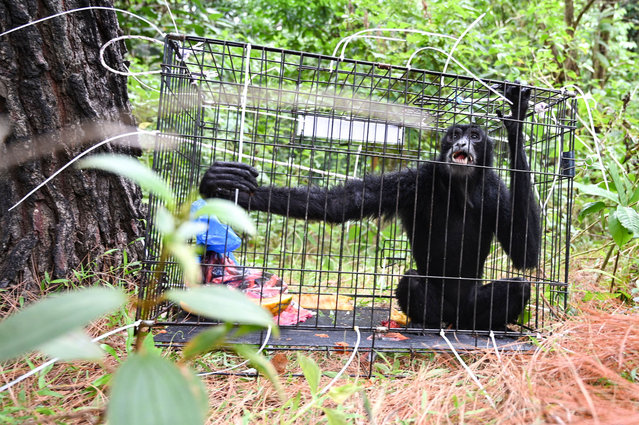
A black gibbon is seen in a cage before being released into the wild by Indonesian nature conservation agency (BKSDA) in Jantho forest, Aceh province on August 26, 2021. (Photo by Chaideer Mahyuddin/AFP Photo)

A black gibbon is seen in a cage before being released into the wild by Indonesian nature conservation agency (BKSDA) in Jantho forest, Aceh province on August 26, 2021. (Photo by Chaideer Mahyuddin/AFP Photo)
Details
04 Sep 2021 08:56:00
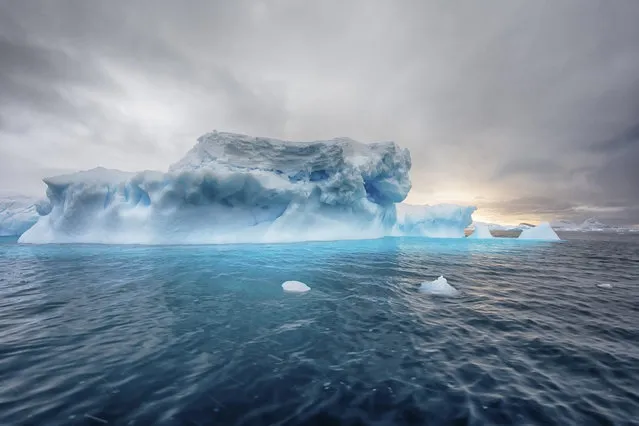
A serene turquoise glow glimmers from underneath these powerful icebergs. Stood in the middle of Antarctica, the giant icebergs appear to be from an unearthly world. These stunning photographs were captured by American photographer Michael Leggero. “My images show pure nature, as that is how I describe Antarctica, simply pure nature”, says the 43 year old, of Carthage, New York. “It is the only place on our planet that humans have not left a presence behind”. (Photo by Michael Leggero/Hotspotmedia/Visual Press Agency)

A serene turquoise glow glimmers from underneath these powerful icebergs. Stood in the middle of Antarctica, the giant icebergs appear to be from an unearthly world. These stunning photographs were captured by American photographer Michael Leggero. “My images show pure nature, as that is how I describe Antarctica, simply pure nature”, says the 43 year old, of Carthage, New York. “It is the only place on our planet that humans have not left a presence behind”. (Photo by Michael Leggero/Hotspotmedia/Visual Press Agency)
Details
07 Aug 2014 10:32:00
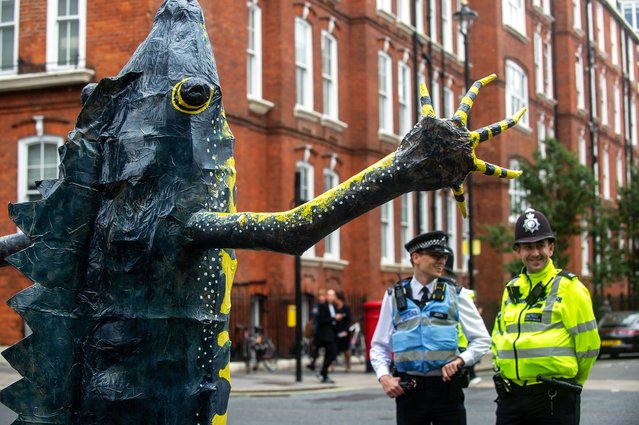
Hundreds of people from a range of NGOs and campaign groups protest to demand the immediate restoration of nature at DEFRA – Department for Environment Food & Rural Affairs on September 28, 2023 in London, England. The 2023 State of Nature Report revealed that approximately one in six species in Great Britain, including turtle doves and hazel dormice, are at risk of extinction, citing climate change, intensive farming, and pollution as major threats, with a 19% average decline in monitored plant and animal populations since 1970. (Photo by Guy Smallman/Getty Images)

Hundreds of people from a range of NGOs and campaign groups protest to demand the immediate restoration of nature at DEFRA – Department for Environment Food & Rural Affairs on September 28, 2023 in London, England. The 2023 State of Nature Report revealed that approximately one in six species in Great Britain, including turtle doves and hazel dormice, are at risk of extinction, citing climate change, intensive farming, and pollution as major threats, with a 19% average decline in monitored plant and animal populations since 1970. (Photo by Guy Smallman/Getty Images)
Details
09 Dec 2024 04:11:00
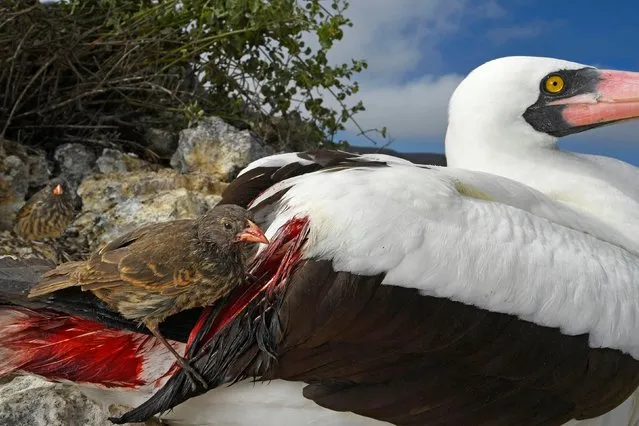
Bloodthirsty by Thomas P Peschak, Germany/South Africa — winner, Behaviour: birds. When rations run short on Wolf Island, in the remote northern Galápagos, the sharp-beaked ground finches become vampires. Their sitting targets are Nazca boobies and other large birds. The finches rely on a scant diet of seeds and insects, which regularly dries up, so they drink blood to survive. ‘I’ve seen more than half a dozen finches drinking from a single Nazca booby,’ says Tom. Rather than leave their nests the boobies tolerate the vampires, and the blood loss doesn’t seem to cause permanent harm. (Photo by Thomas P Peschak/2018 Wildlife Photographer of the Year)

Bloodthirsty by Thomas P. Peschak, Germany/South Africa — winner, Behaviour: birds. When rations run short on Wolf Island, in the remote northern Galápagos, the sharp-beaked ground finches become vampires. Their sitting targets are Nazca boobies and other large birds. The finches rely on a scant diet of seeds and insects, which regularly dries up, so they drink blood to survive. ‘I’ve seen more than half a dozen finches drinking from a single Nazca booby,’ says Tom. Rather than leave their nests the boobies tolerate the vampires, and the blood loss doesn’t seem to cause permanent harm. (Photo by Thomas P. Peschak/2018 Wildlife Photographer of the Year)
Details
19 Oct 2018 00:05:00
Sculptures By Hu Shaoming

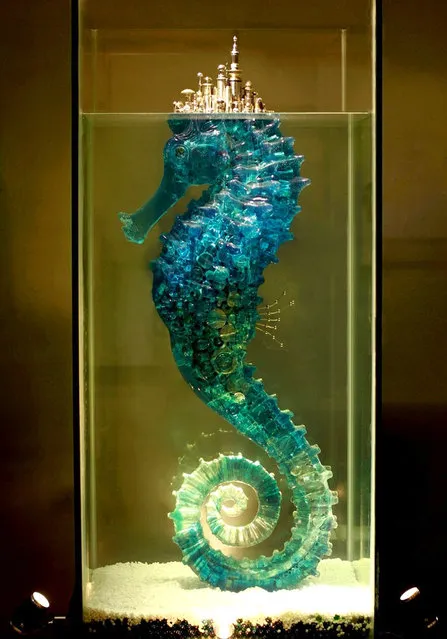
Hu Shaoming is a fantastic artist from China, who has learnt Fine Arts at Guangzhou Academy. The most complex sculpture of all his works is a mechanical seahorse, constructed from many tiny details. The whole composition consists of two complete opposites, including the top part of the seahorse`s head that looks like a golden town, and the bottom which resembles an amazing blue creature. An important problem is reflected in such an idea; it shows how a man forces the nature into submission. The contrast in the opposition of the human buildings and conquered Mother Nature suggests the thought of keeping our natural environment safe.
Details
01 Mar 2015 13:02:00