Loading...
Done
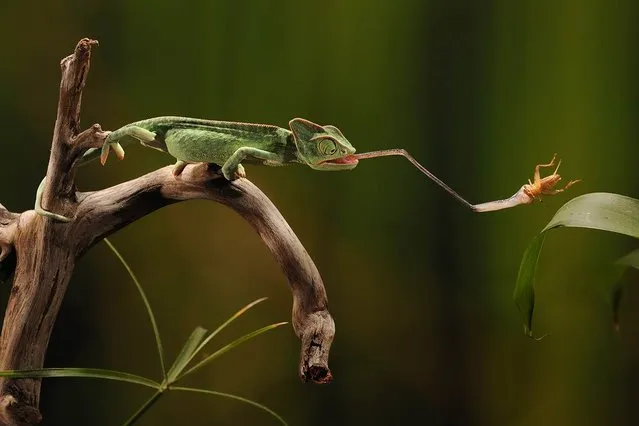
A veiled chameleon extends its tongue to catch a cricket

“Scott Linstead is an internationally published, freelance wildlife photographer/writer. His clients include Natural History Magazine, Hewlett Packard, Ranger Rick Magazine and a number of wildlife publications in North America and Europe. Scott's column on the techniques of bird photography appears in every issue of Outdoor Photography Canada”.

Photo: A veiled chameleon extends its tongue to catch a cricket. Canadian wildlife photographer Scott Linstead, formerly an aerospace engineer and high school teacher, uses a device called Phototrap “to not only photograph the elusive, but also the unimaginably quick”. (Photo by Scott Linstead)
Details
22 May 2012 11:32:00
A dune buggy driver trains before competing in a sand dune drag racing event on January 8, 2016, as part of the Liwa 2016 Moreeb Dune Festival in the Liwa desert, some 250 kilometres southwest of Abu Dhabi. The festival, which attracts participants from around the Gulf region, includes a variety of races (cars, bikes, falcons, camels and horses) or other activities aimed at promoting the country's folklore. (Photo by Karim Sahib/AFP Photo)

A dune buggy driver trains before competing in a sand dune drag racing event on January 8, 2016, as part of the Liwa 2016 Moreeb Dune Festival in the Liwa desert, some 250 kilometres southwest of Abu Dhabi. The festival, which attracts participants from around the Gulf region, includes a variety of races (cars, bikes, falcons, camels and horses) or other activities aimed at promoting the country's folklore. (Photo by Karim Sahib/AFP Photo)
Details
09 Jan 2016 13:45:00
Emma the Maltese's fur blows in the wind as she rides in her owner's purse on 5th Avenue at Central Park in New York December 2, 2014. (Photo by Carlo Allegri/Reuters)

Emma the Maltese's fur blows in the wind as she rides in her owner's purse on 5th Avenue at Central Park in New York December 2, 2014. (Photo by Carlo Allegri/Reuters)
Details
06 Dec 2014 13:07:00
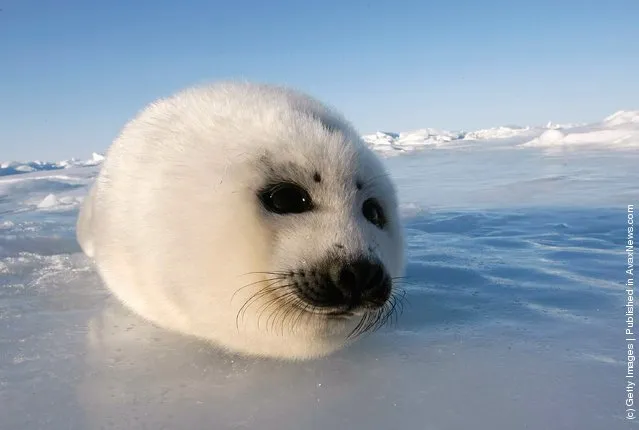
A harp seal pup

“The harp seal or saddleback seal is a species of earless seal native to the northernmost Atlantic Ocean and adjacent parts of the Arctic Ocean. Newborn pups weigh around 11 kilograms (24 lb) and are 80–85 centimetres (31–33 in) long. After birth, the mother only feeds that pup. During the 12 day nursing period, the mother does not eat, losing up to 3 kilograms (7 lb) per day. Harp seal milk contains up to 48% fat, so pups gain over 2.2 kilograms (4.9 lb) per day. During this time, the juvenile's “greycoat” grows in beneath the white neonatal coat, and it weighs 80 pounds (36 kg)”. – Wikipedia

Photo: A harp seal pup lies on an ice floe in the Gulf of Saint Lawrence March 24, 2008 in Charlottetown, Canada. (Photo by Joe Raedle/Getty Images)
Details
19 Sep 2011 15:49:00
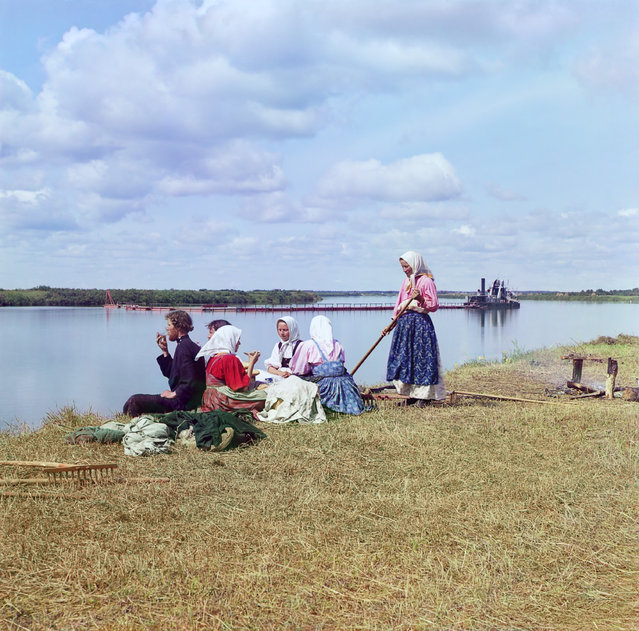
Photos by Sergey Prokudin-Gorsky. Dinner during haying. Russian Empire, Novgorod province, county Cherepovets, 1909

“Sergey Mikhaylovich Prokudin-Gorsky (August 30 1863 Russian Empire – September 27, 1944 Paris, France) was a Russian chemist and photographer. He is best known for his pioneering work in color photography of early 20th-century Russia”. – Wikipedia

Photo: Dinner during haying. Russian Empire, Novgorod province, county Cherepovets, 1909. (Photos by Sergey Prokudin-Gorsky via US Library of Congress and Prokudin-Gorsky.org)

P.S. All pictures are presented in high resolution. To see Hi-Res images – just TWICE click on any picture. In other words, click small picture – opens the BIG picture. Click BIG picture – opens VERY BIG picture (if available; this principle works anywhere on the site AvaxNews). Enjoy.
Details
24 Jul 2012 12:03:00
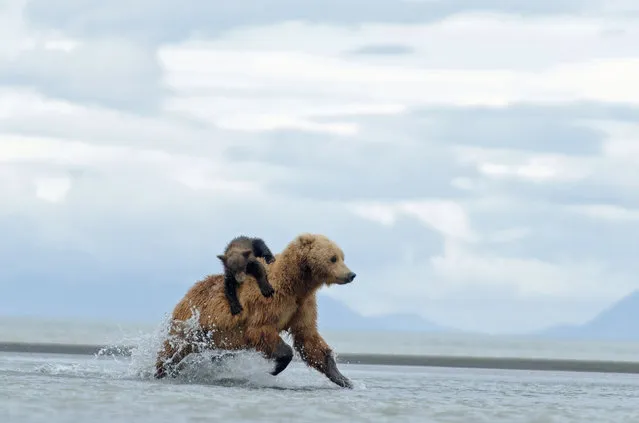
A adorable bear cub cant get enough of playing buckaroo – as it hangs onto its mum splashing about in a river. His mum was attempting to catch a fish supper for the pair as the plucky cub continued to jump on her back. And as she was concentrating on her meal the young bear became a distraction. So she sprung into life with him on her back before he was tossed into the water much to his delight. (Photo by Lisa Sidorsky/Caters News)

A adorable bear cub cant get enough of playing buckaroo – as it hangs onto its mum splashing about in a river. His mum was attempting to catch a fish supper for the pair as the plucky cub continued to jump on her back. And as she was concentrating on her meal the young bear became a distraction. So she sprung into life with him on her back before he was tossed into the water much to his delight. (Photo by Lisa Sidorsky/Caters News)
Details
15 Nov 2014 13:10:00
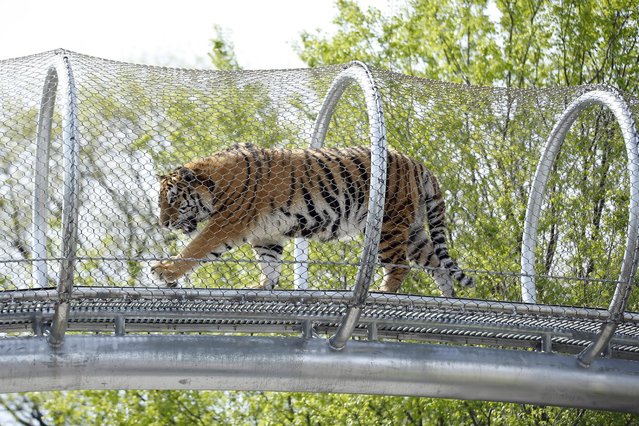
An Amur tiger walks across a passageway after a news conference at the Philadelphia Zoo, Wednesday, May 7, 2014, in Philadelphia. (Photo by Matt Slocum/AP Photo)

An Amur tiger walks across a passageway after a news conference at the Philadelphia Zoo, Wednesday, May 7, 2014, in Philadelphia. The see-through mesh pathway called Big Cat Crossing is part of a national trend called animal rotation that zoos use to enrich the experience of both creatures and guests. (Photo by Matt Slocum/AP Photo)
Details
12 May 2014 12:20:00
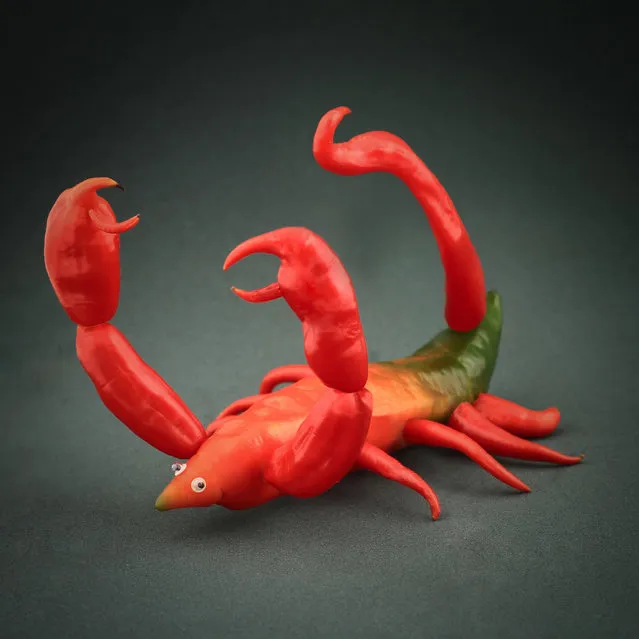
“Red Pepperpion. (Photo by Vanessa Dualib)

“Red Pepperpion. Red Pepperpions are secretive, nocturnal arachilli which can be spotted in kitchens of arid climates all around the world.

Red Pepperpions are equipped with a delicious (and depending on the quantity...deadly!) stinger at the end of its tail. If you happen to get bitten (or if you bite him!) it will produce a burning sensation on your taste nerves.

However, there is no need to worry, since the fact is that his potent stinger is usually only used when hunting or whenever the Pepperpion feels like he might become part of someones meal...

At daylight or when encountering a larger foe, such as a Saucier Chef, they retreat into burrows inside the fridge or hide beneath the oven”. (Photo and comment by Vanessa Dualib)


Details
08 Feb 2013 09:24:00