Loading...
Done
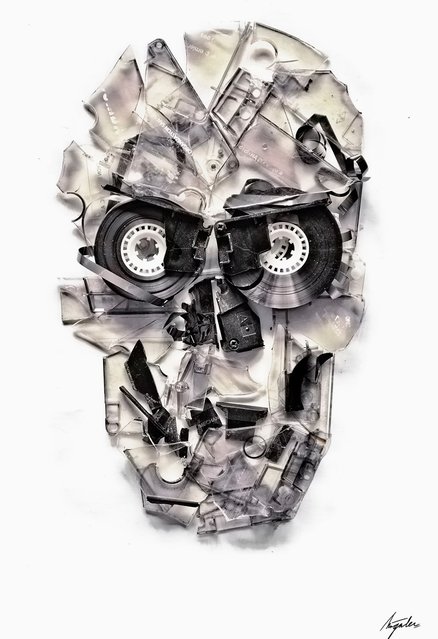
Skull Art By Ali Gulec

Istanbul-based Ali Gulec is a graphic artist with a difference. His surreal illustrations are like identikit drawings aiming to prosecute the material arts. Working on the margins of what is possible with his medium, Gulec's forms, figures, and situations are remarkable for their clarity and strength of purpose, and maintain an iconographic intensity that would make any rock band bereft of an album cover salivate with admiration.
Details
17 Feb 2016 08:00:00
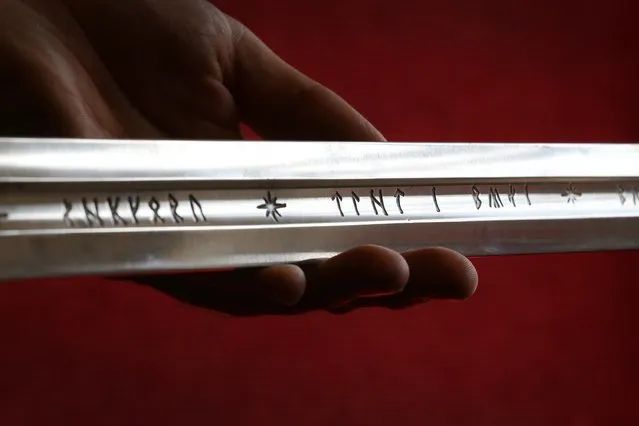
Elvish writing is seen on “Anduril”, a prop sword belonging to Aragorn, hero of “The Lord of the Rings” movie trilogy on July 31, 2014 in London, England. The sword, belonging to actor Sir Christopher Lee and estimated at $150,000-250,000, forms part of Bonhams “There's No Place Like Hollywood” movie memorabilia auction taking place in New York on November 24, 2014. (Photo by Peter Macdiarmid/Getty Images)

Elvish writing is seen on “Anduril”, a prop sword belonging to Aragorn, hero of “The Lord of the Rings” movie trilogy on July 31, 2014 in London, England. The sword, belonging to actor Sir Christopher Lee and estimated at $150,000-250,000, forms part of Bonhams “There's No Place Like Hollywood” movie memorabilia auction taking place in New York on November 24, 2014. (Photo by Peter Macdiarmid/Getty Images)
Details
01 Aug 2014 12:04:00
Devil's Pool – Victoria Falls, Zambia. (Photo by Siena College Study Abroad)

“The Victoria Falls or Mosi-oa-Tunya is a waterfall located in southern Africa on the Zambezi River between the countries of Zambia and Zimbabwe. A famous feature is a naturally formed pool known as the Devil's Pool, near the edge of the falls, accessed via Livingstone Island in Zambia. When the river flow is at a certain level, usually during the months of September to December, a rock barrier forms a pool with little current; some people swim in the pool. Occasional deaths have been reported when people slip over the edge of the rock barrier”. – Wikipedia

Photo: Devil's Pool – Victoria Falls, Zambia. (Photo by Siena College Study Abroad)
Details
13 Dec 2012 12:46:00
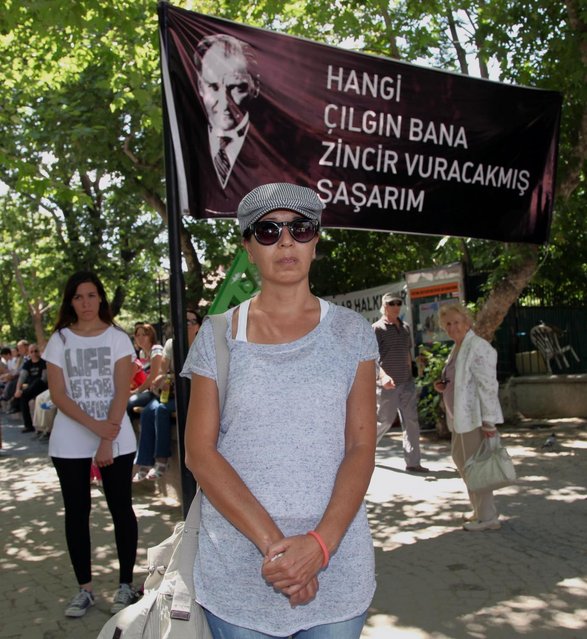
Turks stand in a silent protest in Kugulu Park in Ankara, Turkey, Wednesday, June 19, 2013. After weeks of sometimes-violent confrontation with police, Turkish protesters have found a new form of resistance: standing still and silent. The banner with an image of Turkey's founder Kemal Ataturk reads: “Which crazy person thinks they can put me in chains”. (Photo by Burhan Ozbilic/AP Photoi)

Turks stand in a silent protest in Kugulu Park in Ankara, Turkey, Wednesday, June 19, 2013. After weeks of sometimes-violent confrontation with police, Turkish protesters have found a new form of resistance: standing still and silent. The banner with an image of Turkey's founder Kemal Ataturk reads: “Which crazy person thinks they can put me in chains”. (Photo by Burhan Ozbilic/AP Photoi)
Details
20 Jun 2013 09:37:00
Young Palestinians form an obstacle to be jumped over during a military-style exercise graduation ceremony organised by the Hamas movement, in Gaza City August 5, 2015. Thousands of young Palestinians joined Hamas military-style summer camps during school vacation in the Gaza Strip to prepare them to “confront any possible Israeli attack”, organisers said. (Photo by Suhaib Salem/Reuters)

Young Palestinians form an obstacle to be jumped over during a military-style exercise graduation ceremony organised by the Hamas movement, in Gaza City August 5, 2015. Thousands of young Palestinians joined Hamas military-style summer camps during school vacation in the Gaza Strip to prepare them to “confront any possible Israeli attack”, organisers said. (Photo by Suhaib Salem/Reuters)
Details
06 Aug 2015 11:31:00
A member of the Indian company Margi Kathakali theatre performs during “Kijote Kathakali”, a Kathakali recital based on the Spanish classic “Don Quixote”, at the Niemeyer Center in Aviles, northern Spain, July 29, 2016. The performance and text captured the essence of the novel while sticking to the format of Kathakali. Kathakali is one of the major forms of classical Indian dance. It is another “story play” genre of art, but one distinguished by its elaborately colorful make-up, costumes and face masks wearing actor-dancers, who have traditionally been all males. (Photo by Eloy Alonso/Reuters)

A member of the Indian company Margi Kathakali theatre performs during “Kijote Kathakali”, a Kathakali recital based on the Spanish classic “Don Quixote”, at the Niemeyer Center in Aviles, northern Spain, July 29, 2016. The performance and text captured the essence of the novel while sticking to the format of Kathakali. Kathakali is one of the major forms of classical Indian dance. (Photo by Eloy Alonso/Reuters)
Details
31 Jul 2016 11:02:00
People watch as workers inflate a near-10 metre high giant spider by Singaporean artist Jackson Tan in Singapore's Marina Bay financial district on February 6, 2017. The spider is one of several inflatable creatures that will form the Art-Zoo, a section created by Singaporean artist Jackson Tan for the iLight Marina Bay annual light-art festival in the city-state. (Photo by Roslan Rahman/AFP Photo)

People watch as workers inflate a near-10 metre high giant spider by Singaporean artist Jackson Tan in Singapore's Marina Bay financial district on February 6, 2017. The spider is one of several inflatable creatures that will form the Art-Zoo, a section created by Singaporean artist Jackson Tan for the iLight Marina Bay annual light-art festival in the city-state. (Photo by Roslan Rahman/AFP Photo)
Details
07 Feb 2017 09:54:00
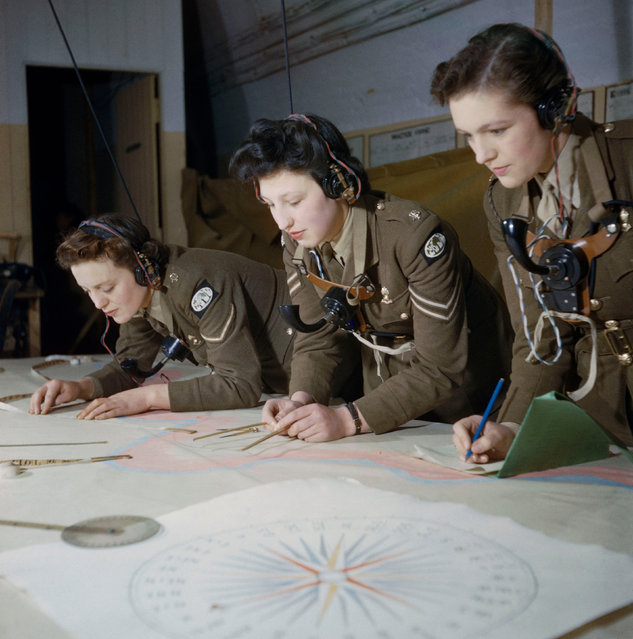
Auxiliary Territorial Service (ATS) plotters at work at Coastal Artillery Headquarters in Dover, December 1942. (Photo by Ted Dearberg/IWM/PA Wire)

Auxiliary Territorial Service (ATS) plotters at work at Coastal Artillery Headquarters in Dover, December 1942. The Auxiliary Territorial Service was the women's branch of the British Army during the Second World War. It was formed on 9 September 1938, initially as a women's voluntary service, and existed until 1 February 1949, when it was merged into the Women's Royal Army Corps. The ATS had its roots in the Women's Auxiliary Army Corps (WAAC), which was formed in 1917 as a voluntary service. During the First World War its members served in a number of jobs including clerks, cooks, telephonists and waitresses. The WAAC was disbanded after four years in 1921. (Photo by Ted Dearberg/IWM/PA Wire)
Details
13 Jul 2017 07:52:00