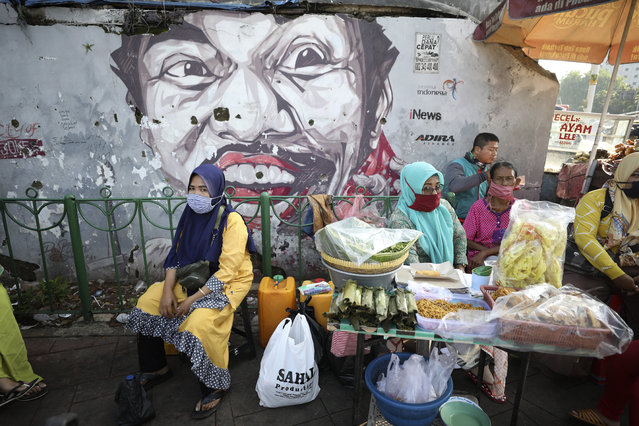
Indonesian women wearing masks as a precaution against the coronavirus outbreak sit at a food stall near a mural in Jakarta, Indonesia, Monday, September 21, 2020. (Photo by Dita Alangkara/AP Photo)
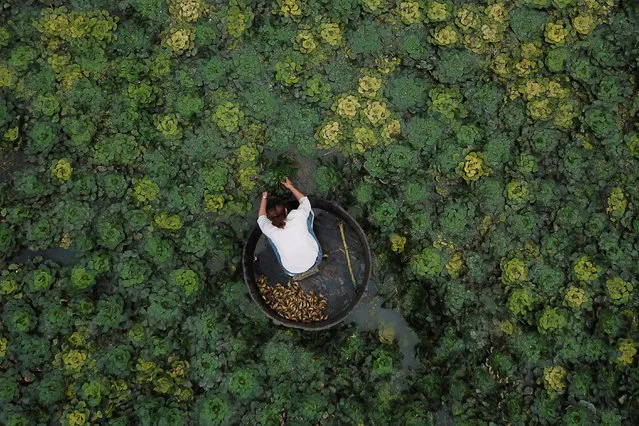
A villager harvests water chestnuts in Feijiadai Village, Zhejiang Province, China on September 20, 2019. (Photo by Huang Zongzhi/Xinhua News Agency/Barcroft Media)
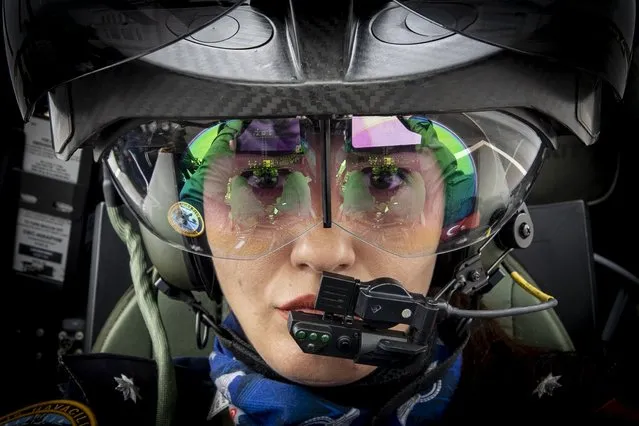
The first female attack helicopter pilot of Türkiye's Atak helicopter, Deputy Commissioner Özge Karabulut, undisclosed location, Türkiye, January 6, 2022. (Photo by Anadolu Agency via Getty Images)
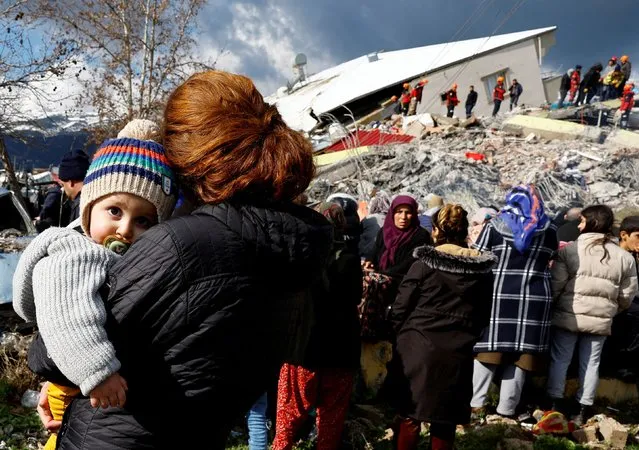
A woman holds a child as she stands near rubble and damages following an earthquake in Gaziantep, Turkey on February 7, 2023. (Photo by Suhaib Salem/Reuters)
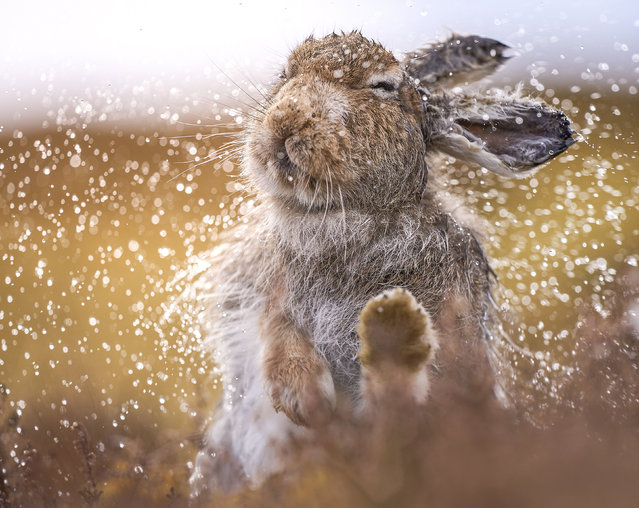
A mountain hare shakes off rain from its fur, in Findhorn Valley, Moray, Scotland in the second decade of August 2024. In summer, the hare’s coat is a grey-brown colour with a tinge of blue, making them hard to spot against the heather moorland. In winter, it changes to almost completely white for camouflage in the snow. (Photo by Will Hall/Solent News)
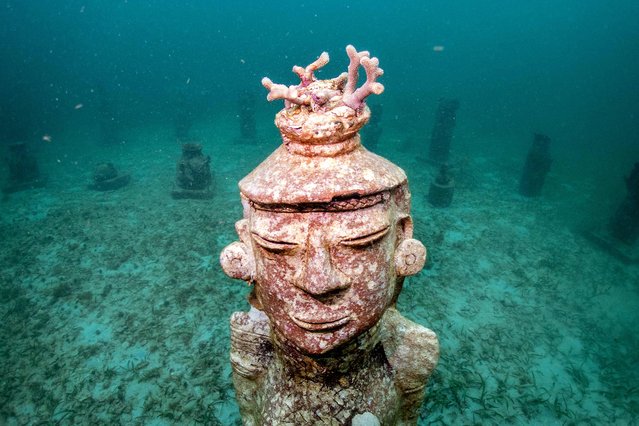
Coral grows in a sculpture at the MUSZIF underwater museum in Isla Fuerte, Bolivar department, Colombia, on May 22, 2024. In the Colombian Caribbean an underwater museum protects coral reefs threatened by tourism and climate change. (Photo by Luis Acosta/AFP Photo)
The official name for this tiny speck of land – the size of 12 football pitches – is Hashima, but few call it that. In English, its most commonly used name means “Battleship Island” and, viewed from a certain angle offshore, its silhouette is uncannily dreadnought in nature. It was a mining facility until 1974, when it was abandoned to the elements, before partially reopening as a tourist attraction in 2009. Photo: A decades-old television. (Photo by Mark C. O'Flaherty)