Loading...
Done
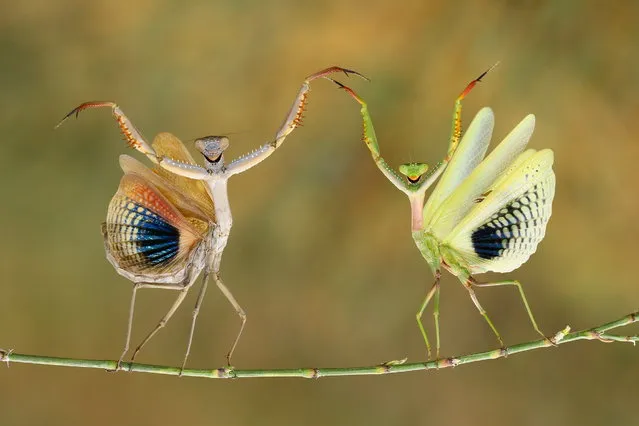
“Show Time”. It's a normal behavior of mantis. They're doing defence. When they're afraid of; raising their arms and spreading their wings. They looks like smiling dancer. Photo location: Nicosia, Cyprus. (Photo and caption by Hasan Baglar/National Geographic Photo Contest)

“Show Time”. It's a normal behavior of mantis. They're doing defence. When they're afraid of; raising their arms and spreading their wings. They looks like smiling dancer. Photo location: Nicosia, Cyprus. (Photo and caption by Hasan Baglar/National Geographic Photo Contest)
Details
28 Oct 2014 13:01:00
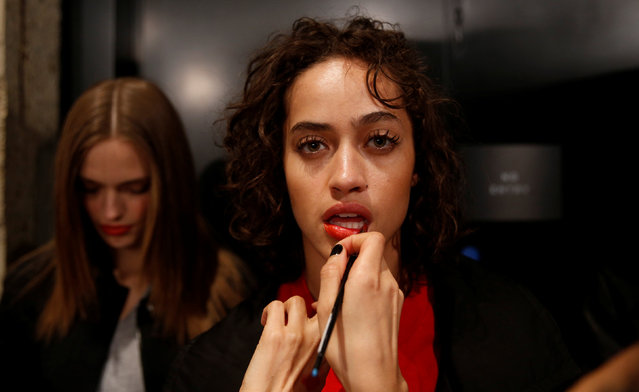
A model poses backstage at the Topshop Unique catwalk show during London Fashion Week in London, Britain February 19, 2017. (Photo by Neil Hall/Reuters)

A model poses backstage at the Topshop Unique catwalk show during London Fashion Week in London, Britain February 19, 2017. (Photo by Neil Hall/Reuters)
Details
21 Feb 2017 00:06:00
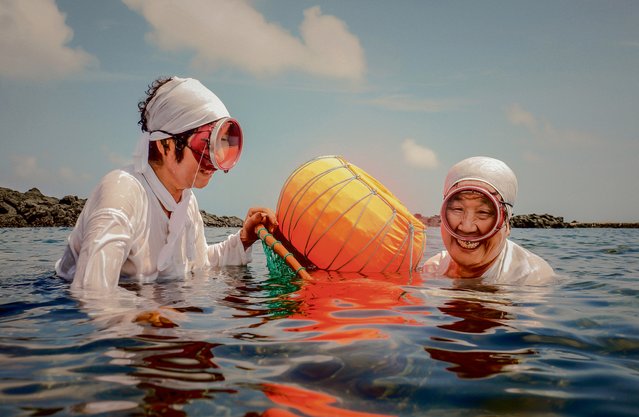
Ja Kang Song, 71, and Ja Hyun Su, 72, dive for shellfish and are the main breadwinners for their families. In South Korea, 45% of the diving women of Jeju are over the age of 70. Routinely diving to depths of 20m and staying under for an average of two to three minutes, the pressure on the body takes its toll and, like many others, burst eardrums have left Ja Hyun Su deaf. Each season, between seven and 10 women die diving the waters around Jeju Island. (Photo by Andy W. Langton/Age International)

Ja Kang Song, 71, and Ja Hyun Su, 72, dive for shellfish and are the main breadwinners for their families. In South Korea, 45% of the diving women of Jeju are over the age of 70. Routinely diving to depths of 20m and staying under for an average of two to three minutes, the pressure on the body takes its toll and, like many others, burst eardrums have left Ja Hyun Su deaf. Each season, between seven and 10 women die diving the waters around Jeju Island. (Photo by Andy W. Langton/Age International)
Details
12 Sep 2016 10:35:00
Sarah Gibbons grades a new batch of Maple Syrup at Gibbons Family Farm in Frankville, Ontario, Canada, 31 March 2014. The annual maple syrup season marks the end of the often brutal central Canadian winters and heralds the beginning of spring. The maple tree, whose leaf dominates the Canada's flag, plays both a symbolic and practical role in the identity of Canadians who produce around 95 percent of the world's supply of maple syrup. (Photo by Stephen Morrison/EPA)

Sarah Gibbons grades a new batch of Maple Syrup at Gibbons Family Farm in Frankville, Ontario, Canada, 31 March 2014. The annual maple syrup season marks the end of the often brutal central Canadian winters and heralds the beginning of spring. The maple tree, whose leaf dominates the Canada's flag, plays both a symbolic and practical role in the identity of Canadians who produce around 95 percent of the world's supply of maple syrup. (Photo by Stephen Morrison/EPA)
Details
08 May 2014 07:24:00
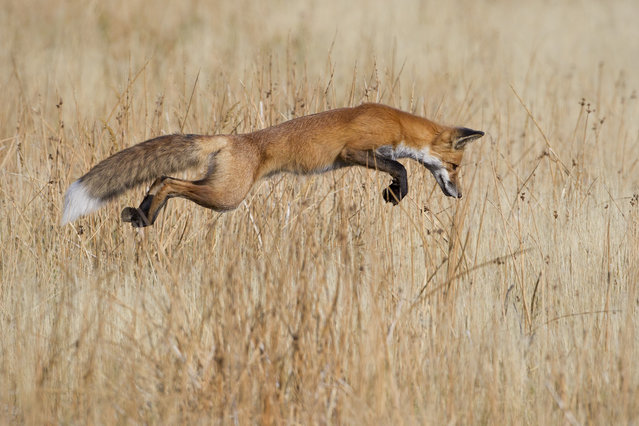
Canada: “Lucky pounce”. (Photo by Connor Stefanison/Wildlife Photographer of the Year 2013)

The winners of The London’s Natural History Museum's prestigious Wildlife Photographer of the Year for 2013 have finally been unveiled. Selected from almost 43,000 entries from 96 countries, the winners offer a glimpse of the stunning array of natural beauty on our planet. Photo: Canada: “Lucky pounce”. “Anticipating the pounce – that was the hardest part”, says Connor, who had come to Yellowstone National Park, Wyoming, USA, in search of wildlife as much as the spectacular landscape. He had found this fox, his first ever, on his last day in the park. It was so absorbed in hunting that Connor had plenty of time to get out of the car and settle behind a rock. It quartered the grassland, back and forth, and then started staring intently at a patch of ground, giving Connor just enough warning of the action to come. When it sprung up, Connor got his shot. And when it landed, the fox got his mouse. (Photo by Connor Stefanison/Wildlife Photographer of the Year 2013)

Details
17 Oct 2013 08:12:00
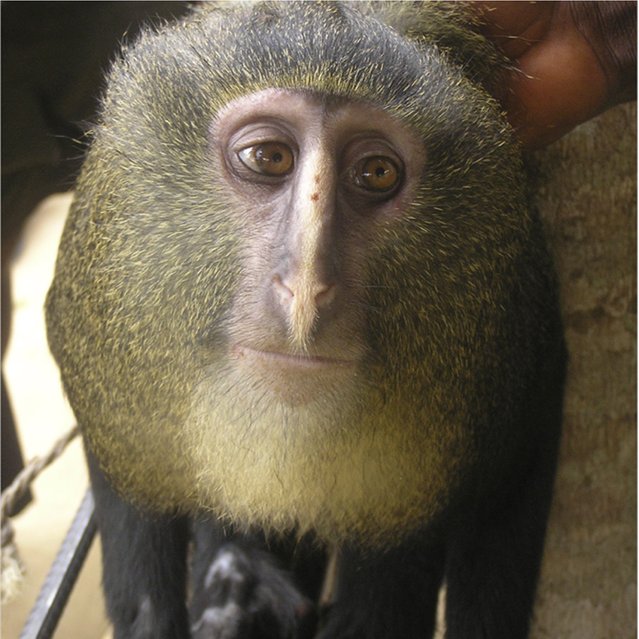
A new species of monkey found in the Democratic Republic of the Congo and identified as Lesula (Cercopithecus lomamiensis) is seen in this undated photograph from an article published September 12, 2012 in the science journal PLOS One. (Photo by Hart J. A., Detwiler K. M., Gilbert C. C./Reuters)

A new species of monkey found in the Democratic Republic of the Congo and identified as Lesula (Cercopithecus lomamiensis) is seen in this undated photograph from an article published September 12, 2012 in the science journal PLOS One. The monkey was first seen in 2007 by researchers John and Terese Hart of the Peabody Museum of Natural History at Yale Research Project. The finding of C. lomamiensis represents only the second new species of African monkey to be discovered in the past 28 years, according to the research article. (Photo by Hart J. A., Detwiler K. M., Gilbert C. C./Reuters)
Details
27 Sep 2012 08:17:00
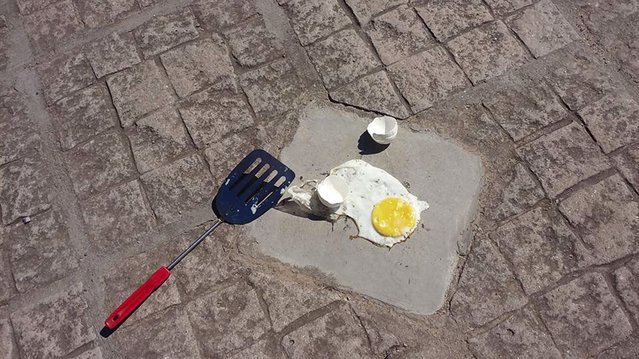
View of an egg fried on the pavement in Pozo Hondo, Santiago del Estero, Argentina on January 23, 2016, while the real feel was 57 degrees Celsius. Pozo Hondo's Mayor Claudio Nicolau fried an egg on the pavement of the main square of the city Saturday. (Photo by AFP Photo/Stringer)

View of an egg fried on the pavement in Pozo Hondo, Santiago del Estero, Argentina on January 23, 2016, while the real feel was 57 degrees Celsius. Pozo Hondo's Mayor Claudio Nicolau fried an egg on the pavement of the main square of the city Saturday. (Photo by AFP Photo/Stringer)
Details
26 Jan 2016 12:43:00
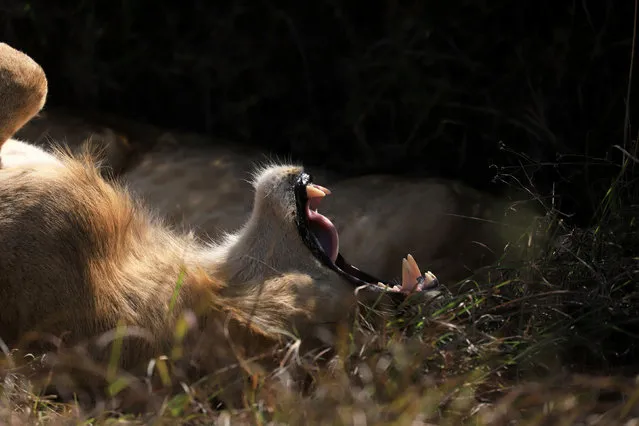
A lion rests in the Nairobi National Park, Kenya on January 6, 2021. (Photo by Tiksa Negeri/Reuters)

A lion rests in the Nairobi National Park, Kenya on January 6, 2021. (Photo by Tiksa Negeri/Reuters)
Details
18 Jan 2021 00:05:00