Artist Kong Ning wears a wedding dress made from respirators to highlight concerns about air quality and pollution in Beijing, China on December 1, 2015. (Photo by Luo Xiaoguang/Xinhua Press/Corbis)
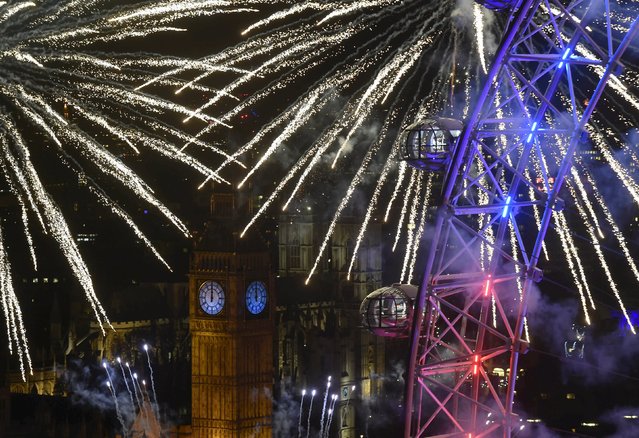
Fireworks explode around the London Eye wheel, the Big Ben clock tower and the Houses of Parliament to mark the beginning of the New Year in London, Britain, January 1, 2016. (Photo by Toby Melville/Reuters)
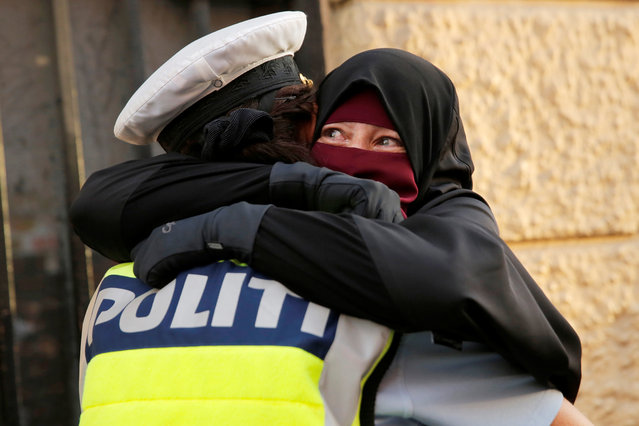
Ayah, 37, weeps as she is embraced by a police officer during a demonstration against the Danish face veil ban in Copenhagen, Denmark, August 1, 2018. (Photo by Andrew Kelly/Reuters)
Models present creations by Ukrainian designer Ivan Frolov during Ukrainian Fashion Week in Kiev, Ukraine on February 1, 2019. (Photo by Valentyn Ogirenko/Reuters)
Ambience backstage and frontstagen at the Y Project fashion show during the Spring Summer 2024 Collections in Paris, France on October 1 30 2023. (Photo by Jonas Gustavsson for The Washington Post)
Revelers enter the cold water during the annual Polar Bear Plunge on New Year's Day, Wednesday, January 1, 2025, in New York. (Photo by Andres Kudacki/AP Photo)
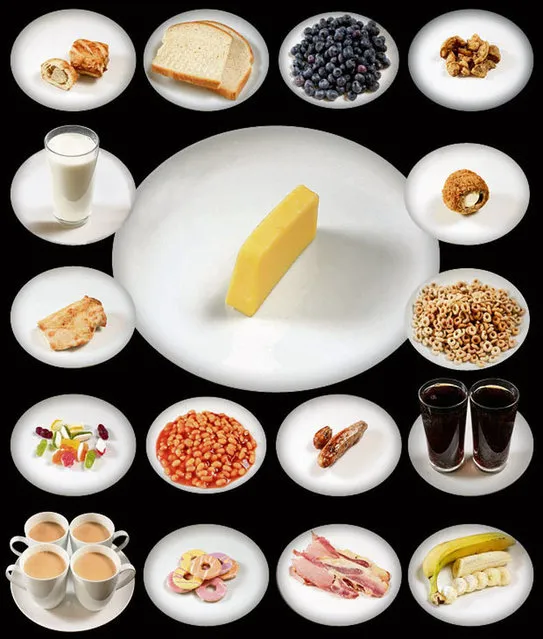
Some foods have significantly more Calories than others but what does the difference actually look like. Each of the photographs below represents 200 Calories of the particular type of food; the images are sorted from low to high calorie density. When you consider that an entire plate of broccoli contains the same number of Calories as a small spoonful of peanut butter, you might think twice the next time you decide what to eat. According to the U.S. Department of Agriculture, the average adult needs to consume about 2000 – 2500 Calories to maintain their weight. In other words, you have a fixed amount of Calories to "spend" each day; based on the following pictures, which would you eat?