Loading...
Done
The following “Utopian Tours” drawings are conceptual images of what tourism in North Korea might one day look like, created by North Korean architects. The images, curated by Nick Bonner, are on view as part of the exhibition at the Venice Architecture Biennale in the Korean Pavilion. Bonner runs the Beijing-based Koryo Tours – a company that organizes tours of outsiders into North Korea. (Photo by Nick Bonner/Kyle Vanhemert/Venice Architecture Biennale)

At this year’s Venice Bienniale in Italy, the Korean pavilion has a curious exhibit called “Commissions for Utopia”. It includes renderings from North Korea’s top architects and artists (all anonymous), many of whom studied at the Paekho Institute of Architecture, North Korea’s state-run architectural college, and none of whom have ever left the country. They were asked to create a vision of North Korea’s future sustainable architecture for its expanding tourism industry. Their final products are a glimpse into what it would be like to envision the future after being entirely cut off from the present for almost 70 years. (Photo by Nick Bonner/Kyle Vanhemert/Venice Architecture Biennale)
Details
08 Aug 2014 11:03:00
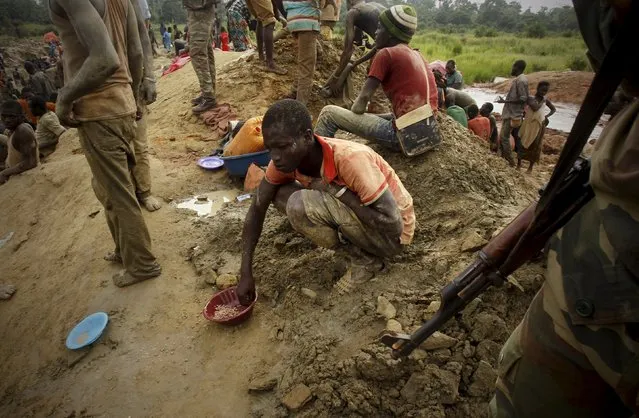
A gold prospector sits and eats close to a soldier at a gold mine near the village of Gamina, in western Ivory Coast, March 18, 2015. (Photo by Luc Gnago/Reuters)

Nestled among the cocoa plantations of western Ivory Coast is a gold mine that does not feature on any official maps. It is not run by an industrial mining company, nor does it pay taxes to the central government. The unlicensed mine is a key part of a lucrative business empire headed by the deputy commander of the West African nation's elite Republican Guard, United Nations investigators allege. Here: A gold prospector sits and eats close to a soldier at a gold mine near the village of Gamina, in western Ivory Coast, March 18, 2015. (Photo by Luc Gnago/Reuters)
Details
08 May 2015 13:54:00
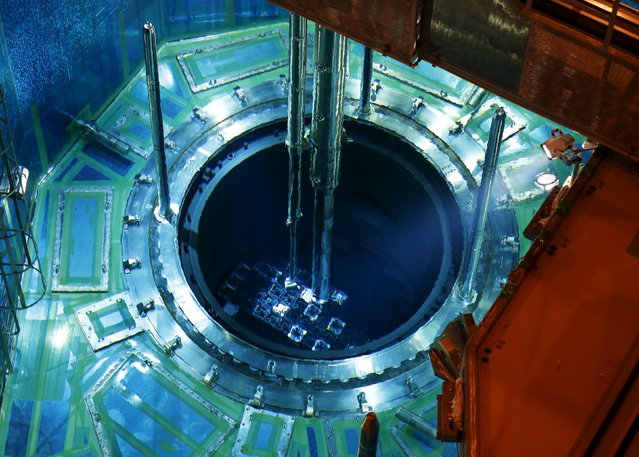
A fuel rod is inserted into a reactor vessel inside the No. 1 reactor building at Kyushu Electric Power's Sendai nuclear power station in Satsumasendai, Kagoshima prefecture, Japan, July 8, 2015. (Photo by Issei Kato/Reuters)

A fuel rod is inserted into a reactor vessel inside the No. 1 reactor building at Kyushu Electric Power's Sendai nuclear power station in Satsumasendai, Kagoshima prefecture, Japan, July 8, 2015. Kyushu Electric Power Co started loading uranium fuel rods into a reactor on Tuesday, marking the first attempt to reboot Japan's nuclear industry in nearly two years after the sector was shutdown following the 2011 Fukushima disaster. (Photo by Issei Kato/Reuters)
Details
09 Jul 2015 11:52:00
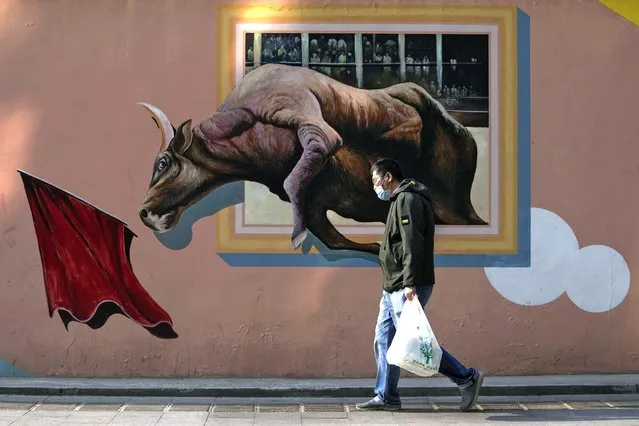
A man wearing a face mask to help protect from the coronavirus carries a bag of groceries as he walks by a mural depicting an iconic financial market bull statue near the central business district, Monday, April 18, 2022, in Beijing. China’s economic growth edged up to a still-weak 4.8% over a year earlier in the first three months of 2022 as spreading coronavirus outbreaks prompted shutdowns of major industrial cities. (Photo by Andy Wong/AP Photo)

A man wearing a face mask to help protect from the coronavirus carries a bag of groceries as he walks by a mural depicting an iconic financial market bull statue near the central business district, Monday, April 18, 2022, in Beijing. (Photo by Andy Wong/AP Photo)
Details
19 May 2022 04:41:00
Ebiowei, 48, carries an empty oil container on his head to a place where it would be filled with refined fuel at an illegal refinery site near river Nun in Nigeria's oil state of Bayelsa November 27, 2012. (Photo by Akintunde Akinleye/Reuters)

Ebiowei, 48, carries an empty oil container on his head to a place where it would be filled with refined fuel at an illegal refinery site near river Nun in Nigeria's oil state of Bayelsa November 27, 2012. Locals in the industry say workers can earn $50 to $60 a day. Thousands of people in Nigeria engage in a practice known locally as “oil bunkering” – hacking into pipelines to steal crude then refining it or selling it abroad. The practice, which leaves oil spewing from pipelines for miles around, managed to lift around a fifth of Nigeria's two million barrel a day production last year according to the finance ministry. (Photo by Akintunde Akinleye/Reuters)
Details
18 Jan 2013 14:29:00
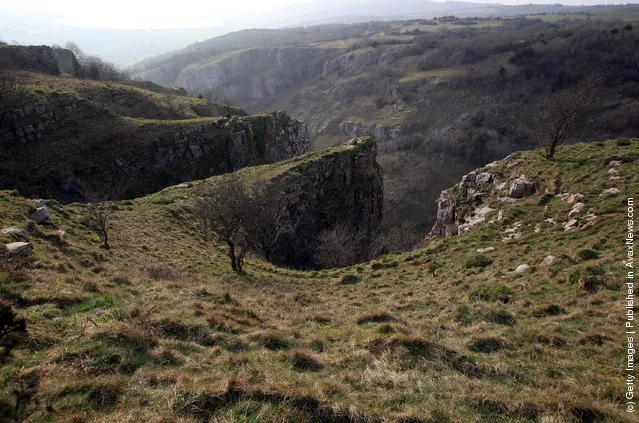
A general view of Cheddar Gorge

“Cheddar Gorge is a limestone gorge in the Mendip Hills, near the village of Cheddar in Somerset, England. The gorge is the site of the Cheddar show caves, where Britain's oldest complete human skeleton, Cheddar Man, estimated to be 9,000 years old, was found in 1903. Older remains from the Upper Late Palaeolithic era (12,000–13,000 years ago) have been found. The caves, produced by the activity of an underground river, contain stalactites and stalagmites”. – Wikipedia

Photo: A general view of Cheddar Gorge is seen on March 22, 2012 in Cheddar, England. With only a few months to go until the opening ceremony of the London 2012 Olympic games, Britain's tourist industry is hoping to benefit from the influx of athletes, officials and visitors. (Photo by Matt Cardy/Getty Images)
Details
23 Mar 2012 11:34:00
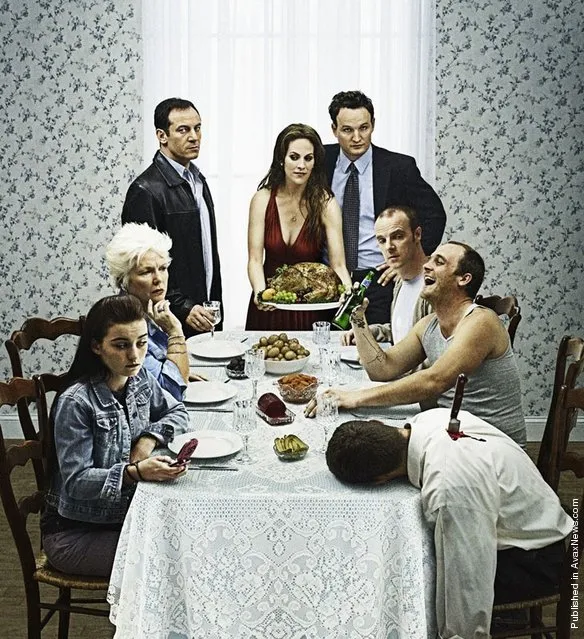
Photographers: Jim Fiscus

“Jim Fiscus is an American photographer specializing in editorial and advertising photography, including several highly regarded campaigns for the Showtime series Dexter, starring Michael C. Hall. Fiscus, who is based in Athens, Georgia, has won many awards for his work, including at the 2005 International Photo Awards for his portraits of hip-hop and R&B artists Jay-Z, Usher, and Outkast. Also in 2005, he was named International Photographer of the Year at the Lucies, and he is the winner of the 2008 International Aperture Award for his photograph of English chef and best-selling cookbook author Jamie Oliver, commissioned by Channel 4 in the U.K. In 2009, his photographic novella, “The Unfortunate Moment of Misunderstanding”, was displayed at Industrial Color’s M Project Gallery in New York in June 2009”. – Wikipedia
Details
03 Apr 2012 11:05:00
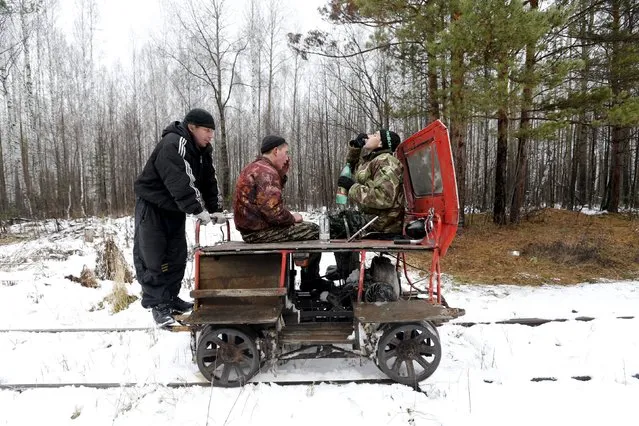
(L-R) A man nicknamed "Barcelona", Alexey Bolotov and Alexey Jakushin drink vodka as they travel by a pioneer motorised railcar on their way to Kalach, Sverdlovsk region, Russia October 18, 2015. The "pioneer," a light auxiliary rail vehicle, is a popular form of transport among people who live along the Alapayevsk railway. (Photo by Maxim Zmeyev/Reuters)

(L-R) A man nicknamed "Barcelona", Alexey Bolotov and Alexey Jakushin drink vodka as they travel by a pioneer motorised railcar on their way to Kalach, Sverdlovsk region, Russia October 18, 2015. The "pioneer," a light auxiliary rail vehicle, is a popular form of transport among people who live along the Alapayevsk railway. In a remote corner of the Urals region at the end of a narrow-gauge railway is Kalach, population about a dozen. Three decades ago 600 people called the village home, but the local forestry industry suffered as the former Soviet Union imploded and people moved away in search of work. In Kalach today there are no telephones, no mobile reception and only a few hours of electricity a day. (Photo by Maxim Zmeyev/Reuters)
Details
15 Nov 2015 08:06:00