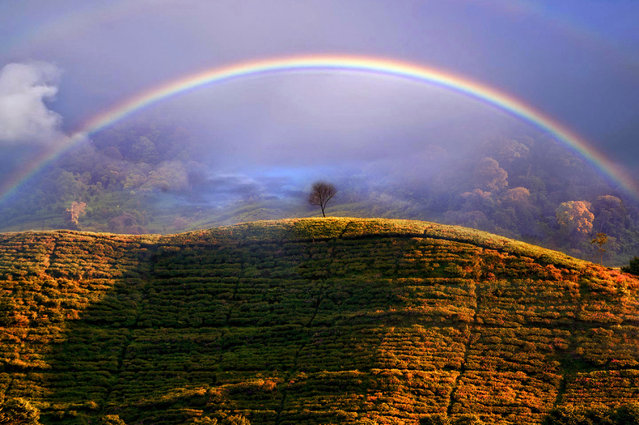
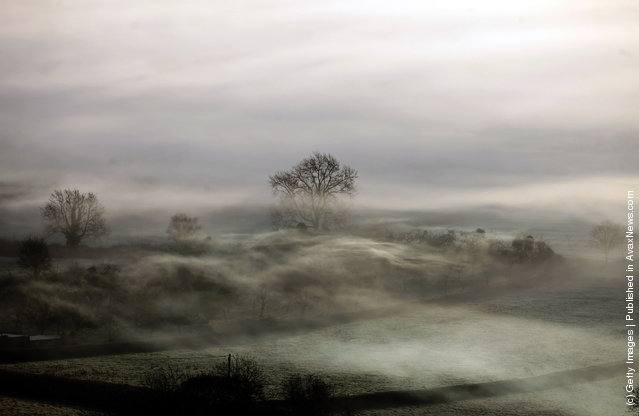
“Misty Rainbow”. A rainbow appears over tea fields in Tangerang Selatan, Indonesia. (Photo by Dani Agus Purnomo/Royal Meteorological Society’s Weather Photographer of the Year Awards)
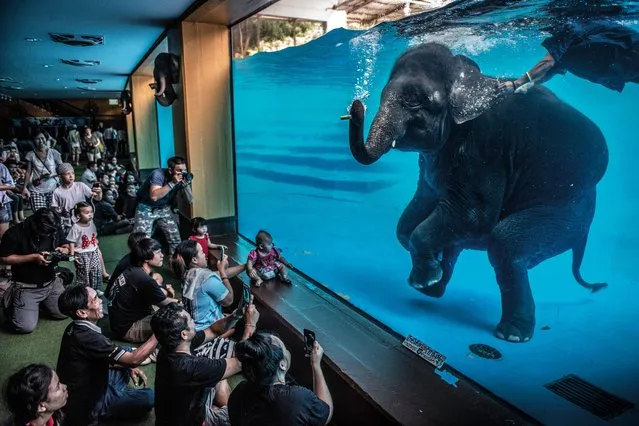
Winner, photojournalism. Elephant in the room, by Adam Oswell, Australia Zoo. Visitors watch a young elephant performing underwater. Oswell was disturbed by this scene, and organisations concerned with the welfare of captive elephants say performances like this encourage unnatural behaviour. In Thailand, there are now more elephants in captivity than in the wild. With the Covid pandemic causing tourism to collapse, elephant sanctuaries are becoming overwhelmed with animals that can no longer be looked after by their owners. (Photo by Adam Oswell/Wildlife Photographer of the Year 2021)
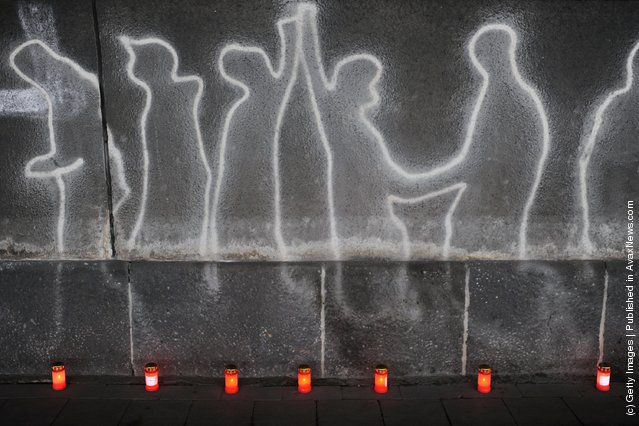
“On 24 July 2010, a stampede at the 2010 Love Parade electronic dance music festival in Duisburg, North Rhine-Westphalia, Germany, caused the death of 21 people. At least 510 more were injured”. – Wikipedia
Photo: Wall art and candles are pictured in the tunnel of the 2010 Loveparade disaster near to where many of the deaths occurred on the first anniversary of the tragedy on July 24, 2011 in Duisburg, Germany. (Photo by Thomas Starke/Getty Images)
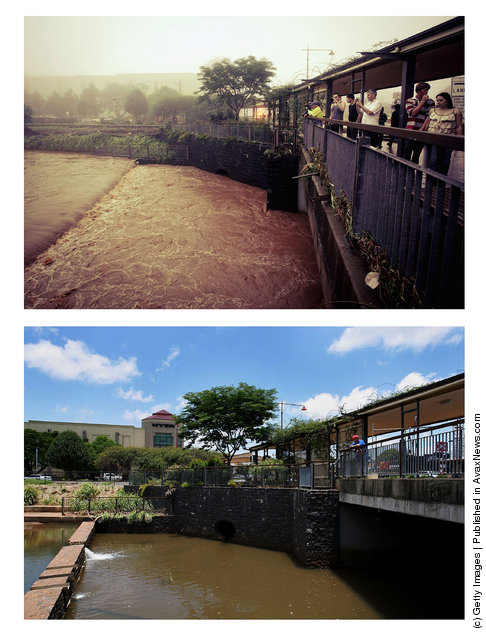
In this composite image (top) flooding is seen in the Toowoomba central business district on January 10, 2011 and (bottom) the same location as seen on January 5, 2012 in Toowoomba, Australia. January 10 marks the one year anniversary of the inland tsunami that devestated southern Queensland's Lockyer valley killing 23 people. (Photos by Dan Proud (top) and Lisa Maree Williams (bottom) /Getty Images)
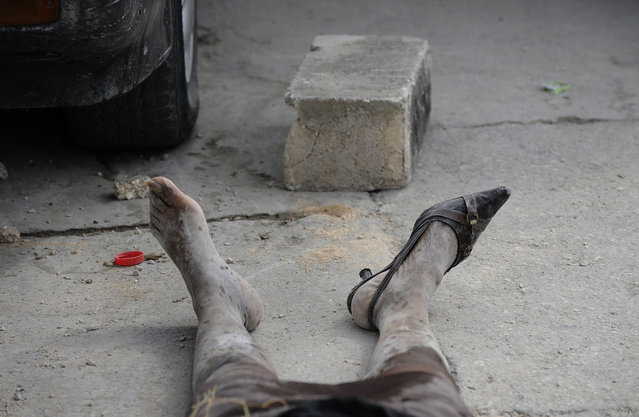
In this photo submitted by the Washington Post tilted “The Moment Time Stopped”, survivors piled bodies of the dead outside for weeks after earthquake on January 14, 2010 in Port-au-Prince, Haiti. The 7.0 magnitude earthquake struck in 2010, and the Haitian government has said more than 300,000 people were killed. The exact toll is unknown because there was no systematic effort to count bodies among the chaos and destruction. (Photo by Carol Guzy/AP Photo/The Washington Post)
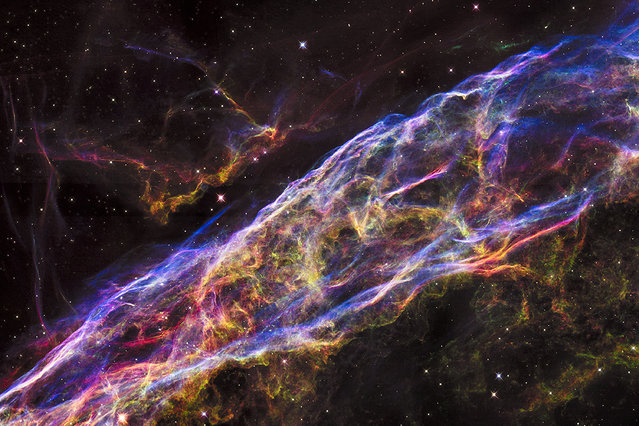
A small section of the expanding remains of the Veil Nebula, a massive star that exploded about 8,000 years ago. The entire nebula is 110 light-years across, covering six full moons on the sky as seen from Earth, and resides about 2,100 light-years away in the constellation Cygnus, the Swan. Image taken by NASA's Hubble Space Telescope. Released September 24, 2015. (Photo by Reuters/NASA/ESA/Hubble Heritage Team)