Loading...
Done
A red squirrel and a woodpecker having an “argument” over some nuts in a woodland near Lockerbie, Dumfries and Galloway in Johnsfield, England in September 2020. (Photo by Karen Crawford/South West News Service)

A red squirrel and a woodpecker having an “argument” over some nuts in a woodland near Lockerbie, Dumfries and Galloway in Johnsfield, England in September 2020. (Photo by Karen Crawford/South West News Service)
Details
24 Jan 2021 09:52:00
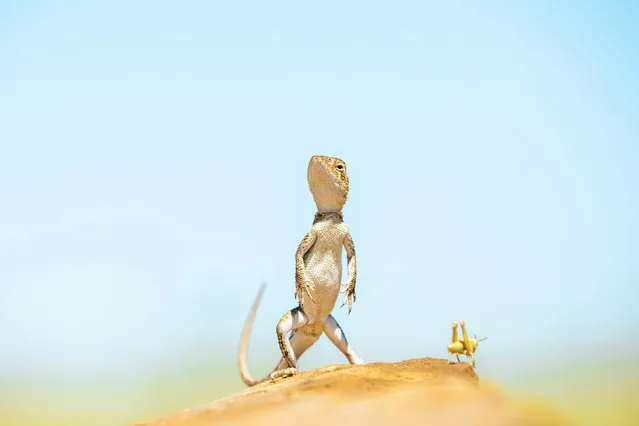
“The Dragon and The Hopper”. Eyrean earless dragon (Tympanocryptis tetraporophora) standing tall on a very hot rock in western Queensland. For a short time it was joined by a hopper, who jumped off before becoming lunch. (Photo by Harrison Warne/Nature Conservancy Australia 2021 Photo Contest)

“The Dragon and The Hopper”. Eyrean earless dragon (Tympanocryptis tetraporophora) standing tall on a very hot rock in western Queensland. For a short time it was joined by a hopper, who jumped off before becoming lunch. (Photo by Harrison Warne/Nature Conservancy Australia 2021 Photo Contest)
Details
01 Oct 2021 08:33:00
Manar Abu Dhabi presents its second public light art exhibition on November 17, 2025. Organized by the Department of Culture and Tourism. KAWS, located at  Souq Al Mina, Abu Dhabi. (Photo by Victor Besa/The National)

Manar Abu Dhabi presents its second public light art exhibition on November 17, 2025. Organized by the Department of Culture and Tourism. KAWS, located at Souq Al Mina, Abu Dhabi. (Photo by Victor Besa/The National)
Details
03 Dec 2025 06:26:00


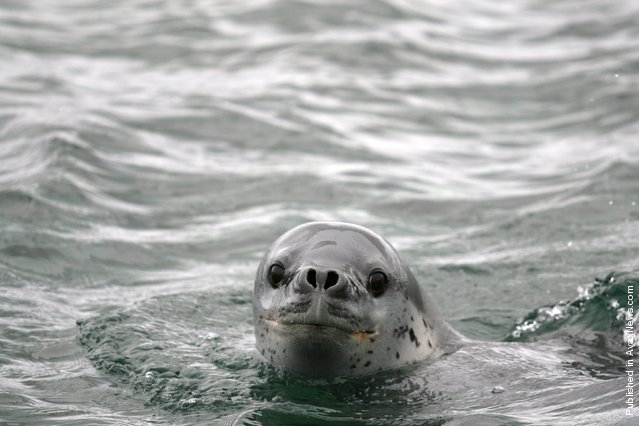
“The leopard seal (Hydrurga leptonyx), also referred to as the sea leopard, is the second largest species of seal in the Antarctic (after the southern elephant seal). It is most common in the southern hemisphere along the coast of Antarctica and on most sub-Antarctic islands, but can also be found on the coasts of southern Australia, Tasmania, South Africa, New Zealand, Lord Howe Island, Tierra del Fuego, the Cook Islands, and the Atlantic coast of South America. It can live twenty-six years, possibly more. Orcas and large sharks are the only natural predators of leopard seals”. – Wikipedia

Photo by: Gilad Rom; Source: Flickr
Details
13 Nov 2011 11:24:00
Stingray City, Grand Cayman

Stingray City is a series of shallow sandbars found in the North Sound of Grand Cayman, Cayman Islands. It is a tourist attraction, where southern stingrays are found in abundance and visitors can pet and interact with the animals.
Details
25 Aug 2014 23:59:00
A reveller dressed as “La Llorona” participates in a parade known as “La Calabiuza” on the eve of the Day of the Dead in Tonacatepeque, El Salvador on November 1, 2022. (Photo by Jose Cabezas/Reuters)

A reveller dressed as “La Llorona” participates in a parade known as “La Calabiuza” on the eve of the Day of the Dead in Tonacatepeque, El Salvador on November 1, 2022. (Photo by Jose Cabezas/Reuters)
Details
28 Dec 2023 21:12:00
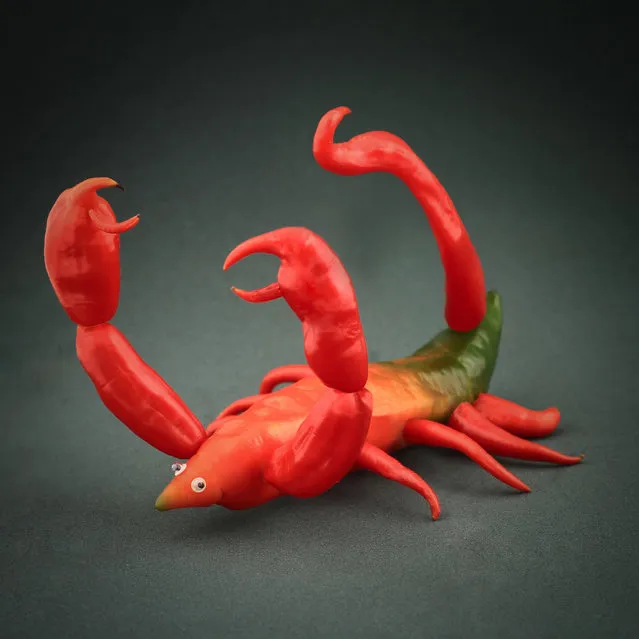
“Red Pepperpion. (Photo by Vanessa Dualib)

“Red Pepperpion. Red Pepperpions are secretive, nocturnal arachilli which can be spotted in kitchens of arid climates all around the world.

Red Pepperpions are equipped with a delicious (and depending on the quantity...deadly!) stinger at the end of its tail. If you happen to get bitten (or if you bite him!) it will produce a burning sensation on your taste nerves.

However, there is no need to worry, since the fact is that his potent stinger is usually only used when hunting or whenever the Pepperpion feels like he might become part of someones meal...

At daylight or when encountering a larger foe, such as a Saucier Chef, they retreat into burrows inside the fridge or hide beneath the oven”. (Photo and comment by Vanessa Dualib)


Details
08 Feb 2013 09:24:00
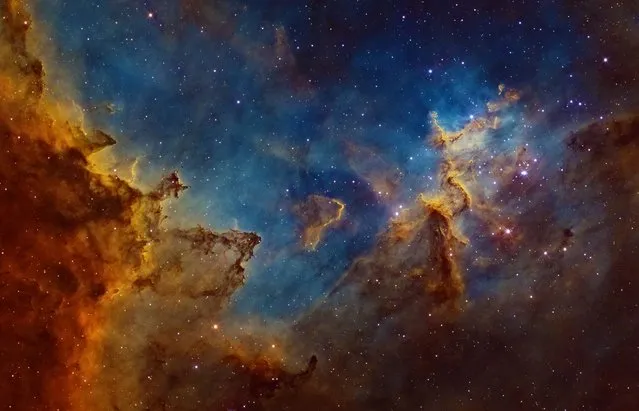
Centre of the Heart Nebula by Ivan Eder (Hungary). Situated 7500 light years away in the ‘W’-shaped constellation of Cassiopeia, the Heart Nebula is a vast region of glowing gas, energized by a cluster of young stars at its centre. The image depicts the central region, where dust clouds are being eroded and moulded into rugged shapes by the searing cosmic radiation. (Photo by Ivan Eder)

The competition, which is run by the Royal Observatory Greenwich in association with BBC Sky at Night Magazine, is now in its sixth year and has received over 2,500 entries. Photo: Centre of the Heart Nebula by Ivan Eder (Hungary). Situated 7500 light years away in the “W”-shaped constellation of Cassiopeia, the Heart Nebula is a vast region of glowing gas, energized by a cluster of young stars at its centre. The image depicts the central region, where dust clouds are being eroded and moulded into rugged shapes by the searing cosmic radiation. (Photo by Ivan Eder)
Details
03 Jul 2014 11:59:00