Loading...
Done
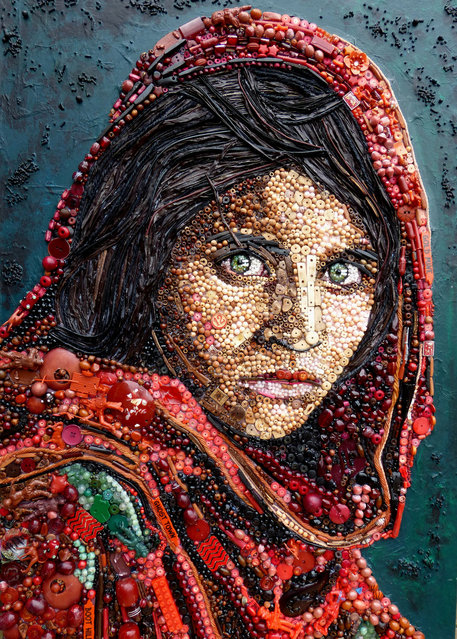
Afghan Girl (based on photograph by Steve McCurry/National Geographic). (Photo by Jane Perkins/Caters News)

“One artist doesn’t mind if people class her work as rubbish. Thats because all of her pieces are made out of junk found in charity shops, garage sales and in and around her home. Using the likes of buttons, broken jewelry and toy parts, Jane Perkins, from Exeter, UK, has recreated the famous faces of Albert Einstein, Kate Middleton, The Queen, as well as some of the worlds most iconic paintings and photographs”. – Caters News. Photo: Afghan Girl (based on photograph by Steve McCurry/National Geographic). (Photo by Jane Perkins/Caters News)
Details
26 Feb 2014 07:07:00
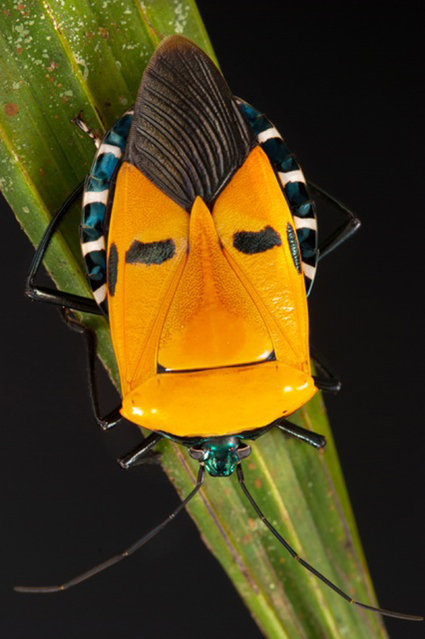
Pentomid bug. (Photo by Darlyne Murawsk/National Geographic Creative/Caters News)

It’s a bug’s life for these colorful insects – whose natural markings resemble incredible smiling faces. These dazzling insects, with their colorful patterns and markings, look as if they are living a happy bugs life. But they’re also the spitting image of a whole host of stars from stage and screen from a creeping Charlie Chaplin to Elvis Presley. Photo: Pentomid bug. (Photo by Darlyne Murawsk/National Geographic Creative/Caters News)
Details
29 Apr 2014 10:08:00
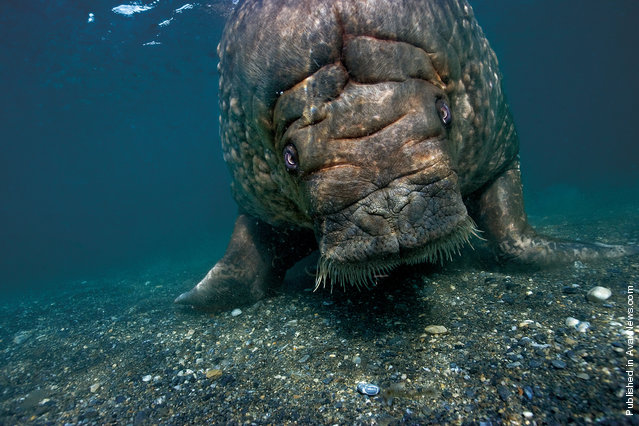
A large bull walrus returns to the shores of Prins Karl Forland after diving and feeding on clams

A large bull walrus returns to the shores of Prins Karl Forland after diving and feeding on clams. (Photo by Paul Nicklen/National Geographic). Svalbard, Norway, 2011
Details
14 Apr 2012 11:53:00
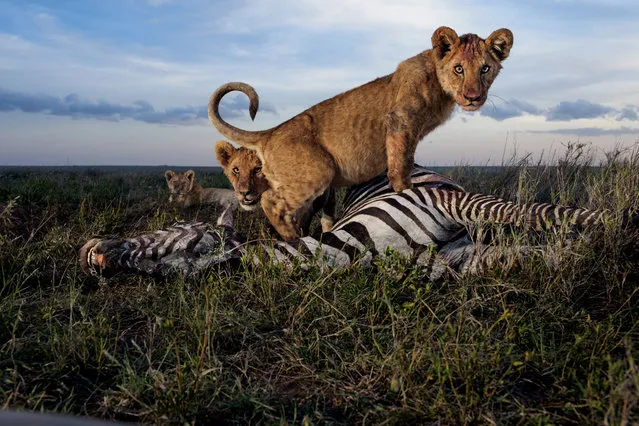
Cubs of the Simba East pride: too young to kill but old enough to crave meat. Adult females, and sometimes males, do the hunting. Zebras and wildebeests rank high as chosen prey in the rainy season. (Photo by Michael Nichols/National Geographic via The Atlantic)

“Serengeti National Park encompasses 5,700 square miles of grassy plains and woodlands near the northern border of Tanzania, and is home to more than 3,500 lions grouped into a couple dozen prides. Photographer Nick Nichols and videographer Nathan Williamson made several extended trips to the Serengeti between July 2011 and January 2013, determined to break new visual ground in their coverage of the Serengeti Lions”. Photo: Cubs of the Simba East pride: too young to kill but old enough to crave meat. Adult females, and sometimes males, do the hunting. Zebras and wildebeests rank high as chosen prey in the rainy season. (Photo by Michael Nichols/National Geographic via The Atlantic)
Details
09 Aug 2013 08:15:00
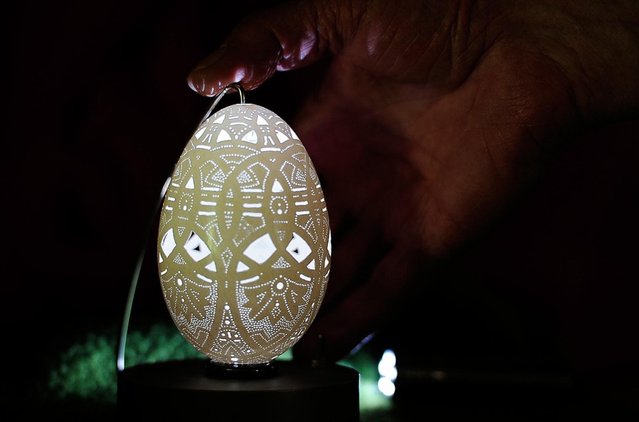
Egg Sculptures By Franc Grom

Slovenian artist Franc Grom, aged 72, makes unbelievably intricate egg sculptures using just a tiny electric drill and enormous patience. According to National Geographic, when finished, each egg contains approximately 2,500 to 3,500 holes. While Slovene artisans usually paint their eggs using a technique called drsanka by lightly scratching intricate patterns into the surfaces of colored eggs, carving them was solely Grom’s idea.
Details
24 Nov 2016 08:00:00
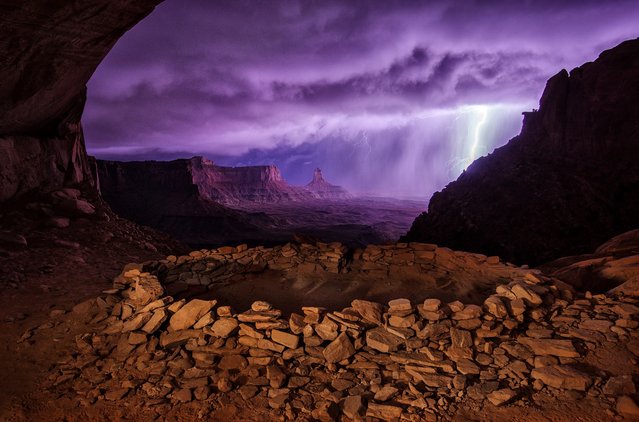
Second Place Winner: “Thunderstorm at False Kiva”. I hiked out to these ruins at night hoping to photograph them with the Milky Way, but instead a thunderstorm rolled through, creating this dramatic image. – Max Seigal. (Photo and caption by Max Seigal/National Geographic Traveler Photo Contest)

Second Place Winner: “Thunderstorm at False Kiva”. I hiked out to these ruins at night hoping to photograph them with the Milky Way, but instead a thunderstorm rolled through, creating this dramatic image. – Max Seigal. National Geographic Traveler Director of Photography Dan Westergren, one of this year's judges, shares his thoughts on the second place winner: “This photo combines two different scenes into one: the small kiva in a cliff dwelling and the grand vista of Canyonlands National Park across the valley. I really like the two different color palettes – warm inside and purple outside. This two-for-one scene was caused by the lightning storm outside the dwelling, which lit up the landscape like it was a huge electronic flash. Looking at this picture I can imagine what a wonderful sight it must have been for the ancient people who lived here. It doesn't seem too amazing now in our modern world, but might have been mind-blowing for the prehistoric residents”. Location: Utah. (Photo and caption by Max Seigal/National Geographic Traveler Photo Contest)
Details
02 Aug 2013 06:16:00
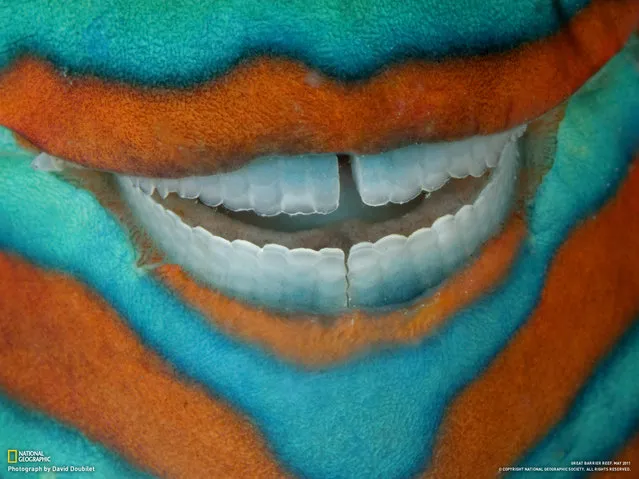
Photographers: David Doubilet

“David Doubilet (born 28 November 1946) is a well known underwater photographer known primarily for his work published in National Geographic Magazine. He was born in New York and started taking photos underwater at the young age of 12. He started with a Brownie Hawkeye in a rubber anesthesiologist's bag to keep the water out of the camera. During his summer holidays, he spent his time along the New Jersey coast. He later worked as a diver and photographer for the Sandy Hook Marine Laboratories in New Jersey. He also spent much time in the Caribbean. While a dive instructor in the Bahamas he found his motivation to capture the beauty of the sea and everything in it”. – Wikipedia. (Photo by David Doubilet/National Geographic)
Details
16 May 2012 12:21:00
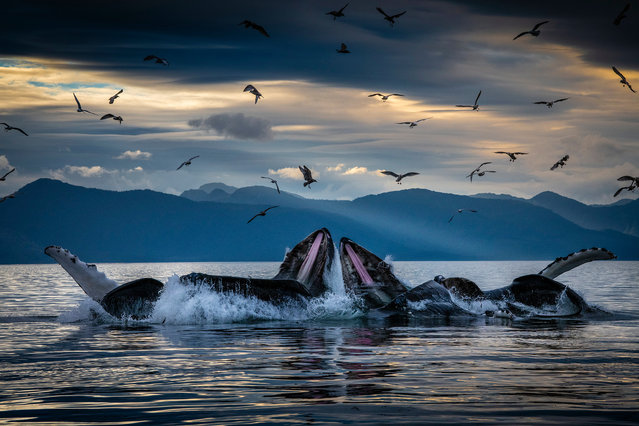
“Secrets of the Whales”. Skerry’s photographs celebrate the lives and culture of whales, illuminating recent research and their diverse behaviours. His latest work focuses on four key species: sperm whales, humpbacks, orca and beluga whales. Humpback whales bubble-net feeding off the coast of Alaska. They work cooperatively to feed on herring by blowing a perfect ring of bubbles underwater to form a net encircling the fish. The whales then swim up through the centre of the bubble net with their mouths open. (Photo by Brian Skerry/National Geographic Photo/Visa pour l'Image)

“Secrets of the Whales”. Skerry’s photographs celebrate the lives and culture of whales, illuminating recent research and their diverse behaviours. His latest work focuses on four key species: sperm whales, humpbacks, orca and beluga whales. Humpback whales bubble-net feeding off the coast of Alaska. They work cooperatively to feed on herring by blowing a perfect ring of bubbles underwater to form a net encircling the fish. The whales then swim up through the centre of the bubble net with their mouths open. (Photo by Brian Skerry/National Geographic Photo/Visa pour l'Image)
Details
04 Sep 2021 09:02:00